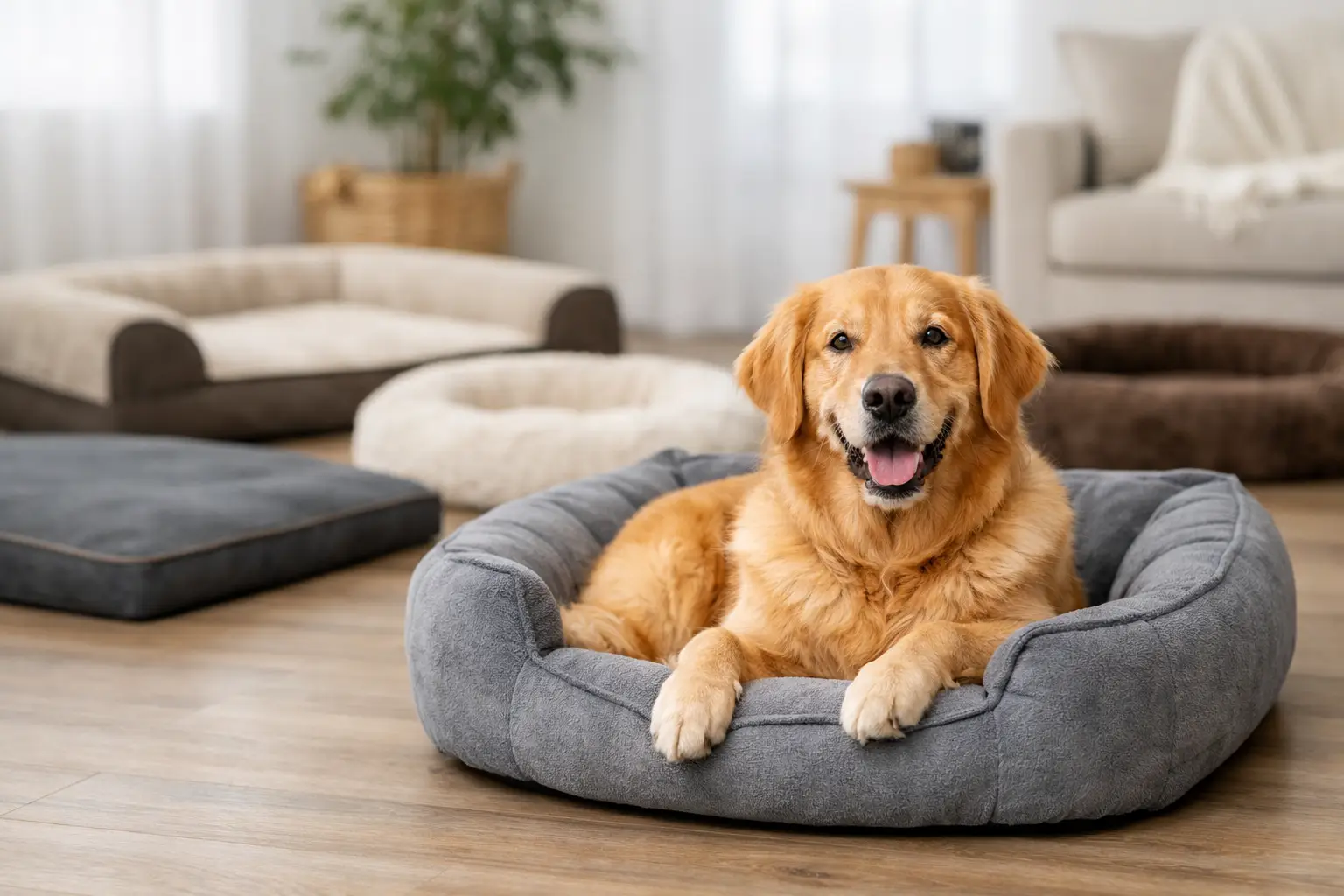
Your dog has probably already made their opinion clear by claiming the couch, your bed, or the softest blanket in the house. That is exactly why learning how to choose a dog bed matters – the right one gives your pup a comfortable spot of their own and makes everyday lounging a lot easier for everyone.
A dog bed is not just a cute add-on. It is where your dog naps after walks, settles down at night, and goes when they want quiet time. Some dogs curl into a tight little ball. Others stretch out like they pay the rent. The best bed depends on your dog’s size, age, habits, and where the bed will actually be used.
Start with the most practical detail: size. A bed that is too small will feel cramped, and a bed that is too large may not give some dogs the secure, tucked-in feeling they like.
A simple trick is to measure your dog from nose to base of tail while they are lying down in their usual sleep position, then add a few inches. If your dog likes to sprawl, give them extra room. If they sleep curled up, a slightly cozier shape can work well.
Weight guidelines on product pages are helpful, but they should not be the only thing you use. Two dogs can weigh the same and have very different body shapes. A long, lean dog may need more bed length than a stockier dog of the same weight.
If you are shopping for a puppy, think ahead a little. It can be tempting to buy a tiny bed for right now, but fast-growing breeds may outgrow it quickly. On the other hand, a huge bed for a very small puppy can feel awkward at first. For puppies, many pet parents do best with a practical starter bed and then size up once growth becomes clearer.
This is where shopping gets easier. Watch how your dog sleeps now, because that tells you a lot.
Dogs that curl up often like donut beds, cuddler beds, or beds with raised sides. The extra edge can make them feel snug and protected. These are especially popular for smaller dogs and pups that like to rest their chin on a soft rim.
Dogs that stretch out usually do better with flat mattress-style beds or larger rectangular beds. Raised bolsters can get in the way if your dog likes full-body sprawl mode.
Some dogs move around and switch positions through the night. In that case, a roomy bed with one or two supported sides can be a nice middle ground. It gives them structure without boxing them in.
If your dog likes your sofa cushions, they may enjoy a plush, overstuffed bed. If they are always seeking cool tile floors, a super fluffy bed may not be their favorite. Comfort is personal, even for dogs.
A young, healthy dog can often nap just about anywhere and still seem perfectly happy. Older dogs are usually less forgiving. If your dog is a senior, a large breed, or showing stiffness when getting up, support becomes a much bigger factor.
Orthopedic beds are a smart choice for dogs that need more cushioning around hips, elbows, and shoulders. Memory foam or dense supportive filling can help distribute weight more evenly. That does not mean every dog needs the thickest bed available, but if your dog is slowing down, the upgrade can make a real difference.
For smaller adult dogs with no mobility issues, a standard padded bed may be totally fine. The key is not to overbuy or underbuy. A bed should match your dog’s real needs, not just the trendiest style.
If your dog is recovering from surgery or has arthritis, flatter beds are often easier to get into than very puffy options with high walls. Raised edges can be cozy, but they can also be harder for some dogs to step over.
Fabric affects comfort, cleanup, and how long the bed stays looking good. This is one of those decisions that sounds small until you are dealing with muddy paws, shedding season, or the occasional accident.
Soft plush and faux fur beds feel extra cozy and tend to appeal to dogs that love warmth. They can be great for cooler rooms or colder months. The trade-off is that they may collect more fur and can need more frequent cleaning.
Canvas, polyester blends, and tightly woven covers are often easier to wipe down and hold up well for everyday use. These can be a better fit for active dogs, multi-pet homes, or households that want lower-maintenance options.
If your dog runs hot, look for breathable materials rather than heavily shaggy textures. If your dog sheds a lot, smoother fabrics are usually easier to keep tidy. And if accidents are a concern, a removable washable cover is worth its weight in gold.
Water-resistant liners can also be useful, especially for puppies, seniors, or dogs that come in wet from outdoor play. You may not need one for every dog, but when you do need it, you will be glad it is there.
Some dogs gently settle into bed. Others circle, scratch, fluff, and then attack the corner seam for no good reason. If that sounds familiar, durability should move way up your list.
No bed is truly indestructible for every dog, but some hold up better than others. Look for stronger outer fabrics, reinforced seams, and simpler shapes without lots of decorative extras. Beds with loose stuffing, thin covers, or oversized bolsters can wear out faster with rough use.
Chewers may do better with a more structured, tough-fabric bed rather than a plush lounger. Diggers can flatten soft-fill beds quickly, so denser fill or foam tends to last longer. If your dog is tough on bedding, it often makes more sense to buy for function first and fluff second.
Before you choose a bed, think about where it will go. A bed for the living room may need to blend into a busy space and handle daily traffic. A crate bed needs the right dimensions and lower profile. A bedroom bed may be more about comfort and calm.
If the bed will sit on hardwood or tile, a non-slip bottom helps keep it in place. If it is going in a drafty spot, thicker cushioning adds comfort. If your dog likes watching the room, put the bed somewhere they can relax without feeling cut off from the action.
Many pet parents end up needing more than one bed. That is not overdoing it. A main bed in the room where your dog spends the most time and a second option for crates, travel, or another floor of the house can make daily life easier.
A dog bed gets used hard. It collects fur, dander, dirt, drool, and whatever your dog dragged in after their last backyard adventure. That is why easy care should be part of the buying decision, not an afterthought.
Removable covers are usually the easiest option for regular washing. Check whether the cover is machine washable and whether the insert can also be cleaned if needed. Some beds look great at first but become a hassle if they are difficult to unzip, wash, or reshape.
Darker colors and patterned fabrics can hide everyday wear better than very light solid colors, especially in active homes. That may sound minor, but it can make the bed look fresher between washes.
If convenience matters to you, choose a bed that matches your real cleaning habits. A high-maintenance bed is less appealing once real life kicks in.
The biggest mistake is buying based only on looks. A bed can be adorable and still be wrong for your dog. Focus on fit, support, and fabric first.
Another common issue is underestimating size. If you are between sizes, going a bit larger is often the safer move, especially for dogs that stretch out. The exception is dogs that strongly prefer that snug, enclosed feel.
It is also easy to ignore your dog’s habits. If they sleep cool, avoid overly warm materials. If they have joint issues, do not settle for thin padding just because it costs less. The best value is the bed your dog will actually use and keep using.
If you are wondering how to choose a dog bed without overthinking every detail, keep it simple. Start with your dog’s size, sleeping style, and comfort needs, then narrow it down by material, durability, and cleanup. That gets you to the right fit much faster than shopping by appearance alone.
At Doggodays.shop, that practical approach makes browsing easier because you can shop for comfort, style, and everyday convenience in one place. Pick the bed that suits your dog’s real routine, and you are much more likely to end up with a happy pup who finally stops stealing your spot on the couch.
A good dog bed does not need to be fancy. It just needs to feel like home to your dog.








Leave a comment