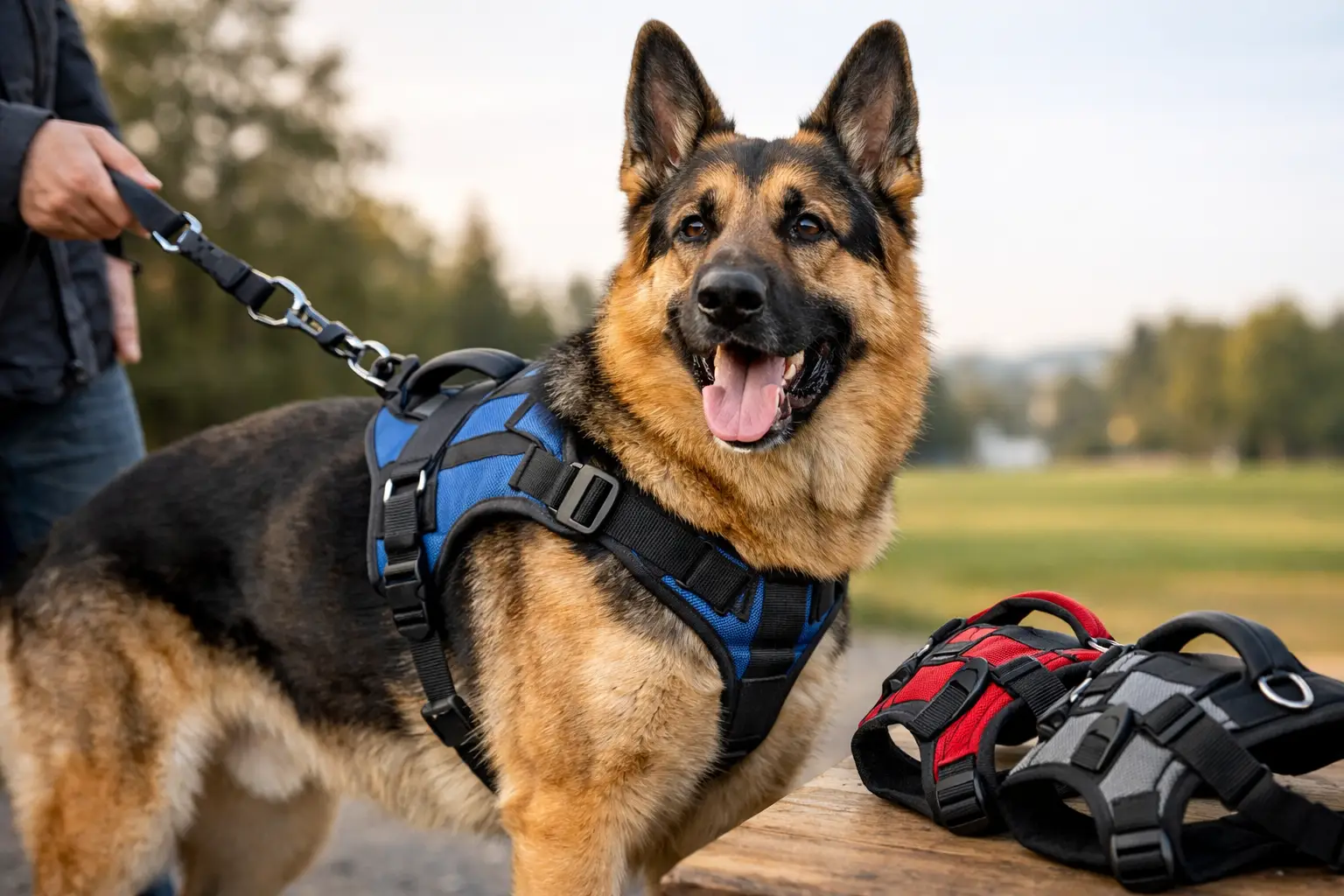
A strong dog that hits the end of the leash can turn a simple walk into a full-body workout. If that sounds familiar, a no pull dog harness for large dogs can make everyday outings feel calmer, safer, and a lot more enjoyable for both of you.
Large dogs bring plenty of lovable energy, but they also bring strength, momentum, and sometimes a habit of leading the walk instead of following your pace. The right harness helps shift that dynamic without making your dog uncomfortable. It is not a magic fix for leash manners, but it can give you better control while supporting training and protecting your dog’s neck from the pressure that often comes with pulling in a standard collar.
Big breeds and large mixed dogs can put serious force into a leash. When that force is concentrated around the throat, it can be hard on the neck and frustrating for the person holding the other end. A harness spreads pressure more evenly across the chest and body, which usually feels more secure and less harsh.
A no-pull design goes a step further. Many of these harnesses use a front leash attachment that gently redirects a dog when they surge forward. Instead of letting them lean into the walk like a sled dog, the harness encourages them to turn back toward you. That small change can make a big difference, especially with dogs who are powerful, excitable, or still learning good leash habits.
That said, not every large dog needs the same setup. Some need more structure and control for busy sidewalks or reactive moments. Others do better with a simpler everyday harness that focuses on comfort and a reliable fit. The best choice depends on your dog’s size, build, coat, and walking style.
Fit comes first. Even the best-looking harness will be a bad choice if it shifts, rubs, or gives your dog room to back out. Large dogs vary a lot in shape. A deep-chested Labrador, a broad-shouldered Rottweiler, and a lean Great Dane will not wear the same harness in the same way.
Look for adjustable straps in more than one spot so you can fine-tune the fit around the chest and shoulders. A harness should feel snug but not tight. You should be able to slide two fingers under the straps without forcing them through. If the chest panel hangs loose or the straps sit too close to the armpits, your dog may end up with chafing after longer walks.
Material matters too. Large dogs need durable webbing, strong buckles, and hardware that can handle repeated pulling without wearing down fast. Padding is a plus, especially across the chest, but too much bulk can make a harness hot or stiff. For daily use, a balance of strength and comfort usually works best.
Easy-on design is another feature worth paying attention to. Some dogs hate gear going over their heads. Others are patient as long as the harness goes on quickly. If you walk your dog multiple times a day, convenience starts to matter a lot.
This is where many shoppers pause, and for good reason. The leash attachment point changes how a harness feels on the walk.
A front-clip harness is often the go-to option for dogs that pull. Because the leash is attached at the chest, your dog is redirected when they charge ahead. It can help reduce the constant tugging match that happens with strong dogs. The trade-off is that some front-clip styles can twist slightly on dogs with broad chests or enthusiastic movement if the fit is not dialed in.
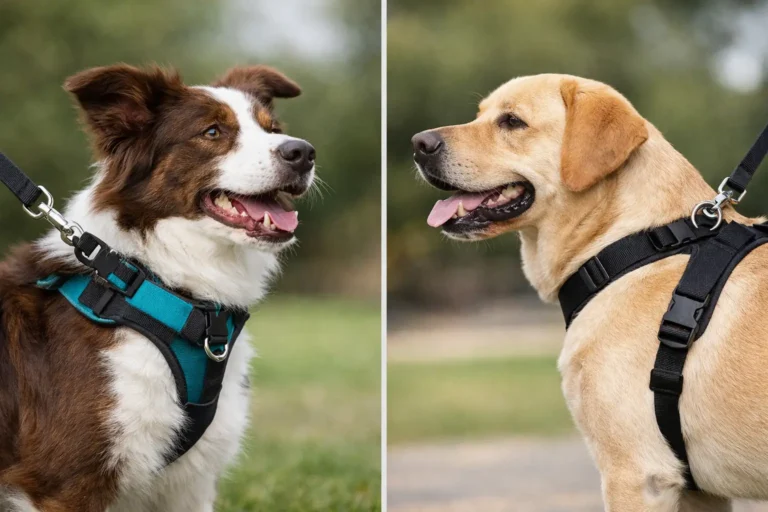
A back-clip harness is simple and popular for everyday comfort. Many dogs move more naturally in it, and it can be easier to put on. But if your large dog is a committed puller, a back clip alone may not give you the control you want. Some dogs will lean into it and keep going.
A dual-clip harness offers more flexibility. You can use the front clip for training walks and the back clip when your dog is walking nicely or when you want a more relaxed setup. For many pet parents, this is the most practical option because it gives you room to adjust as your dog’s behavior improves.
When you are shopping for a no pull dog harness for large dogs, a few comfort and convenience features can really improve the experience.
A sturdy top handle is one of them. It gives you an extra way to guide or steady your dog in crowded areas, near traffic, or when getting in and out of the car. It is especially handy for larger dogs because a quick grab can prevent a lot of chaos.
Reflective stitching or trim is also worth having if you walk early in the morning or after sunset. Better visibility is a simple safety upgrade.
If your dog is active, look for breathable materials that dry reasonably fast. A harness that stays damp or traps heat may be fine for short walks, but less ideal for warm weather, weekend outings, or frequent use.
Do not guess based on breed name alone. Even among large breeds, sizing can be all over the place. Measure your dog’s chest at the widest point, usually right behind the front legs, and check the neck measurement if the product sizing calls for it.
If your dog falls between sizes, the better choice depends on the harness design. In many cases, going with the larger size works if there is enough adjustment to tighten it securely. But if the harness has limited adjustment or your dog has a narrower frame, sizing down may give a better fit. The product chart should guide you, but your dog’s shape still matters.
After trying it on, watch your dog move. A good harness should stay centered, allow a full shoulder stride, and sit flat without shifting side to side. If your dog walks a few steps and the harness starts rotating or rubbing, it is not the right fit yet.
One common mistake is expecting the harness to do all the work. A no-pull harness helps, but it works best when paired with consistent leash training, rewards, and clear walking routines. If your dog has practiced pulling for months or years, it may take time to build better habits.
Another mistake is choosing the biggest, heaviest harness because the dog is large. More material does not always mean more control. In some cases, bulky harnesses can restrict movement or feel awkward enough that dogs resist wearing them.
It is also easy to overlook comfort in favor of control. If a harness pinches, rubs, or frustrates your dog, walks may become more stressful instead of easier. The sweet spot is a harness that gives you support without making your dog miserable.
These harnesses are especially helpful for young large dogs that are still learning, enthusiastic dogs that lunge toward squirrels or other dogs, and strong adult dogs whose pulling has become a daily habit. They are also useful for pet parents who want more confident handling on walks without relying on a collar alone.
Still, there are cases where a no-pull harness may not be the complete answer. If your dog has serious reactivity, panic behavior, or a medical issue affecting gait or shoulders, product choice becomes more specific. In those cases, comfort, safety, and training approach may matter as much as the harness style itself.
The best pick is usually the one that fits your dog well, feels comfortable enough for regular use, and gives you the kind of control your walks actually need. That may mean a padded front-clip style for a hard puller, or a dual-clip harness for a dog who is improving and needs flexibility.
If you are comparing options, keep your routine in mind. Think about walk length, weather, your dog’s energy level, and how easy the harness is to put on when you are in a hurry. Practical details often matter more than flashy extras.
At Doggodays.shop, the appeal for many pet parents is simple: it is easier to shop when everyday gear, comfort items, and training-friendly accessories live in one place. When you are already picking up essentials for your pet, finding a harness that helps make walks smoother is one less errand and one more win.
A good walk does not have to start with a tug-of-war. The right harness can help your big dog feel secure, help you feel more in control, and turn daily outings into the kind of routine you both look forward to.







Leave a comment