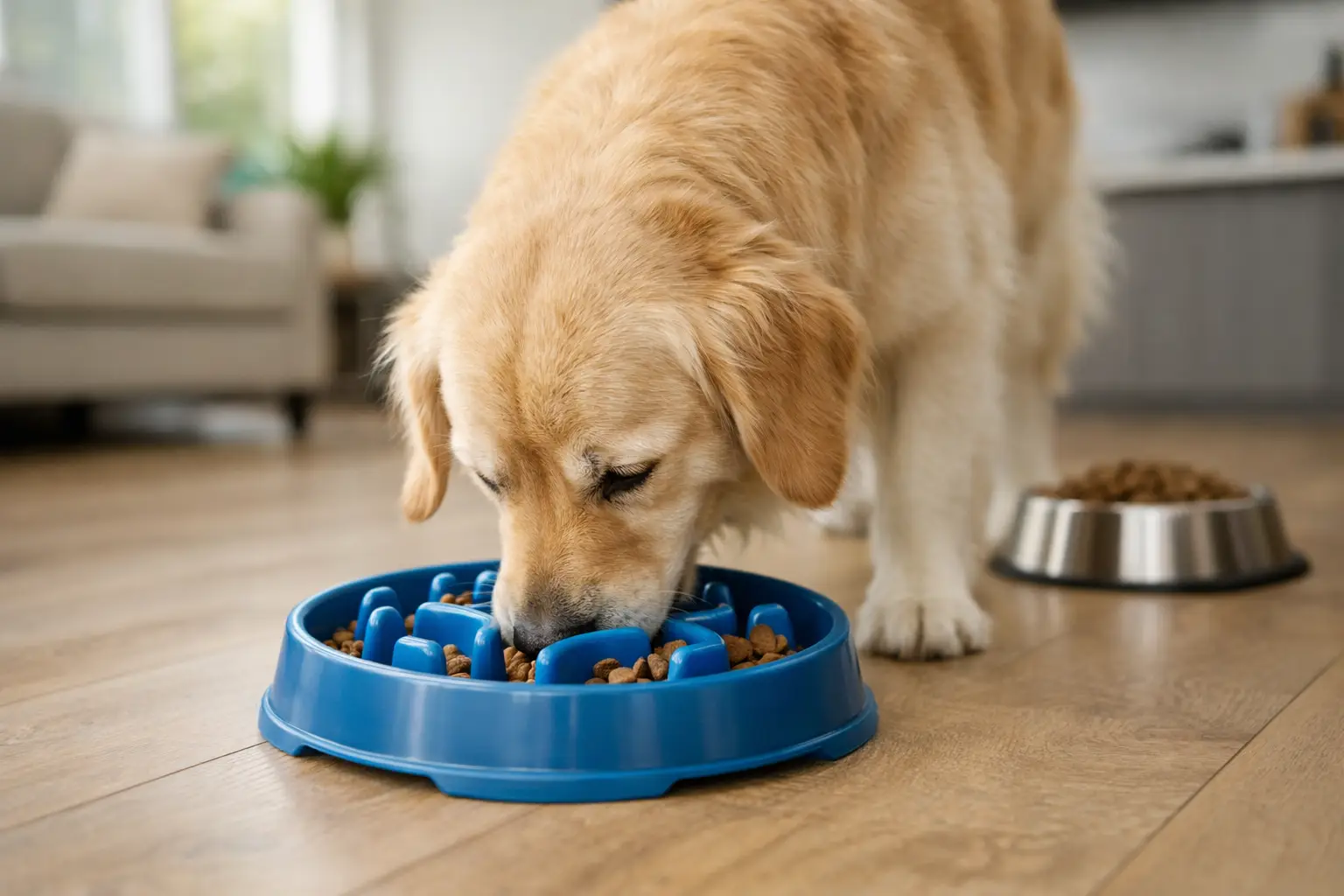
If your dog finishes dinner in under a minute and then looks around like the meal never happened, a slow feeder bowl for dogs is probably already on your radar. Fast eaters can turn feeding time into a gulping contest, and that can mean more mess, more gassiness, and in some cases more stomach upset than any pet parent wants to deal with.
The good news is that this is one of those simple everyday products that can make a real difference. A slow feeder is not a fancy extra for most dogs – it is a practical feeding accessory designed to turn speed eating into a calmer, more controlled routine. For many households, that means less scarfing, less stress around meals, and a better overall feeding setup.
A slow feeder bowl is built with ridges, mazes, pockets, or raised patterns inside the bowl. Instead of giving your dog one wide-open space to inhale food, it creates small barriers that make them work around the bowl to get each bite. The goal is simple: slow the pace down without making mealtime frustrating.
That slower pace can help in a few ways. Some dogs swallow a lot of air when they eat too quickly, which can lead to burping, bloating, or discomfort afterward. Others eat so fast that they barely chew, then end up with hiccups, vomiting, or a restless stomach. A slower feeding rhythm can make meals easier on the digestive system and a lot less chaotic for everyone nearby.
Not every dog needs one, though. If your dog eats at a normal pace, leaves the bowl content, and has no stomach issues tied to meals, a standard bowl may be perfectly fine. This is one of those products where the biggest benefit usually shows up in homes with obvious fast-eating behavior.
Some signs are easy to spot. If your dog seems to vacuum up kibble, pushes the bowl around the floor, coughs while eating, or acts uncomfortable right after meals, a slower bowl is worth considering. Dogs that get overly excited at feeding time often benefit too, especially if they turn every meal into a race.
It can also help in multi-dog homes. When one dog feels competitive, they may eat too fast simply because another dog is nearby. A slow feeder will not solve every feeding rivalry, but it can make one dog less likely to gulp the whole meal in a few seconds.
Puppies can be candidates as well, particularly if they are learning bad feeding habits early. Starting with a feeding setup that encourages a steadier pace can help create a better routine from the beginning.
The biggest selling point is right in the name, but the value goes beyond speed. A slow feeder can make meals more engaging for dogs that enjoy a bit of problem-solving. It turns eating into a short activity rather than a quick reflex, which can add a little enrichment to the day.
That matters most for dogs who need more stimulation indoors. For a pet parent looking for practical products that do more than one job, this is a nice bonus. You are not just buying a bowl. You are also making feeding time a little more interactive.
There is also the cleanup factor. Many slow feeders have wider bases or non-slip bottoms, which can cut down on bowl flipping and sliding. That will not make every messy eater neat, but it can help keep kibble from scattering across the kitchen quite so easily.
As useful as these bowls can be, there are trade-offs. Some dogs get annoyed by very deep or complex maze patterns, especially if they have a short snout. Flat-faced breeds may struggle with certain bowl designs, and senior dogs may find hard plastic ridges awkward if they have dental sensitivity.
Wet food can be another deciding factor. Some bowls handle kibble beautifully but become a chore to use with canned food or fresh food because the grooves are too narrow and messy. If your dog eats mixed meals, the bowl shape matters more than you might think.
Cleaning is another real-world issue. A bowl that slows your dog down is great, but not if it takes forever to wash after every meal. For busy households, ease of cleaning is part of the product quality, not an afterthought.
The best slow feeder is the one your dog will actually use comfortably every day. Start with size. The bowl should fit your dog’s meal portion without forcing food to pile too high. A bowl that is too small defeats the purpose because your dog may still gulp from the top layer.
Material matters too. Plastic is common and lightweight, but it should feel sturdy and easy to clean. Some pet parents prefer stainless steel or silicone options, especially if their dog is rough on bowls or prone to chewing. A non-slip base is a smart feature for almost any home, especially on tile or hardwood floors.
Pattern depth is where a lot of buyers get it wrong. More complicated does not always mean better. For many dogs, a medium pattern is enough to slow eating without turning dinner into a puzzle they lose patience with. If your dog is new to slow feeders, it often makes sense to start simpler.
You will also want to think about your dog’s face shape and eating style. Long-snouted dogs can usually handle deeper grooves, while flatter-faced dogs often do better with shallower channels and more open designs. This is one of those small shopping details that can make a big difference in daily use.
If you feed dry kibble only, most slow feeders will do the job as long as the size and pattern are right. Kibble naturally settles into the grooves, which creates the slower pace the bowl is designed for.
Wet food is a little trickier. Shallow patterns are easier for dogs to lick clean and easier for you to wash afterward. If your dog eats a combination of kibble and toppers, you want a bowl that still works when food gets sticky.
For treat-based feeding or small training meals, a slow feeder can be a nice add-on instead of your dog’s full-time bowl. Some pet parents use one just for the meals their dog tends to rush through most.
Most dogs figure it out quickly, but a few need a short learning curve. If your dog seems confused or frustrated, try using the slow feeder with a smaller amount of food at first. You can also choose a lower-complexity design until they get the idea.
Keep an eye on the first few meals. The goal is slower eating, not stress. If your dog paws at the bowl nonstop, gives up halfway through, or seems unable to reach food comfortably, the design may simply not be a good match.
That is why product variety helps. Different dogs need different feeding solutions, and a one-style-fits-all approach rarely works across breeds, ages, and meal types.
For the right dog, yes. A slow feeder bowl is a practical everyday item that can improve mealtime habits without requiring a major routine change. It is especially useful for dogs that inhale food, get gassy after eating, or turn feeding time into a kitchen-floor event.
It is not magic, and it is not necessary for every pet. But when your dog clearly eats too fast, this is one of the simplest upgrades you can make. The best part is that it fits naturally into a regular feeding setup, so you are not overcomplicating care just to solve one common problem.
If you are shopping for pet-approved picks that make daily care easier, a slow feeder is the kind of small change that can feel surprisingly helpful. The right bowl will not just slow the meal down – it can make feeding time feel calmer, cleaner, and better suited to the way your dog actually eats.







Leave a comment