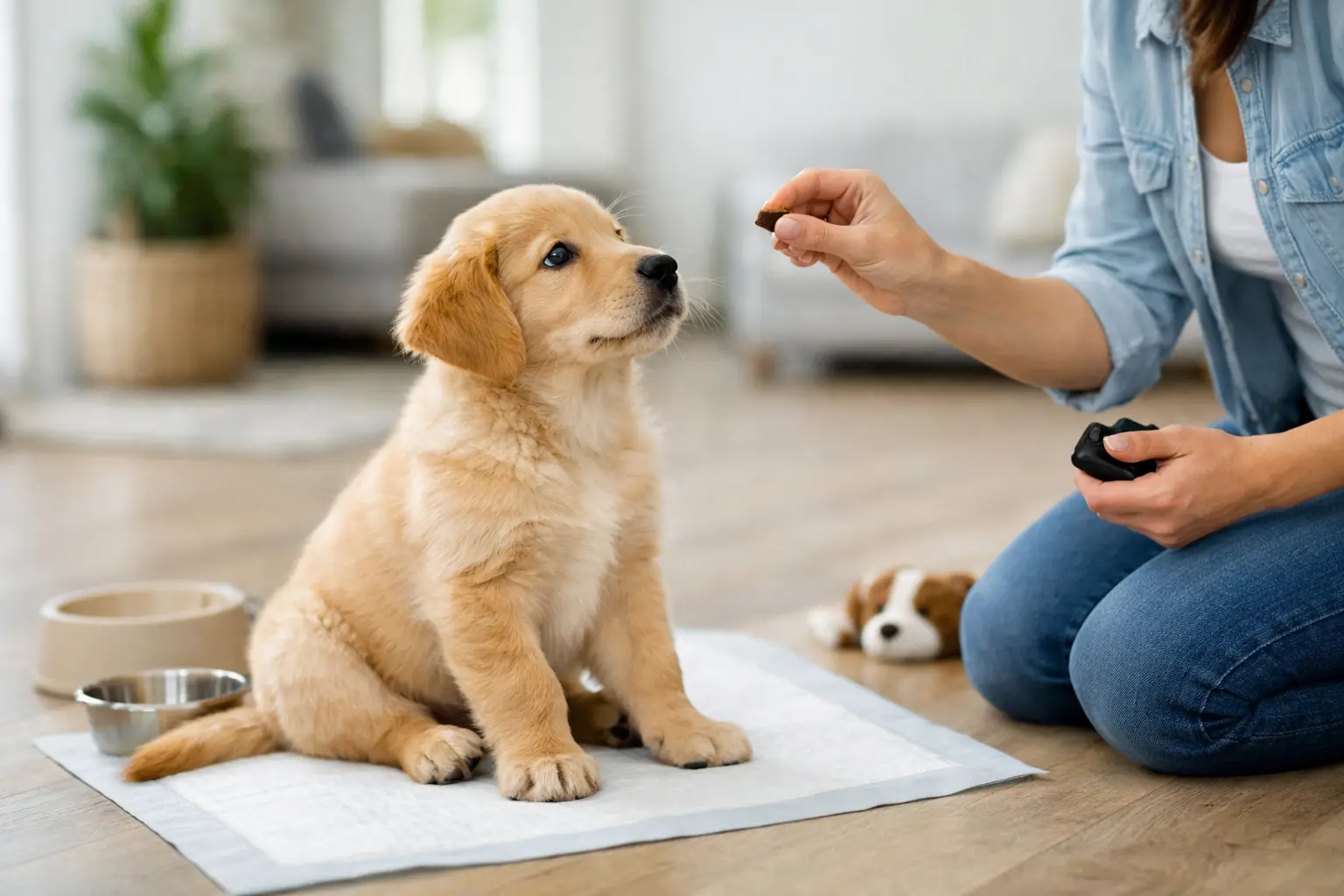
That first surprise puddle usually happens right after you think, “We’re doing great.” If you’re wondering how to potty train a puppy fast, the good news is that speed mostly comes down to consistency, timing, and setting your puppy up to get it right more often than wrong.
Fast potty training is not about pushing your puppy too hard. It is about making the right behavior easy, obvious, and rewarding. Puppies learn quickly when the routine is clear, the potty spot stays the same, and the humans in the house are all playing by the same rules.
A puppy does not need a complicated plan. A puppy needs a predictable one. The fastest house training happens when your dog goes out at the same key moments every day and gets praised the second they finish.
The most important potty trips happen first thing in the morning, right after naps, right after meals, after play sessions, after drinking a lot of water, and right before bed. Young puppies also need more frequent breaks than many new owners expect. If your puppy is very young, waiting too long between trips is often the real problem, not stubbornness.
In the early stage, think less about freedom and more about rhythm. Take your puppy to the same outdoor potty area each time. Stand still, give a simple cue like “go potty,” and wait a few minutes. When they go, praise warmly and offer a small treat right away. That timing matters. If the reward comes after you walk back inside, your puppy may not connect it to the bathroom behavior.
Most indoor accidents are management issues, not attitude issues. Puppies usually have accidents because they had too much space, too much time, or not enough supervision. When a puppy wanders out of sight for even a minute, they can easily decide that a quiet corner behind the couch works just fine.
This is why fast potty training often involves temporarily limiting access around the house. A crate, playpen, baby gate, or leash tether can make a big difference. The goal is not to make your puppy uncomfortable. The goal is to help them build a clean habit before they earn more room.
Crate training can be especially helpful because many puppies naturally avoid soiling a sleeping space. That said, the crate has to be the right size. If it is too large, your puppy may sleep on one side and use the other as a bathroom. If your puppy is still very young, they also cannot “hold it” for long just because they are in a crate. Age still matters.
If you want quick results, your daily routine needs to match your puppy’s body, not your ideal calendar. Very young puppies may need to go out every 30 to 60 minutes when awake, especially during the first stretch of training. As they mature and get the idea, you can gradually extend the time.
Meals should happen on a regular schedule rather than free-feeding all day. A steady feeding routine usually creates more predictable potty timing. Water should stay available, but it is smart to pay attention to heavy drinking before naps, car rides, or bedtime so you can plan an extra trip outside.
One of the simplest ways to stay ahead of accidents is to keep a short log for a few days. Note when your puppy eats, drinks, naps, plays, and poops. Patterns show up fast. Once you know that your puppy almost always needs to poop 10 to 15 minutes after breakfast, your job gets much easier.
A practical day might look like this: outside first thing in the morning, outside after breakfast, outside after play, outside after every nap, outside after dinner, and one last trip before bed. In between, supervised indoor time stays short until your puppy has a stronger track record.
It may feel repetitive for a week or two, but repetition is exactly what helps the lesson stick.
Praise alone works for some puppies. For many, a tiny treat makes the lesson click faster. Keep the reward small, quick, and easy to deliver. You want your puppy thinking, “Bathroom outside equals good things every single time.”
Be cheerful, but do not turn the potty trip into a full play party before your puppy goes. If outside means sniffing, zooming, and chasing leaves for 15 minutes, some puppies forget why they were brought out in the first place. Keep potty breaks focused first, then let the fun happen after success.
This is one of the biggest trade-offs in training. A fenced yard is convenient, but it can also be distracting. For some puppies, a leash helps them stay on task and speeds up the learning process.
If you catch your puppy in the act, interrupt gently and quickly take them outside. Do not yell, scare, or punish. Harsh reactions can make puppies hide when they need to go, which usually makes house training slower, not faster.
If you find the mess after the fact, just clean it up. Your puppy will not connect a delayed correction to what happened earlier. What does matter is using an enzyme-based cleaner that removes the odor well. If your home still smells like a bathroom to your dog, that same spot can become a repeat location.
Accidents are information. They tell you the gap between potty trips was too long, supervision slipped, or your puppy did not fully empty outside. Adjust the plan and keep going.
Nighttime is usually the part new puppy owners dread most. The easiest way through it is to be realistic. Many young puppies simply cannot make it all night at first. A late-night potty break or early morning trip is normal in the beginning.
Keep nighttime trips calm, quiet, and boring. Take your puppy out, give the potty cue, reward the result, and head back inside. No play session, no exciting chatter, no wandering around the yard. You want your puppy to learn that nighttime is for bathroom business and sleep.
Placing the crate near your bed can help you hear when your puppy wakes and needs to go. That can prevent accidents and help your puppy settle more easily.
Some puppies bark or whine at the door. Others give much subtler hints. Common signs include sudden sniffing, circling, wandering away, stopping play abruptly, or heading toward a familiar accident spot.
The tricky part is that these signals can be easy to miss until you know your puppy better. That is why supervision matters so much during the first few weeks. If you cannot actively watch your puppy, use the crate or a small safe area instead of hoping for the best.
Potty pads can be useful in some situations, especially in apartments, during bad weather, or when a puppy cannot safely go outside yet. But if your goal is outdoor bathroom habits as fast as possible, pads can sometimes confuse the message. You are teaching that going inside is acceptable, then later asking your puppy to stop.
That does not mean pads are always a bad choice. It depends on your setup, schedule, and the age of your puppy. Just know that switching from pads to outdoor-only potty habits can add an extra training step.
You do not need a huge setup, but a few basics make life smoother. A properly sized crate, a leash, training treats, enzyme cleaner, and a small gated area can do a lot of heavy lifting. If your routine feels messy, the problem is often not motivation. It is usually that your tools are not making the process easy enough to follow every day.
For busy pet parents, having everyday puppy supplies in one place can also help you stay consistent. When cleanup, training items, and daily essentials are easy to keep stocked, the whole routine feels more manageable.
Some puppies catch on in a few days and become fairly reliable within a couple of weeks. Others take longer because of age, breed tendencies, previous habits, or inconsistent routines at home. Fast progress is possible, but “fast” does not always mean “perfect.”
A puppy may understand the idea before they have the bladder control to follow it every single time. That is normal. Real success is usually a mix of learning and physical maturity.
If progress suddenly stalls, go back to basics for a few days. More frequent potty trips, tighter supervision, and quicker rewards can often get things moving again.
If your puppy is having ongoing accidents despite a very consistent routine, or seems to urinate unusually often, it may be worth checking with your veterinarian to rule out a medical issue.
The puppies who learn fastest are not always the smartest ones. They are usually the ones with the clearest routine, the closest supervision, and the quickest reward for doing the right thing. Stay steady, keep the pattern simple, and give your puppy plenty of chances to succeed. A clean house and a confident pup usually follow sooner than you think.







Leave a comment