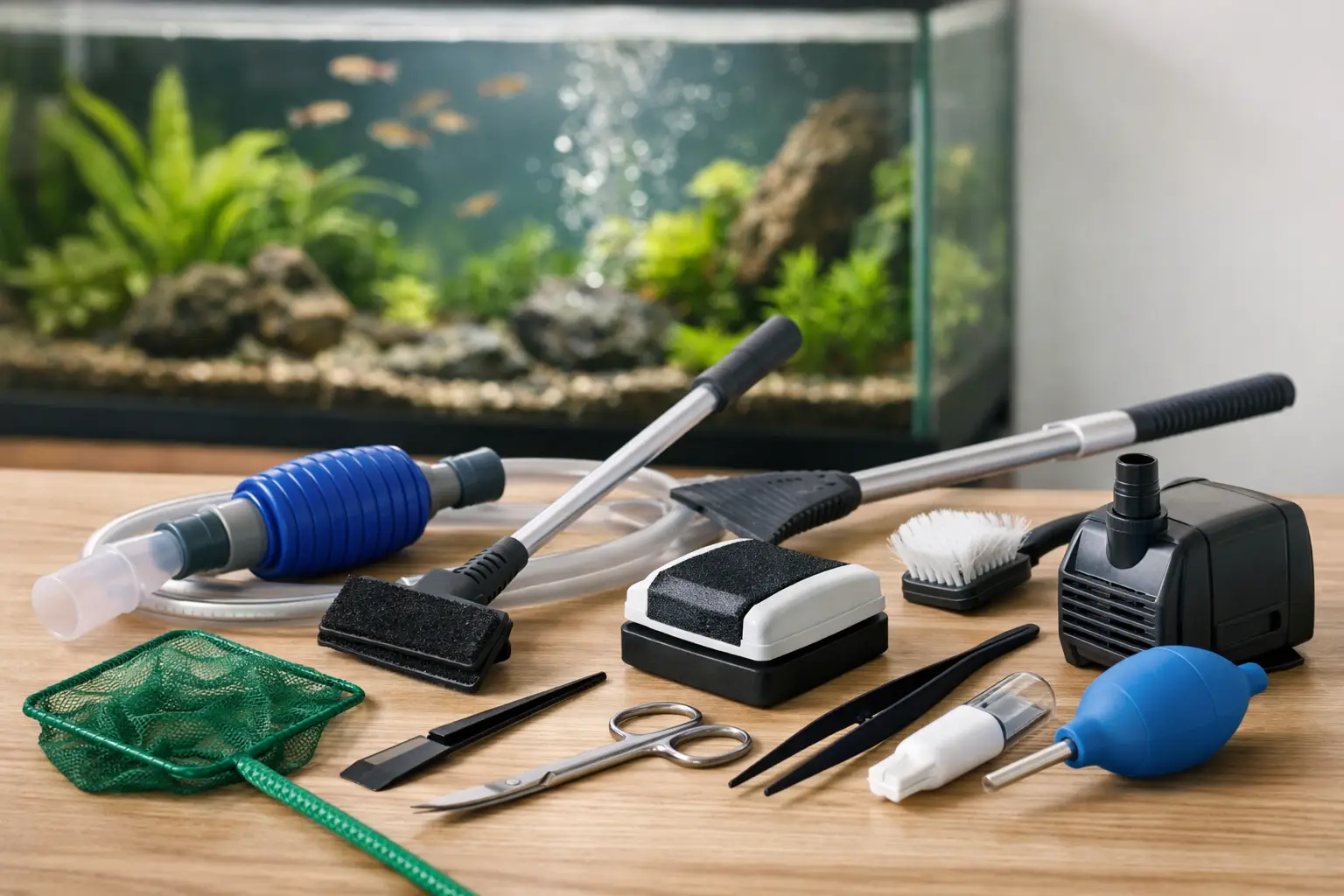
Cloudy glass, a layer of algae, and bits of waste sitting in the gravel can make a tank look messy fast. The best fish tank cleaning tools help you stay ahead of that buildup without turning routine care into a full weekend project. If you want your aquarium to look clean and your fish to stay comfortable, the right tools make everyday maintenance quicker and a lot less frustrating.
Most tank owners do not need a huge collection of specialty gear. What they need is a smart mix of tools that handle the jobs that come up again and again – algae on the glass, debris in the substrate, dirty filter parts, and water changes. A good setup saves time, helps you clean more consistently, and lowers the chance of stressing your fish during maintenance.
The trick is choosing tools that match your tank size and setup. A small desktop freshwater tank has different needs than a large community aquarium with live plants, décor, and a deeper gravel bed. Some tools are almost universal, while others depend on whether you have glass or acrylic, sand or gravel, and light algae or heavy buildup.
If there is one tool most aquarium owners reach for first, it is an algae cleaner. Scrapers and magnetic cleaners help remove green film and stuck-on algae before it gets out of hand. Magnetic options are especially handy for quick touch-ups because you can clean the inside glass while keeping your hands dry.
That said, not every tank should use the same cleaner. Glass tanks can handle firmer scraper pads or blades, while acrylic tanks need gentler materials to avoid scratches. If you have an acrylic aquarium, always check that the cleaner is labeled safe for it. A cleaner that works great on glass can leave visible marks on acrylic panels.
A gravel vacuum is one of the most useful aquarium tools you can buy. It pulls out dirty water while lifting waste, uneaten food, and debris from the substrate. This makes it a two-in-one tool for regular water changes and basic tank cleanup.
For gravel tanks, a standard siphon works well because debris settles between the stones. For sand tanks, you need a gentler approach. A strong vacuum can pull up sand too easily, so it helps to choose a model with better flow control or use a lighter touch above the surface. The goal is to remove waste without stripping out your substrate.
An aquarium-safe scrub pad is a simple add-on that earns its place. It is useful for cleaning tank walls, ornaments, lids, and other surfaces that collect residue. It also helps with spots a magnetic cleaner cannot reach, especially around corners or near equipment.
This is one of those tools where using the right material matters. Household sponges and kitchen scrubbers can contain soap residue or rough fibers that are not safe for aquarium use. A pad made specifically for fish tanks is the safer pick and makes routine cleaning more straightforward.
A fish net is not just for catching fish. It also helps remove floating plant bits, loose algae, uneaten food, and debris that drifts around after cleaning. During water changes, it can be handy for lifting out decorations or moving lightweight items without a lot of splashing.
It is worth keeping at least one size that matches your tank. A net that is too large can be awkward in a small aquarium, while one that is too small can slow you down in a bigger tank. Soft mesh is usually the better choice for general use.
It may not look fancy, but a dedicated bucket is one of the best fish tank cleaning tools because it keeps the whole process cleaner and safer. Using a bucket that has never held soap, cleaners, or other household chemicals reduces the risk of contamination.
For many pet parents, the most practical setup is keeping one or two aquarium-only buckets near their cleaning supplies. That way, water changes and rinsing accessories feel less like a scavenger hunt and more like a simple routine.
Once you move beyond very small tanks, carrying heavy buckets gets old quickly. A water change pump or hose system can make a big difference, especially for medium and large aquariums. These systems help drain and refill the tank more efficiently, which makes it easier to stick with regular maintenance.
This is a convenience tool, but it is a real one. If your tank is large enough that you tend to put off water changes, a hose-based system can turn a difficult chore into a manageable job. For busy households, that kind of convenience matters.
Filters collect plenty of grime, and some parts are hard to reach with a cloth or pad. A filter brush set helps clean intake tubes, impellers, and narrow areas where sludge can build up over time. Keeping those parts cleaner can support stronger flow and better overall tank cleanliness.
You do not need to over-clean your filter media every time. In fact, cleaning too aggressively can disrupt beneficial bacteria. But brushes are great for the plastic components and tight spaces that trap dirt and reduce performance.
Tweezers and tongs are especially useful in planted tanks, but they are helpful in almost any setup. They let you remove dead leaves, reposition decorations, pick up debris, or drop sinking food exactly where you want it. They also keep your hands out of the tank for small adjustments.
This is not the first tool most beginners buy, but it often becomes one of the handiest. If your tank has lots of décor, live plants, or tight spaces, long tweezers can save time and reduce disturbance.
For stubborn algae on glass tanks, a razor blade scraper can work much faster than a soft pad. It is a practical tool for hard water marks and thick buildup that regular wiping does not fully remove.
There is one major trade-off here – this tool is for glass, not acrylic. Used carelessly, it can also scratch or damage seals. It is best for targeted use, not casual scraping all over the tank. When used properly, though, it is one of the quickest ways to restore clear viewing panels.
A testing kit is not a cleaning tool in the classic sense, but it absolutely belongs in the conversation. Sometimes a tank looks dirty because the water quality is off, algae is thriving, or maintenance has been uneven. Testing helps you spot problems that wiping glass alone will not fix.
If you are seeing recurring cloudiness or algae blooms, the issue may be tied to ammonia, nitrites, nitrates, or other water conditions. A test kit gives you a clearer picture so your cleaning routine can actually solve the problem instead of just covering it up.
The best setup depends on your aquarium, not just the product label. If you have a small tank, compact tools are easier to control and store. If you have a larger tank, hose systems, longer scrubbers, and larger siphons save effort.
Tank material is another big factor. Glass is more forgiving, while acrylic needs softer, scratch-safe tools. Substrate matters too. Gravel vacuums are fantastic, but the style you choose should match whether you have gravel, sand, or a planted base.
It also helps to think about your cleaning habits honestly. If you want quick upkeep between deeper cleanings, a magnetic cleaner and small net may get used constantly. If you tend to do fewer, larger maintenance sessions, a stronger siphon, dedicated bucket, and filter brushes may matter more. The best tools are the ones you will actually reach for.
Having the right tools is only half the job. A light, regular routine usually works better than waiting until the tank looks rough. Wiping algae early, removing debris during water changes, and keeping filter parts from getting overly dirty can prevent bigger cleanup sessions later.
For many tanks, that means checking the glass every few days, doing partial water changes on a regular schedule, and cleaning accessories as needed rather than all at once. Fish do better with steady care than dramatic overhauls, and most pet parents prefer maintenance that feels manageable.
If you are shopping for aquarium supplies alongside other everyday pet essentials, it helps to keep your routine simple and your tools easy to grab. Stores with broad pet care options, including picks like those at Doggodays.shop, can make it easier to stock up on the basics without adding extra errands.
It is easy to assume a spotless tank is always the goal, but aquarium care has some balance to it. Cleaning too aggressively can stress fish, disturb beneficial bacteria, and turn a healthy tank into an unstable one. That is why the best fish tank cleaning tools are the ones that help you clean efficiently, not excessively.
A good tool should make the job gentler, faster, and more precise. Whether you are clearing algae from the glass, vacuuming gravel, or handling a water change, the right supplies help you do what your tank actually needs without overdoing it.
A clean aquarium is easier to enjoy, and the right tools make that feel less like work and more like part of caring for your pet well.









Leave a comment