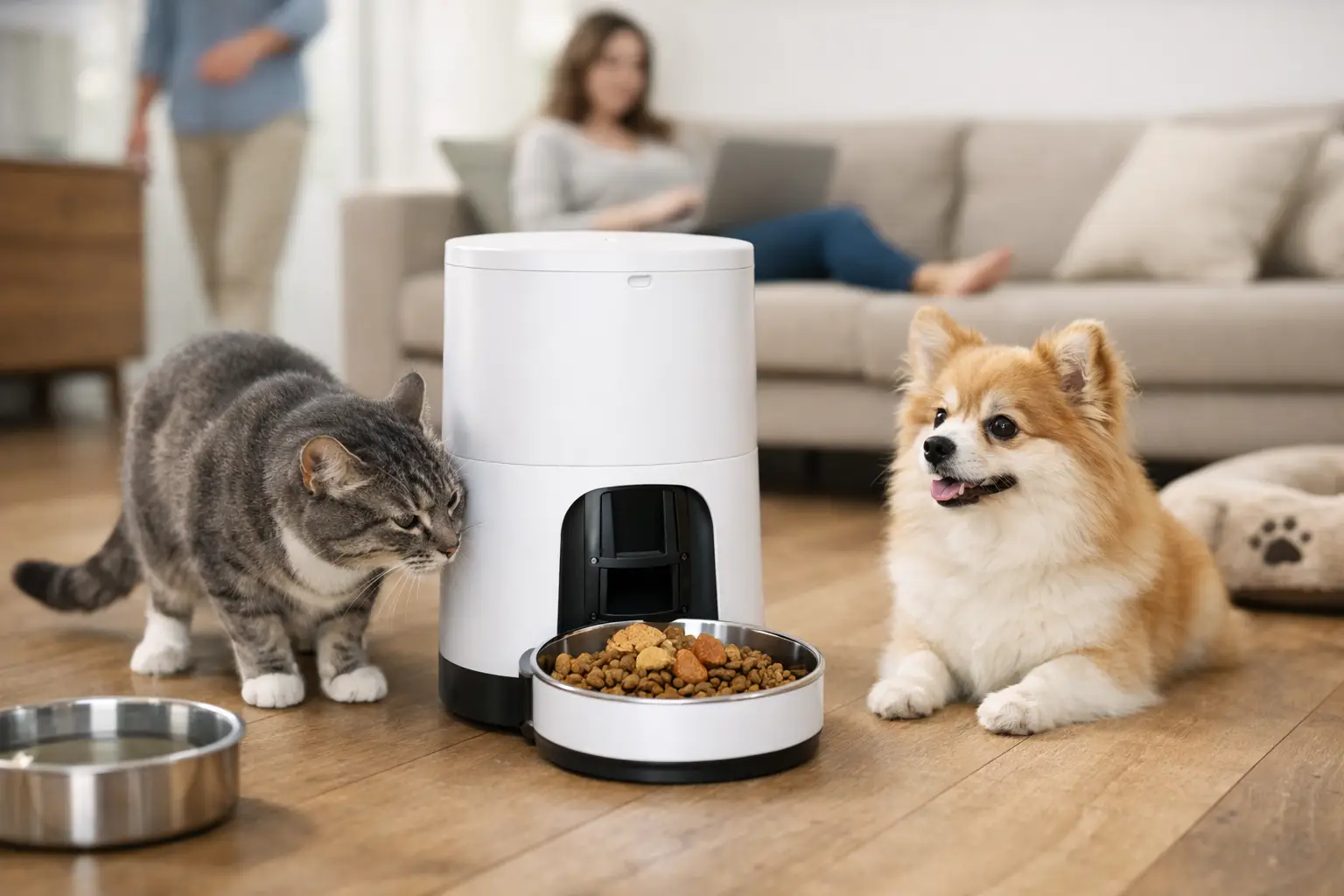
The breakfast stare-down is real. Whether your dog starts pacing at 6 a.m. or your cat becomes very vocal five minutes before dinner, an automatic feeder can bring more consistency to the bowl. This automatic pet feeder review focuses on what matters most for everyday pet parents: dependable timing, sensible portions, easy cleaning, and a setup your pet cannot easily outsmart.
Automatic feeders are not just for people who work long hours. They can also help households with early meetings, school drop-offs, multiple pets, or pets who do better with smaller meals spread through the day. The right model can make feeding feel less rushed while keeping your pet’s routine steady.
An automatic pet feeder releases a pre-set amount of dry food at scheduled times. Basic models may offer one or two timed meals, while more advanced options can provide several daily feedings, portion controls, app scheduling, voice recordings, and backup power.
The biggest benefit is consistency. Pets often thrive on predictable routines, and a feeder can serve breakfast at the same time on weekdays, weekends, and those mornings when everyone sleeps through an alarm. For pets that eat too quickly, dividing a daily food allowance into smaller servings may also be more comfortable than offering one large meal.
That said, a feeder is a helpful tool, not a substitute for attentive care. You still need to check that food is dispensing correctly, fresh water is available, and your pet is eating normally. If your pet has a medical condition, a prescription diet, or a history of food guarding, ask your veterinarian whether an automatic feeding plan makes sense.
A cute design is a bonus, but everyday details decide whether a feeder earns a place in your home. Start with the food capacity. A small hopper may be perfect for one cat or a small dog, while a larger container can be more practical for multi-pet households or bigger dogs. Bigger is not always better, though. Food left too long in a hopper may lose freshness, especially in warm or humid spaces.
Portion settings deserve close attention. Some feeders measure food by cups, while others use small dispensing increments that can vary depending on kibble size and shape. Round pieces, large chunks, and oddly shaped recipes do not always flow the same way. Before relying on a new feeder, run several test meals and measure what actually lands in the bowl.
Scheduling should be simple enough to adjust without pulling out a manual every time. Look for clear buttons, an easy-to-read display, and a feeding schedule that matches your pet’s needs. App-connected feeders can be handy for changing meal times from work or checking whether a meal was released. They are especially useful for busy households, but a straightforward non-Wi-Fi feeder can be a better fit if you prefer fewer tech steps.
Many plug-in feeders offer battery backup. This feature matters because a brief power outage should not automatically mean a missed meal. Some models use batteries as the main power source, while others use them only when the plug loses power. Check the product details, battery type, and whether batteries are included.
A good feeder should also keep its schedule after an outage or reset. If it does not, you may need to reprogram meal times, which defeats some of the convenience. For extra peace of mind, test the backup system before leaving your pet in the feeder’s care.
Pets are clever when food is involved. A light plastic lid may be no match for a determined dog, and a feeder that slides across the kitchen floor can quickly become a snack machine. Choose a stable base, a secure top, and a food outlet designed to limit curious paws.
For homes with more than one pet, consider the personalities involved. A fast eater may hover over a slower pet’s bowl, and one food-motivated dog may wait nearby for another pet’s meal. A standard automatic feeder is usually best when pets can eat separately or are already comfortable with their feeding spaces.
Most automatic feeders are made for dry kibble. They are generally easier to fill, easier to clean, and better suited to long feeding schedules. If dry food is part of your pet’s regular diet, a kibble feeder is usually the most convenient choice.
Wet food feeders work differently. They often use covered trays and may include ice packs to keep food cooler for a limited period. These can be useful for a lunch portion or a shorter day away from home, but they need more frequent cleaning and should not be treated as long-term food storage. Follow food safety guidance for your pet’s specific diet, especially during hot weather.
If your pet eats a mix of wet and dry food, an automatic dry feeder can handle scheduled kibble while you serve fresh wet meals when you are home. It is a practical compromise for many routines.
Start with your pet, not the feeder. Consider their age, size, activity level, current feeding routine, and the instructions on their food. A young, active dog may need a different schedule than a senior cat who prefers several tiny meals. The goal is not to add more food. It is to deliver the right daily amount more consistently.
Measure your pet’s food for a few days before programming anything. If you normally scoop by eye, you may be surprised by how much the serving changes from one meal to the next. Once you know the daily amount, divide it into the number of meals your pet needs. Then use the feeder’s test setting to confirm that its portions match your plan.
For a pet who eats too fast, smaller scheduled meals can help reduce the excitement around a full bowl. For a pet who grazes all day, a feeder may require a little adjustment time. Introduce it gradually, placing it near the usual feeding spot and letting your pet investigate it before expecting them to eat from it.
A little prep prevents most feeder frustrations. Place the feeder on a flat surface away from splashing water, direct sun, and high-traffic areas where it could get bumped. Keep the cord tucked away if your pet likes to chew. Make sure the bowl sits correctly under the dispenser before every use.
Before your first scheduled day, use this quick check:
Cleaning matters just as much as programming. Crumbs and oil from kibble can collect around the chute, bowl, and lid. Wipe down the feeder regularly, empty and refresh stored food as needed, and follow the manufacturer’s cleaning directions for electronic parts.
Automatic feeders are not ideal for every pet. They may be less suitable for pets that need carefully supervised meals, require medications mixed into food, eat only wet food, or have diets that change frequently. They can also create tension in homes where one pet steals food from another.
Some pets are initially nervous around the dispensing sound. Usually, a calm introduction and a few treats placed near the feeder can help build a positive association. If your pet remains frightened or refuses meals, return to their normal bowl and try again later rather than forcing the change.
For everyday dry-food routines, though, a well-chosen feeder can be a genuinely useful part of pet care. The best pick is not necessarily the one with the most buttons. It is the one that fits your pet’s food, your household schedule, and the kind of reliable routine that lets everyone start the day a little more happily.









Leave a comment