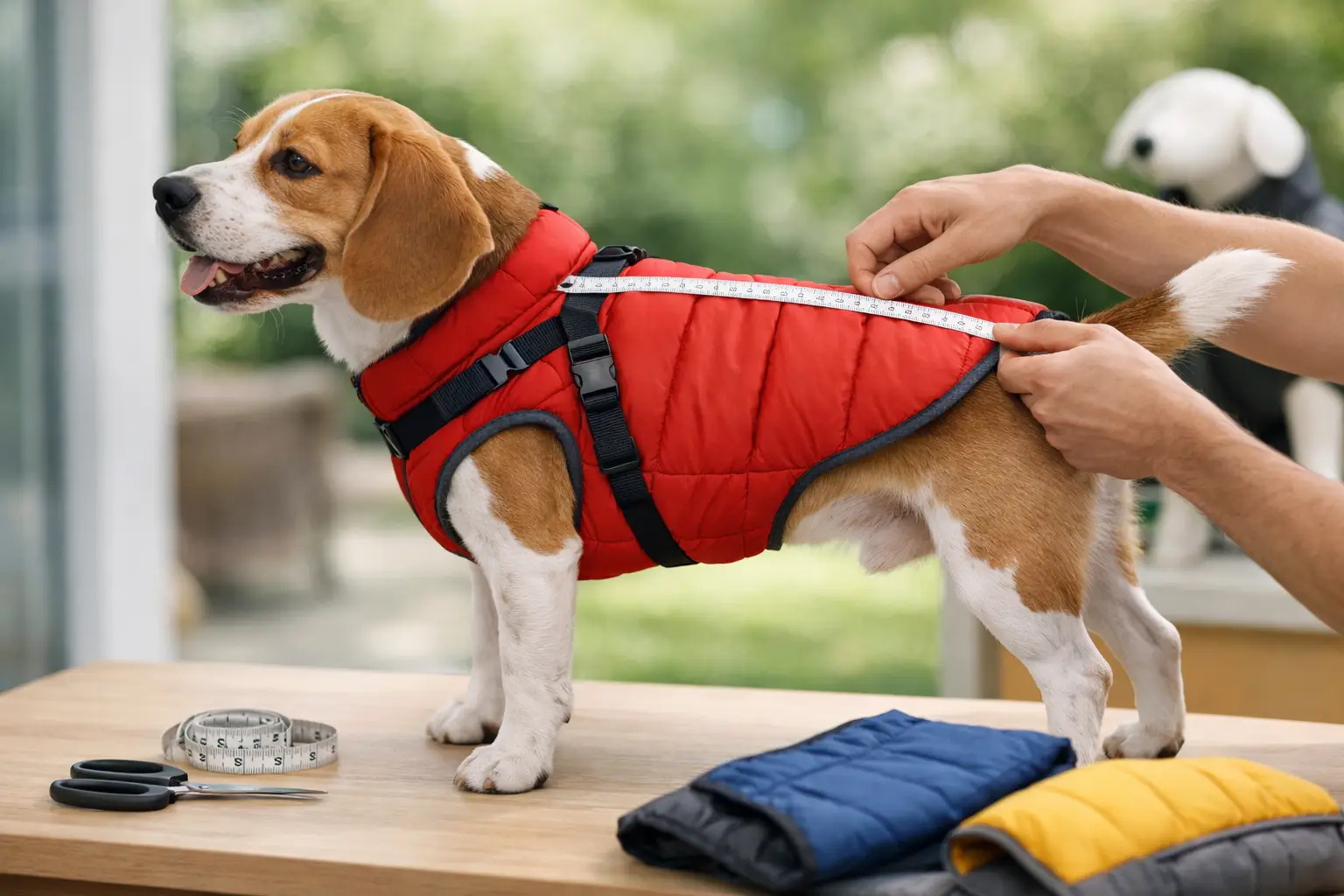
A jacket that looks adorable but pinches under the front legs is not much of a treat for your dog. A reliable dog jacket sizing chart takes the guesswork out of cold-weather shopping by helping you match your pup’s real measurements to the style you want. Whether you are picking a light rain layer, a fleece hoodie, or a warm insulated coat, the best size is the one that lets your dog move, sniff, stretch, and enjoy the walk.
Most dog jackets are sized with three measurements: chest girth, neck circumference, and back length. The chart on each product page should be your final reference, because a medium in one jacket can fit very differently from a medium in another. Brands may use different cuts, fabrics, closures, and intended breeds.
Start with the chest measurement. For most jackets, this is the most useful number because the chest is the widest part of your dog’s body. If your dog’s chest falls between two listed sizes, sizing up is often the more comfortable choice, especially for padded winter coats or thick fleece styles. A jacket that is slightly roomy can usually be adjusted. One that is too tight can rub, restrict movement, or pop open during a walk.
Back length and neck size still matter. A long-backed dog may need extra coverage, while a dog with a broad neck or deep chest may need a roomier cut even if their back length suggests a smaller size. Think of the chart as a helpful starting point, then consider your dog’s individual shape.
You only need a soft measuring tape and a few calm minutes. If your dog is wiggly, a favorite treat can make the process much easier. Measure while your dog is standing naturally on all four paws, rather than sitting or lying down.
Wrap the tape around the broadest part of your dog’s rib cage, usually just behind the front legs. Keep the tape snug but not tight. You should be able to slide two fingers beneath it comfortably. Write this number down first since it will usually guide your size choice.
Measure around the base of the neck, where a collar normally rests. Do not measure high up near the head. Jackets with high collars, pullovers, and hooded styles may need a little extra room here so your dog can turn their head freely.
Measure from the base of the neck, between the shoulder blades, to the base of the tail. Keep the tape along your dog’s back without pulling it down the curve of the body. A jacket does not need to cover every inch of your dog’s rear, but it should protect the main body area without bunching near the tail.
If you are shopping for a dog with a fluffy coat, gently press the measuring tape through the fur rather than measuring only the outside of the fluff. The jacket needs to fit your dog’s body, while still leaving enough room for their natural coat.
Once the jacket arrives, try it on indoors before heading outside. Close the straps, buckles, snaps, or zipper according to the product design, then let your dog walk around for a few minutes. A good fit should feel secure without looking tight.
Look closely at the chest and front-leg openings. Your dog should be able to take a full stride without the fabric pulling into the armpits. The neckline should sit comfortably without pressing on the throat. Along the back, the jacket should lie flat rather than twisting to one side or curling upward.
A well-fitting jacket should also stay in place when your dog lowers their head to sniff. If it slides backward, swings from side to side, or rotates around the body, adjust the straps if possible. If there is no adjustment left, the cut or size may not be right for your pup.
Signs a jacket may be too small include shallow breathing, stiff steps, red marks after wear, difficulty sitting, or reluctance to move. Signs it may be too large include loose straps, a sagging belly panel, paws catching in the fabric, or a jacket that shifts dramatically during play.
Being between sizes is common, and the right choice depends on the jacket style and your dog’s build. For a lightweight raincoat with adjustable belly straps, the smaller size may work if the chest measurement is only slightly over the chart. For a thick, insulated jacket, the larger size is usually safer because the lining takes up room and your dog may wear it over a harness.
Consider what your dog will do while wearing the jacket. A quick potty break calls for less coverage than a long winter walk. Active dogs need flexibility through the shoulders, while older dogs may appreciate a warmer coat that is easy to step into and fasten.
Do not buy a much larger jacket just to make sure it fits. Excess fabric can trap moisture, snag on branches, or interfere with your dog’s gait. The goal is comfortable room, not a loose costume-like fit.
Two dogs can weigh the same and need completely different jacket sizes. Weight is useful only as a rough guide because it does not tell you where your dog carries their shape.
Long, low dogs often need a longer back panel with a narrower chest. Deep-chested breeds may need more room around the ribs but a shorter back length. Broad-shouldered dogs can benefit from jackets with adjustable chest straps or a stretchy front panel. Small dogs with fine builds may need a secure closure so the jacket does not shift as they walk.
Puppies deserve extra attention because they grow quickly. Measure before each new jacket purchase rather than relying on the size they wore a few months ago. A slightly adjustable style can give a growing pup a little flexibility, but a coat should never be so oversized that it becomes a tripping hazard.
Sizing is only one part of choosing a jacket your dog will enjoy wearing. A thin water-resistant shell may be enough for a damp, breezy day, while short-haired, small, senior, or lean dogs may appreciate insulated warmth when temperatures drop. Dogs with thick double coats may need less insulation but can still benefit from rain protection.
For snowy or wet conditions, check that the jacket covers the chest and back without dragging underneath the belly. A damp belly panel can make a dog colder instead of warmer. For chilly but dry walks, fleece or quilted styles can be cozy, provided the fabric does not restrict the shoulders.
If your dog wears a harness, check whether the jacket has a harness opening in the right position. Placing a harness over a bulky jacket can work for some dogs, but it may change the fit and create pressure points. Always make sure the leash connection is secure and that the harness still fits correctly.
The most useful dog jacket sizing chart is the one paired with a few careful measurements and an honest fit check. Your dog does not care about the label on the tag. They care about being able to trot down the sidewalk, greet neighbors, and curl up comfortably after the walk.
At Doggodays.shop, pet parents can shop everyday dog apparel alongside the collars, harnesses, grooming tools, toys, and other pet-approved picks that make daily care easier. Take a moment to measure first, then choose a jacket with the coverage and flexibility that suits your dog’s routine.
A comfortable jacket should feel like an extra layer of care, not something your dog is counting the minutes to take off. When the fit is right, even a cold morning walk can become one of the best parts of their day.








Leave a comment