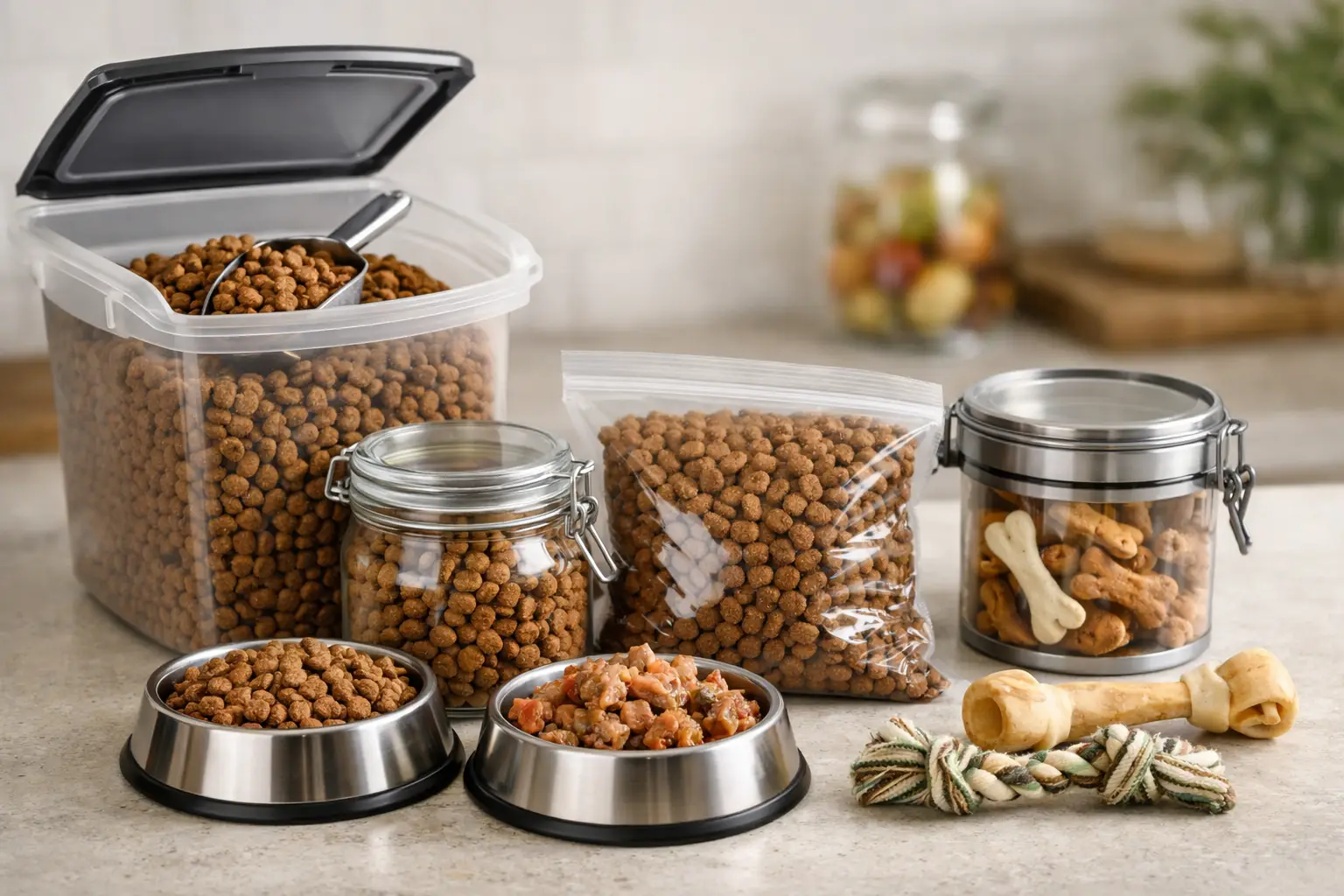
That oversized bag of kibble may feel like a smart stock-up purchase, but it only stays a good value if your dog gets to enjoy it fresh. Knowing how to store dog food helps protect its flavor, texture, and nutritional quality while keeping curious pets, pests, and moisture out of the bowl.
The good news is that safe storage does not require a complicated setup. A cool spot, the right container, and a quick look at the package label will cover most households. Whether you serve dry food, canned recipes, fresh food, or a mix of all three, a few everyday habits can make mealtime easier and safer.
Start with the food’s original packaging. Dog food bags are designed to help protect the product from air, light, and moisture, and the printed lot number and best-by date are useful if you ever have a question about the food. Rather than pouring kibble straight into a bin, place the whole bag inside a clean, dry storage container and fold or clip the bag closed between meals.
This approach gives you the convenience of a pet food container without losing the package information. It also means oils from the food are less likely to build up inside the container, where they can become stale over time. If you do pour food directly into a bin, save the label and clean the bin thoroughly before adding a new bag.
Keep food in a cool, dry indoor area. A kitchen pantry, utility closet, or cabinet away from the stove often works well. Heat can cause fats in food to break down faster, while humidity can lead to clumping or mold. Garages, sheds, porches, and laundry rooms may seem convenient, but temperature swings and damp conditions make them less reliable choices.
Sunlight is another factor. Do not leave food near a sunny window or in a car, even for a short period on a hot day. A sealed container protects against spills and pests, but it cannot fully protect food that is exposed to excessive heat.
The best dog food container is one that keeps food dry, closes securely, and is easy for you to clean. For most dry food, food-grade plastic, stainless steel, or glass containers with tight-fitting lids are practical options. Select a size that holds one bag at a time rather than a giant container that encourages you to combine several bags.
A pet-proof lid can be especially helpful in homes with food-motivated dogs. Some dogs can nose open loose lids, and a late-night kibble raid can cause more than a messy floor. Choose a container with a locking lid if your dog is persistent, or store it in a closed cabinet as an extra layer of protection.
Avoid using containers that once held chemicals, paint, fertilizer, or nonfood items. Even if they look clean, they are not appropriate for pet food. A dedicated food storage container is the simple, pet-approved choice.
When it is time to refill, do not just top off the remaining kibble with a new bag. Finish the old food first, then wash the container with warm, soapy water, rinse it well, and let it dry completely. Moisture left behind can spoil fresh food surprisingly quickly. Washing between bags also removes the oily residue and crumbs that can collect in corners.
Dry kibble is convenient, but its fats and flavor can degrade after the bag is opened. Check the best-by date before buying, especially when choosing a larger bag. Buy an amount your dog can reasonably finish within a few weeks after opening, based on the feeding instructions and your dog’s actual portion size.
A very large bag may cost less per pound, but it is not always the best purchase for a small dog. If one bag takes months to finish, a smaller bag may keep meals fresher and reduce waste. This matters even more for foods with higher fat content or recipes made with fish oils.
Use a scoop reserved only for dog food, and keep it clean and dry. Wet hands, a damp scoop, or a scoop that has touched raw food can introduce moisture and bacteria. It is a small habit that makes a meaningful difference.
Before serving, take a quick look and sniff. Kibble should look consistent and smell like its usual recipe. A sour, rancid, or unusually musty odor, visible mold, bugs, or an odd greasy coating are reasons to stop using the food. When in doubt, choose a fresh bag instead of hoping a questionable one is fine.
Refrigerators and freezers can create condensation when food is brought back to room temperature. That moisture is not helpful for dry food. Room-temperature storage in a sealed bag and container is generally the better option unless the package specifically says otherwise.
Unopened canned dog food can usually stay in a cool, dry pantry. Keep cans off a damp floor and away from direct heat. Before opening, inspect the can. Do not use cans that are bulging, deeply dented along a seam, leaking, or badly rusted.
Once opened, canned dog food belongs in the refrigerator. Cover the can with a fitted lid or transfer the food to a clean, sealed container. Most opened wet food is best used within three to five days, but the package instructions should always have the final say. Write the opening date on a piece of tape if your household tends to lose track.
Fresh refrigerated dog food should remain cold until serving and be used according to its label. If your dog does not finish a portion, refrigerate the leftovers promptly in a sealed container. Food that has sat in a warm bowl for a long time can become less appealing and may not be safe to save. On hot days, pick up uneaten wet or fresh food sooner rather than later.
For frozen dog food, keep it frozen until you are ready to thaw it in the refrigerator. Avoid thawing it on the counter. Once thawed, follow the product directions for how long it can be refrigerated, and do not refreeze food that has been fully thawed unless the label says it is acceptable.
Treat bags often get tossed into a drawer and forgotten, but treats can lose freshness just like kibble. Reseal the original package tightly, or move treats into a small airtight container with the label or date kept nearby. Soft treats are especially likely to dry out when left exposed.
Natural chews and dehydrated treats should be stored in a dry place and inspected before offering. If a chew smells off, shows discoloration, feels sticky when it should be dry, or develops mold, discard it. Toppers and broths may need refrigeration after opening, so check each label instead of assuming they can stay in the pantry.
A little organization makes daily feeding feel effortless. Keep the current bag in a sealed container, the scoop nearby, and wet food lids or portion containers in the same area. Store feeding accessories away from household cleaners, and keep a small spot for checking best-by dates before you open a new item.
If you portion food for daycare, travel, or a pet sitter, use clean, sealed containers and pack only what your dog needs. Dry food travels well at room temperature when kept dry. Wet and fresh food need an insulated bag with ice packs if they will be out of the refrigerator for more than a brief trip.
At Doggodays.shop, pet parents can find everyday feeding accessories alongside the other supplies that keep tails wagging. The right container, scoop, and bowl setup can turn a cluttered feeding corner into a simple routine you actually enjoy.
Your dog may not care whether their food lives in a matching container or a pantry bin, but they will notice a meal that smells good and tastes right. Give every bag, can, and treat a clean, cool home, and mealtime can stay one of the happiest parts of the day.







Leave a comment