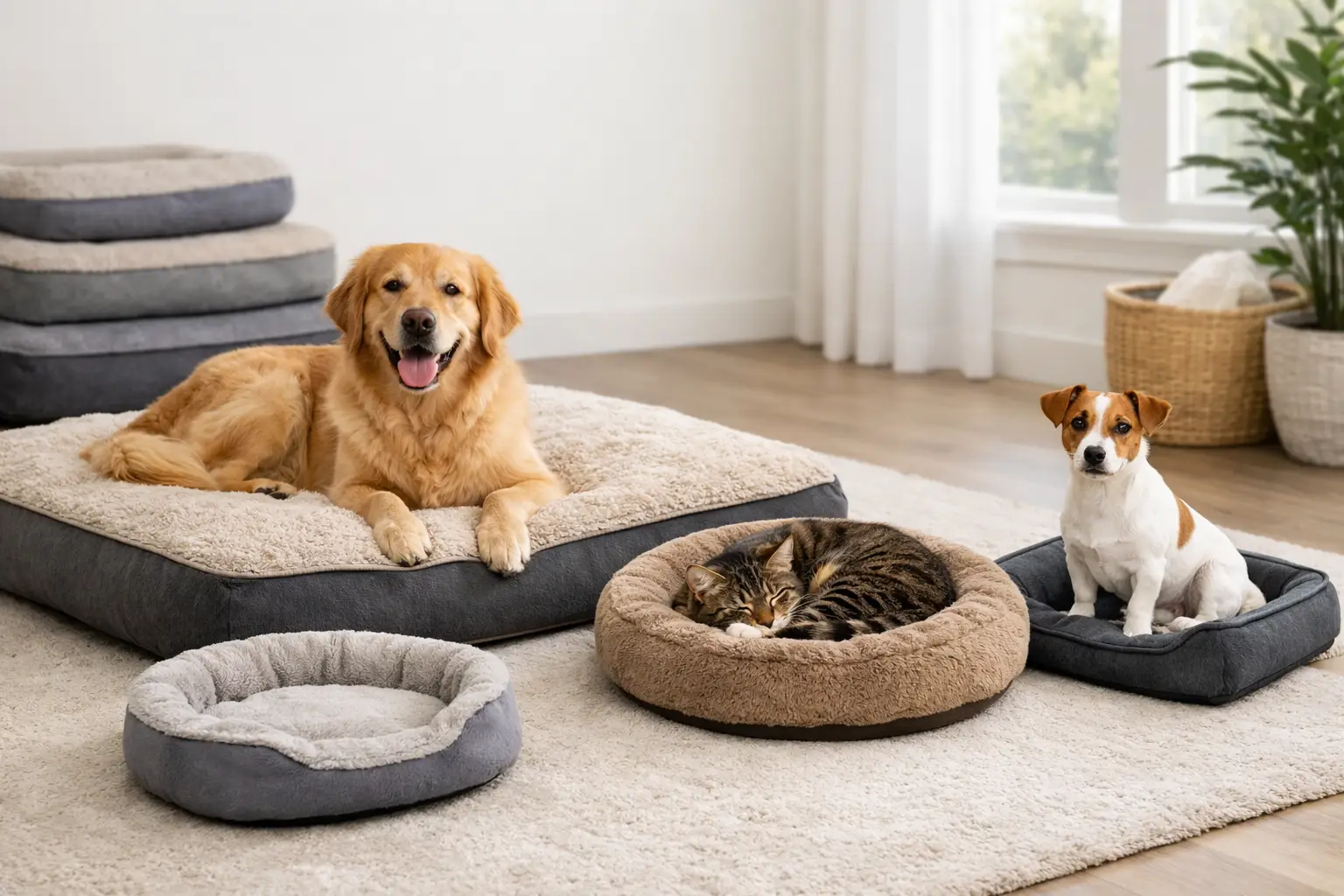
A bed that looks roomy in a product photo can feel surprisingly small once your pet curls up, stretches out, or claims it as their all-day nap spot. If you are asking what size pet bed to buy, the best answer starts with your pet’s sleeping style, not just their weight. A good bed should give them a comfortable place to rest without taking over every inch of your floor.
The right fit helps your pet settle in more easily, keeps their body supported, and makes the bed a spot they choose on their own. Whether you are shopping for a tiny kitten, a long-legged dog, or a senior pet who loves extra cushioning, a few quick measurements can make choosing much simpler.
Start by measuring your pet from the tip of their nose to the base of their tail while they are lying down. Then add 6 to 12 inches, depending on how much they like to stretch. That number is a useful starting point for a flat, rectangular, or mattress-style pet bed.
For a curled-up sleeper, measure the space they take up when tucked into their favorite nap position. Round and oval beds are often a great match for pets that sleep in a little ball, but they still need enough room to reposition comfortably. When in doubt, sizing up is usually safer than buying a bed that is just barely large enough.
Weight can help narrow down product options, especially when beds are labeled small, medium, large, or extra-large. Still, two pets at the same weight can need very different sizes. A 50-pound stocky Bulldog and a 50-pound long-bodied Border Collie may not fit the same bed equally well.
These ranges are a helpful reference, but always compare them with your pet’s actual measurements and the bed’s listed dimensions.
Bed labels vary between manufacturers, so do not rely on the word “large” alone. Check the usable sleeping surface, especially when a bed has thick bolsters or raised sides that reduce the open area in the middle.
Your pet has already shown you what kind of bed they want. Watch where and how they sleep for a day or two. Do they curl tightly against the couch arm? Sprawl across cool tile with all four legs out? Rest their chin on a pillow? Those habits are valuable clues.
A pet that curls up may feel secure in a round cuddler bed with raised edges. Choose a diameter that is at least a few inches wider than their curled body. Cats often enjoy this enclosed, nest-like feel, although a larger cat may prefer an oval bed that lets them change positions without hanging over the edge.
For stretchers, measure from nose to tail base and add at least 8 inches. A rectangular cushion or flat orthopedic bed gives them the open space to extend their legs. Dogs that sleep on their side often need more length than their weight category suggests.
If your pet switches between curling and stretching, choose the larger measurement. A little extra room will not stop them from curling up, but a too-small bed can make stretching uncomfortable.
Size and shape work together. A perfectly sized bed in the wrong shape may still go unused, especially if your pet has strong preferences.
Bolster beds have raised sides that create a cozy border and a built-in headrest. They suit pets that like leaning against furniture, tucking into corners, or resting their heads up while they watch the room. Because the bolsters take up space, look for interior dimensions rather than exterior dimensions when checking fit.
Flat beds and mattress beds are easy choices for dogs that sprawl, older pets that have trouble stepping over high sides, and homes that use crates. They also slide easily under a table or beside a favorite chair. For a crate bed, measure the inside floor of the crate and leave a little clearance so the bed lies flat instead of bunching at the edges.
Donut and round beds are popular for small pets and enthusiastic curlers. Their soft, supportive sides can feel comforting, but the center sleeping area is often smaller than the overall diameter. A 30-inch round bed does not always provide 30 inches of open sleeping space.
Cave beds and covered beds can be a fun option for cats and small dogs that seek quiet, warm spots. Look for an opening wide enough for easy entry and a sleeping area that does not force your pet to crouch or squeeze inside.
A young dog may happily hop into almost any bed, but an older pet may need a different setup. Senior dogs, pets with arthritis, and pets recovering from an injury often benefit from a larger bed with supportive foam and a low front edge. The goal is to give them room to change positions without putting pressure on sore joints.
For these pets, avoid choosing a bed solely because it looks plush. A very soft fill can flatten quickly and offer little support underneath. A thicker orthopedic-style bed may cost more, but it can be a practical everyday choice for a larger dog or a pet that spends many hours resting.
Puppies present another trade-off. Buying a full-size adult bed right away can save you from replacing it later, but a huge open bed may not feel as secure for a very small puppy. Some pet parents start with a cozy smaller bed and move up as their puppy grows. Others use a larger bed with a washable blanket tucked inside to make the space feel more inviting.
Many pets do not sleep on a bare bed. They nest into a blanket, drag in a toy, or use the bed as their personal hangout during the day. If your pet likes to burrow under a throw or carry a plush toy to bed, leave extra room when choosing dimensions.
This matters most with bolstered and covered beds. A bed that fits your pet with no blanket may become cramped once their favorite fleece layer is added. For pets that run warm, however, extra blankets may not be necessary. A breathable, open bed with enough room to shift away from warm spots can be the more comfortable choice.
The biggest bed is not automatically the best bed if it blocks a hallway or ends up squeezed into a corner your pet avoids. Measure the floor space where you plan to place it, then compare that space with the bed’s exterior dimensions.
Think about your pet’s routine, too. A bed placed near the family room may be perfect for a social dog who wants to stay close to everyone. A cat may prefer a quieter bedroom corner away from noisy foot traffic. If your pet has more than one favorite resting place, having a bed in each spot can be more useful than one oversized bed in a less-loved room.
For travel, crates, or car rides, a separate compact bed can be a smart choice. Your pet’s home bed can stay roomy and comfortable, while a smaller washable mat handles adventures, appointments, and overnight visits.
A too-small bed is usually easy to spot. Your pet may sleep with their head, hips, or legs hanging over the edge, circle repeatedly without settling, or choose the floor beside the bed. They may also use the bed only when curled tightly, even though they normally stretch out elsewhere.
An oversized bed is not necessarily a problem, but it may be less appealing to pets that love a snug, den-like feeling. Small dogs and cats sometimes ignore a giant flat bed because it lacks the cozy boundaries they enjoy. In that case, a smaller bolstered bed or a blanket placed in one corner can help create a more secure spot.
The best pet bed size is the one that supports your pet’s usual sleep style, fits their body with room to move, and works naturally in your home. A quick measurement now makes it easier to choose a pet-approved spot they will be excited to curl up in tonight.








Leave a comment