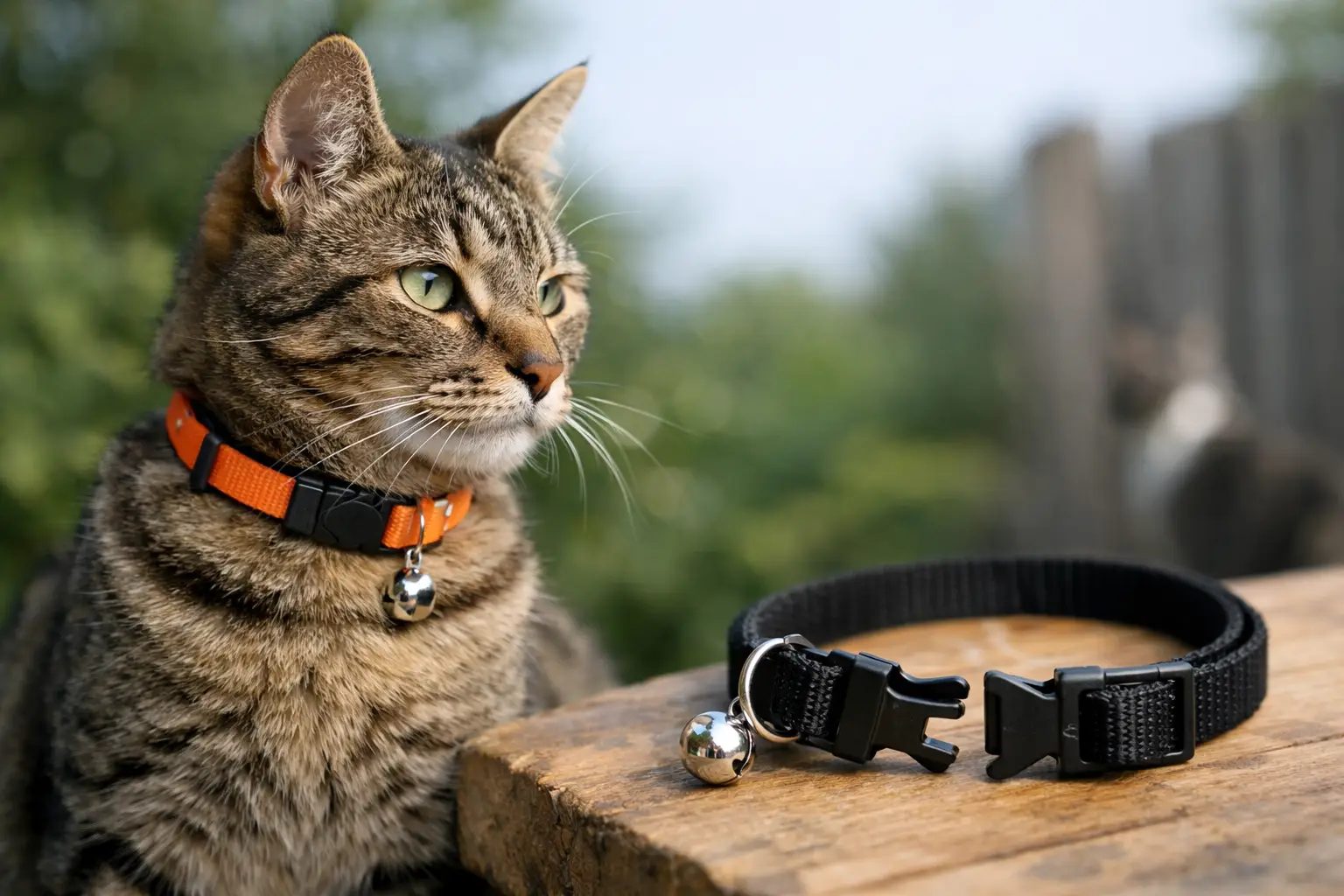
A collar can seem like a tiny everyday accessory, but for a cat, the wrong one can become a snag hazard in a hurry. So, do cats need breakaway collars? For most cats who wear a collar, a breakaway style is the safest choice. It is designed to release under pressure if your cat gets caught on a branch, fence, furniture, crate, or another unexpected obstacle.
That does not mean every cat must wear a collar at all times. Indoor-only cats, outdoor explorers, kittens, and cats with medical needs may each need a slightly different approach. The goal is simple: choose identification and accessories that help keep your cat comfortable and safer without creating a new risk.
A breakaway collar is usually a smart pick for daily wear because cats are famous for squeezing into places they were never invited to explore. They climb, crawl, jump, nap behind furniture, and inspect every corner of the house. A standard buckle collar can catch during these adventures. If that happens, a cat may panic or struggle to pull free.
Breakaway collars have a quick-release clasp that pops open when enough force is applied. The collar stays on during normal movement but releases if it is pulled or snagged. This feature can reduce the chance of a collar trapping your cat.
For cats that go outdoors, the safety benefit is even more relevant. Trees, shrubs, deck rails, wire fencing, and storage areas all create opportunities for a collar to catch. An outdoor cat may still lose a breakaway collar from time to time, but replacing a lost collar is far better than dealing with a dangerous entanglement.
There is one practical trade-off: because the collar can release, it may not stay on forever. Some cats are especially good at shedding collars while grooming, wrestling with a housemate, or slipping through a tight space. If your cat comes home without their collar, check the fit and consider a lighter, better-sized option before switching to a non-breakaway design.
A microchip is one of the most dependable forms of permanent identification, and every cat should have current microchip information whenever possible. Still, a collar with an ID tag gives a neighbor, shelter worker, or good Samaritan an immediate way to contact you. They do not need a scanner, an appointment, or special equipment to read a phone number.
That matters even for indoor cats. A door left open during grocery unloading, a startled dash during a repair visit, or a torn window screen can create a surprise escape. Indoor cats are often unfamiliar with the neighborhood and may hide quietly close to home rather than finding their way back.
A simple breakaway collar paired with an easy-to-read ID tag gives your cat an extra layer of protection. Include your phone number and, if there is room, your cat’s name. Avoid putting a full home address on the tag if you prefer to keep that information private.
Some cats do perfectly well without a daily collar. A cat with a skin condition, an injury around the neck, or a strong sensitivity to collars may need time without one while you speak with a veterinarian. Very young kittens also need careful supervision around any accessory, since they grow quickly and can outgrow a collar faster than expected.
Cats recovering from surgery or wearing a medical cone may be more comfortable collar-free for a short period. The same can be true for cats that repeatedly get their jaw or leg caught in a loose collar, even if it is breakaway. A safety clasp helps, but proper fit and routine checks are still essential.
If your cat does not wear a collar, keeping their microchip registered is especially valuable. A clear, recent photo of your cat on your phone can also be helpful if they ever slip outside.
The best collar is not necessarily the flashiest one. Look for a lightweight collar made for cats, with a true breakaway clasp and an adjustable fit. Cat collars are generally narrower and lighter than dog collars, which helps prevent unnecessary bulk around a smaller neck.
A comfortable material matters, especially for a cat who will wear the collar day and night. Soft nylon, fabric, or smooth webbing can work well when the edges are finished neatly and do not rub. Check the inside of the collar for stiff seams, rough decorative pieces, or loose threads that could irritate your cat’s skin.
The fit should be snug enough that your cat cannot easily slip a paw, jaw, or leg underneath it, but not tight. A common guideline is to slide two fingers between the collar and your cat’s neck. For a tiny cat or kitten, your fingers may take up most of the available space, so use common sense and make sure the collar moves comfortably without pressing into the fur or skin.
Check the collar regularly. Cats can gain or lose weight, kittens grow fast, and fabric collars can stretch with wear. If you notice hair loss, redness, a worn clasp, frayed material, or an ID tag that has become hard to read, it is time for a replacement.
A small bell can help you hear where your cat is sneaking around the house, and some owners like it as a reminder to wildlife that a cat is nearby. However, not every cat enjoys the sound. If your cat seems bothered by a bell or tries constantly to remove the collar, choose a quieter design.
Reflective stitching or a reflective strip can make a cat easier to spot in low light. It is a handy feature for cats who spend time on a porch, in a yard, or near a dimly lit entryway. It should be a bonus feature, though, not a replacement for a visible ID tag and an up-to-date microchip.
Decorative bows, charms, and bulky attachments can be cute, but keep your cat’s habits in mind. A low-profile collar is often the better everyday choice for a climber, a rough-and-tumble player, or a cat who dislikes extra weight around the neck.
This is the most important limitation to remember. A breakaway collar should not be used to attach a leash. The whole point is that it opens under pressure, which means it can release if your cat pulls, gets startled, or changes direction suddenly.
For supervised walks, travel, or outdoor adventures, use a properly fitted cat harness attached to a leash. A harness spreads pressure across the chest and body rather than concentrating it around the neck. Introduce it slowly indoors with treats and short, positive practice sessions. Many cats need time to accept a harness, and some may prefer indoor enrichment over walks outside.
A cat who has never worn a collar may freeze, scratch at it, walk oddly, or act personally offended for the first few minutes. That is normal for many cats. Start with short supervised sessions, then gradually increase the time as your cat becomes comfortable.
Offer a favorite treat, a little playtime, or calm affection while the collar is on. This helps your cat connect the new accessory with something pleasant. If your cat is still intensely distressed after several gentle attempts, remove the collar and reassess the material, weight, and fit.
It can also help to test the breakaway clasp before your cat wears it. You should know how it opens and how firmly it reconnects. The clasp should release with a sharp pull, not pop open every time your cat shakes their head.
For most pet parents, a lightweight breakaway collar, readable ID tag, and current microchip information make a practical safety trio. It gives your cat everyday identification while respecting the fact that cats climb, hide, and get into mischief with impressive determination.
Choose a collar that feels comfortable, check it often, and keep a spare on hand for the occasional disappearing act. Your cat may never thank you for it, but a safe, well-fitted collar is one of those quiet pet-parent choices that can make a big difference when it counts.







Leave a comment