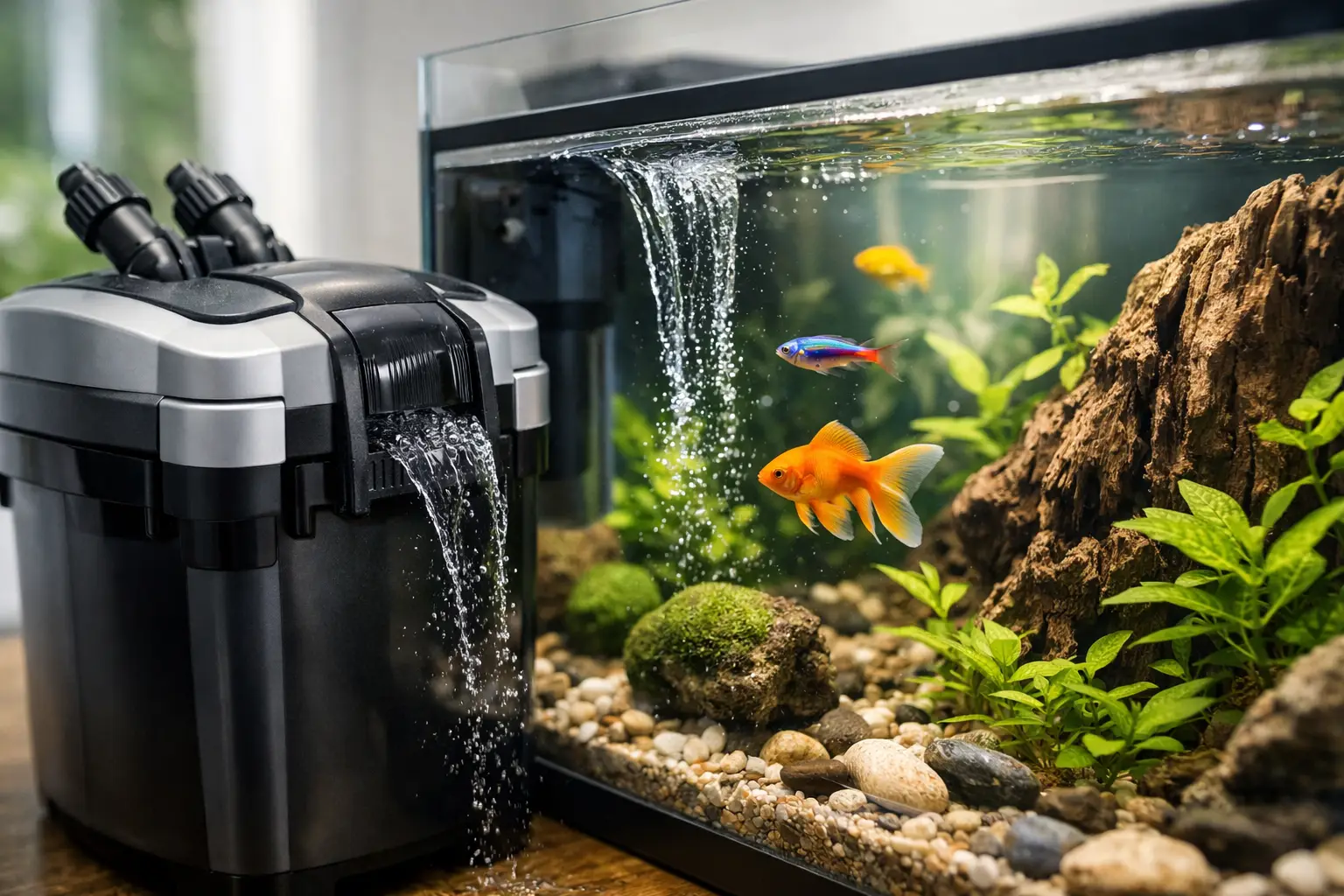
Cloudy water, debris collecting on the gravel, or fish lingering near the surface can turn a relaxing aquarium into a stressful guessing game. This aquarium filter guide makes the choice simpler, whether you are setting up a small first tank or refreshing the equipment on an established aquarium. The right filter helps create cleaner water, steadier conditions, and a more comfortable home for your fish.
A filter does much more than make aquarium water look clear. It moves water through filter media that catches floating waste, supports beneficial bacteria, and may remove odors or discoloration. Those jobs are usually described as mechanical, biological, and chemical filtration.
Mechanical filtration is the physical cleanup step. Sponges, pads, and floss catch leftover food, plant bits, fish waste, and other particles before they settle throughout the tank. It is what helps water look bright and tidy between maintenance days.
Biological filtration is the part fish rely on most. Beneficial bacteria live on filter media and convert toxic ammonia from fish waste into less harmful compounds. A filter is not a substitute for regular water changes, but it gives these helpful bacteria a dependable place to grow.
Chemical filtration, often handled with activated carbon or specialty media, is optional in many everyday setups. It can be useful for removing certain medications after treatment, tannins that tint the water, or unwanted smells. It is not something every aquarium needs all the time.
Start with your tank’s actual water volume, then look at the manufacturer’s recommended tank-size range. Choosing a filter rated for a tank slightly larger than yours is often a smart move, especially if your aquarium has several fish. A 20-gallon tank with a few small fish has very different needs from a 20-gallon tank with messy goldfish.
Water flow matters just as much as capacity. Many active community fish enjoy a moderate current, while bettas, shrimp, baby fish, and long-finned varieties can struggle in strong flow. If the filter seems powerful for your fish, use an adjustable setting if available, redirect the output toward the glass, or soften the current with a sponge attachment.
Hang-on-back filters sit on the aquarium rim and pull water through an intake tube before returning it in a gentle waterfall. They are popular for freshwater tanks because they are easy to access, simple to maintain, and available in sizes for many common home aquariums.
They are a practical choice for beginners who want visible, straightforward filter media. The trade-off is that the waterfall return can be a little noisy if the water level drops, and the intake should be protected if you keep tiny shrimp or fry.
Internal filters sit inside the aquarium and are usually attached to the glass with suction cups. They are compact and can work well in smaller tanks, turtle setups, quarantine tanks, or aquariums where an external unit will not fit.
Because the filter body is underwater, internal filters are often quieter than hang-on-back styles. They do take up space in the tank, though, so placement matters when you are arranging plants, décor, and swimming room.
A sponge filter uses air from an air pump to pull water through a porous sponge. It offers gentle mechanical and biological filtration, making it a favorite for betta tanks, shrimp tanks, breeding tanks, and fry. The soft flow is a major plus for small or delicate aquarium residents.
Sponge filters do not polish water as thoroughly as some other options, particularly in heavily stocked tanks. Still, they are affordable, easy to run, and especially useful as a backup source of beneficial bacteria.
Canister filters are external units that sit below or beside the aquarium and move water through several layers of media. They offer strong filtration capacity and flexible media choices, so they are well suited to larger aquariums, planted tanks, and tanks with bigger or messier fish.
They require more setup than a basic hang-on-back filter, and cleaning one takes a little more time. For a large tank, however, the quieter operation and extra media space can be worth it.
The label on a filter box is a helpful starting point, not a complete answer. Consider the number of fish, their adult size, how much they eat, live plants, and the type of aquarium you keep. Goldfish, cichlids, and turtles produce more waste than a lightly stocked tank of small community fish, so they generally benefit from more filtration and more frequent maintenance.
Planted aquariums can be a little different. Healthy live plants use some waste nutrients, but they do not eliminate the need for a filter or water changes. Choose flow that gently circulates water without constantly bending delicate stems or blasting loose substrate around the tank.
For saltwater aquariums, filtration can include extra equipment such as protein skimmers, live rock, and specialized media. The same basics still apply: stable water movement, plenty of biological filtration, and equipment sized for the tank’s livestock.
Rinse new sponges, cartridges, media baskets, and filter parts with clean water before installation. Do not use soap, household cleaners, or scented products. Even a small amount of residue can be dangerous for fish.
Position the intake where it can draw in water without being blocked by plants or decorations. Aim the output to create gentle circulation across the aquarium. Dead spots, where water barely moves, allow debris to accumulate and can lead to uneven water conditions.
If you are starting a brand-new aquarium, remember that a running filter does not instantly make the tank safe for fish. The beneficial bacteria needed for biological filtration take time to establish. Cycling the aquarium before adding a full fish population helps avoid dangerous ammonia and nitrite spikes.
When replacing an old filter, avoid throwing away all established media at once. That old sponge or ceramic media may hold much of your beneficial bacteria. Move some mature media into the new filter when possible, or run both filters together for a short period so the new one can become established.
A clean filter works better, but an over-cleaned filter can cause problems. The goal is to remove trapped debris while preserving the bacteria that help process waste. During a water change, swish sponges and reusable media in a bucket of old tank water. This clears buildup without exposing the media to untreated tap water, which may contain chlorine or chloramine.
Replace disposable pads or cartridges when they no longer rinse clean or begin to fall apart. If a cartridge contains carbon but is still holding useful bacteria, consider keeping a piece of established sponge or biomedia in the filter so you do not remove all biological filtration at once.
Check the intake tube and impeller regularly. Slime, sand, algae, and plant fragments can reduce flow and make the filter work harder. If the output becomes noticeably weaker, a quick inspection and rinse may be all it needs. Always unplug the filter before taking it apart, and make sure it is properly primed before restarting if your model requires it.
A noisy hang-on-back filter often means the water level is too low or the impeller area needs cleaning. Top off the tank with properly treated water and inspect the moving parts for debris. A rattling internal filter may need to be repositioned so it is securely attached to the glass.
Cloudy water is not always a filter failure. White or milky water in a new tank can be a bacterial bloom, while green water usually points to excess light and nutrients. Brown particles may mean the filter media is clogged or the substrate was recently disturbed. Test the water before making big changes, because clear water alone does not guarantee safe water.
If fish are gasping at the surface, acting unusually still, or showing sudden stress, test ammonia, nitrite, nitrate, and temperature right away. Add surface movement if oxygen seems low, perform an appropriate partial water change, and avoid adding more fish until the water is stable. A filter supports a healthy aquarium, but it cannot correct overstocking or missed maintenance on its own.
A well-matched filter should quietly support the life in your tank rather than dominate it. Give it the right media, a sensible cleaning routine, and fish-friendly flow, and you can spend less time worrying about water quality and more time enjoying the colorful activity behind the glass.
[…] change. Once the water level is back where it should be, turn equipment on again and make sure the filter is flowing […]









Leave a comment