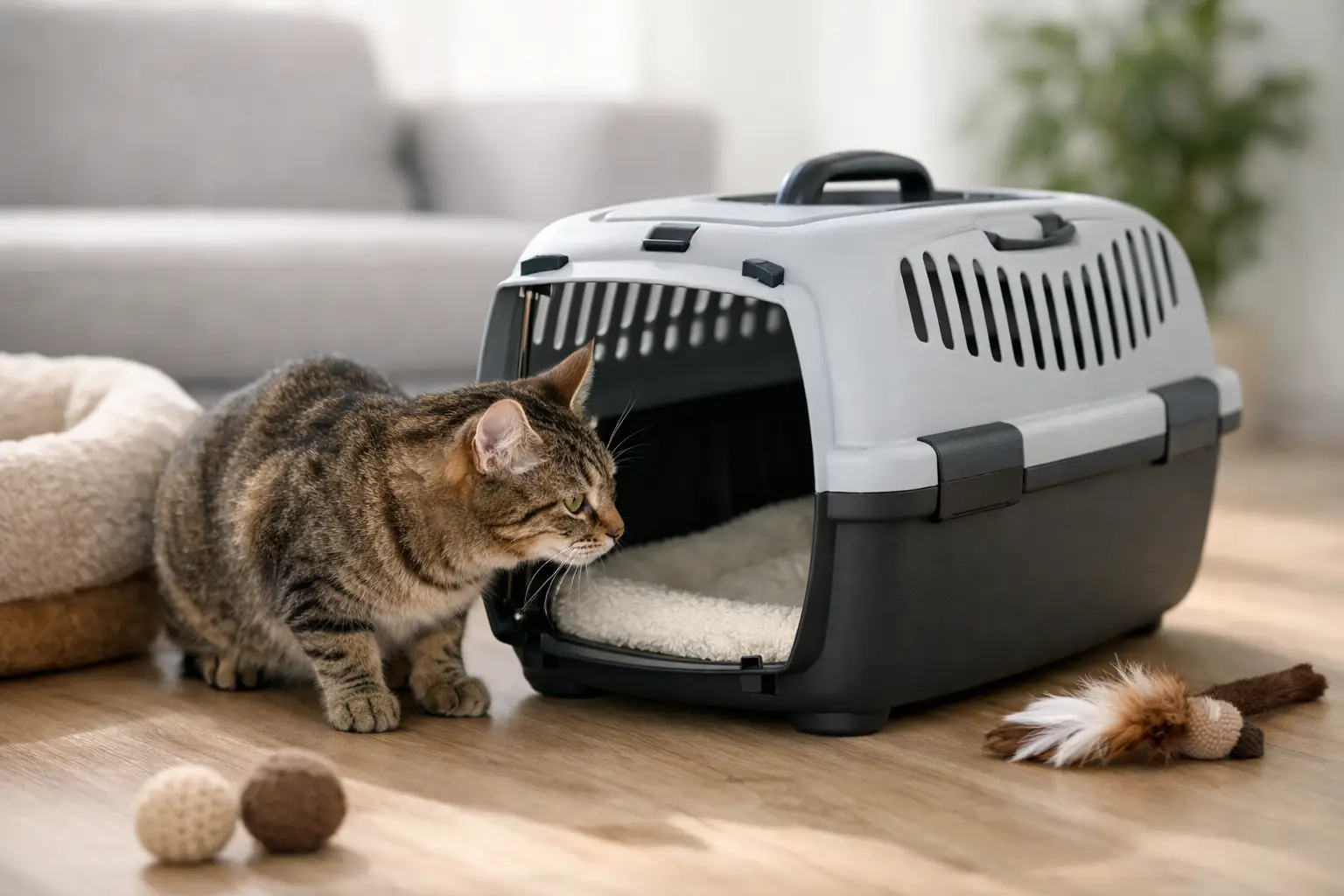
The carrier only appears, your cat vanishes under the bed, and a routine vet appointment suddenly feels like a full-house emergency. Learning how to introduce a cat carrier before you need it can change that pattern. With a little patience, the carrier can become a familiar resting spot instead of a signal that something scary is about to happen.
Most cats do not fear the carrier because it is a carrier. They fear what it predicts: being caught, riding in a noisy car, visiting an unfamiliar place, or getting poked and examined. If the carrier lives in a closet until appointment day, it only ever brings bad news.
The fix is simple, but it is not instant. Give your cat repeated chances to see, sniff, enter, and relax around the carrier when nothing else happens. The goal is not to force your cat to love travel. It is to make the carrier feel ordinary, safe, and worth investigating.
A carrier that is too small, hard to open, or awkward to clean can make every step harder. Your cat should be able to stand up, turn around, and settle down inside without being squeezed. For many cats, a hard-sided carrier with a secure door and a removable top is a practical everyday choice. A top-opening design can also be helpful for cats who dislike being pushed through a front door.
Soft-sided carriers are lighter and convenient for short trips, but some cats feel more secure in a structured carrier that does not shift around. There is no single best option for every cat. Consider your cat’s size, confidence level, and the type of travel you expect to do.
Before introducing it, check that the door latch works smoothly and that there are no rough edges, loose parts, or strong plastic smells. Add a soft towel, small blanket, or bed insert that already smells like home. Familiar scent matters more to cats than a cute new accessory.
Place the carrier in a quiet room where your cat already spends time. Leave the door wide open, and do not point it out, carry your cat toward it, or close them inside. At first, it is simply another piece of furniture.
Put a few treats just outside the entrance. Once your cat is comfortable approaching it, place treats right inside the door, then gradually farther toward the back. You can also place a favorite toy nearby or sprinkle a small amount of catnip if your cat enjoys it. Never use a treat to lure your cat in and then suddenly shut the door. That teaches your cat that entering was a trick.
Some cats step inside on the first day. Others may need a week or two before they put more than their head through the door. Both responses are normal. Let your cat set the pace, especially if they are shy, newly adopted, or have a history of stressful trips.
The most useful step is also the easiest: leave the carrier out. Keep it in a familiar spot with soft bedding inside, even after your cat starts using it. Toss in an occasional treat when you walk by, or serve a small portion of a favorite snack near the carrier.
If your cat begins napping inside, resist the urge to celebrate loudly or take photos right in their face. Let it remain a low-pressure place. Quiet success builds a stronger positive association than attention and excitement.
For multi-cat homes, offer more than one cozy resting option so no cat feels they have to compete for the carrier. If one cat is confident and another is cautious, the cautious cat may learn by watching, but they still need room to approach on their own terms.
Once your cat walks into the carrier willingly and stays there long enough to eat a treat or relax, begin brief door practice. Start by gently moving the door a few inches, then open it again. Reward your cat if they stay calm.
On another day, close the door for one or two seconds, offer a treat through the opening if possible, and open it before your cat becomes upset. Slowly increase the time over several short sessions. A few calm seconds are more valuable than several panicked minutes.
When your cat can stay relaxed with the door closed, lift the carrier just an inch or two, set it down, and open the door. Later, carry it across the room. Keep your movements level and steady, supporting the bottom with both hands. Wobbling carriers can make even a confident cat nervous.
Next, try a very short walk through the house, then a calm minute in the parked car. You do not need to drive anywhere right away. These small practice sessions teach your cat that getting into the carrier does not always lead to a long, upsetting event.
Even a cat that naps in their carrier at home may be nervous when the car starts moving. On appointment day, keep the routine calm and give yourself extra time. Rushing often leads to chasing, grabbing, and a stressful start for everyone.
Place an absorbent pad or familiar towel inside the carrier. Covering part of the carrier with a light blanket can help reduce visual stimulation during the ride, as long as airflow stays clear. Secure the carrier on a flat surface in the car so it will not slide or tip. Do not hold it in your lap.
Avoid opening the carrier outdoors, in a parking lot, or anywhere your cat could escape. Even indoor cats can bolt when startled. At the clinic, keep the carrier elevated if there is a safe chair or bench available, rather than placing it directly on a busy floor near dogs and foot traffic.
If your cat becomes extremely distressed, pants heavily, drools, vocalizes nonstop, or tries to injure themselves during travel, talk with your veterinarian before the next trip. Some cats need additional behavior support or medication for unavoidable travel. That is not a failure of training. It is a kind, practical way to protect your cat’s well-being.
Avoid turning the carrier into a capture tool whenever possible. Chasing your cat around the house, reaching in from above, or tipping a frightened cat into a carrier can make future attempts much harder.
Do not punish growling, hissing, or hiding. Those reactions mean your cat is scared, not stubborn. Step back to an easier stage, such as leaving treats near the open carrier, and rebuild confidence from there.
It also helps not to wash the carrier bedding right before a trip unless it is soiled. A freshly scented fabric softener or detergent smell may be pleasant to people, but familiar home scent is often more reassuring to a cat.
If you have several weeks before an appointment, work in short sessions a few times each week. Leave the carrier out continuously, reward voluntary visits, practice closing the door, then practice gentle lifting and brief car time. Keep each session short enough that your cat finishes calm.
If the appointment is tomorrow, do not try to rush through every training stage. Set the carrier out with familiar bedding, keep the room quiet, and focus on getting your cat in safely with as little chasing as possible. For a frightened cat, a carrier with a removable top can make loading and unloading less stressful than forcing them through a small front opening.
A carrier is one of those everyday pet supplies that earns its place long before travel day. Leave it out, make it cozy, and let your cat decide it belongs in their home. The next time you need it, you may find your cat waiting somewhere much easier to reach.







Leave a comment