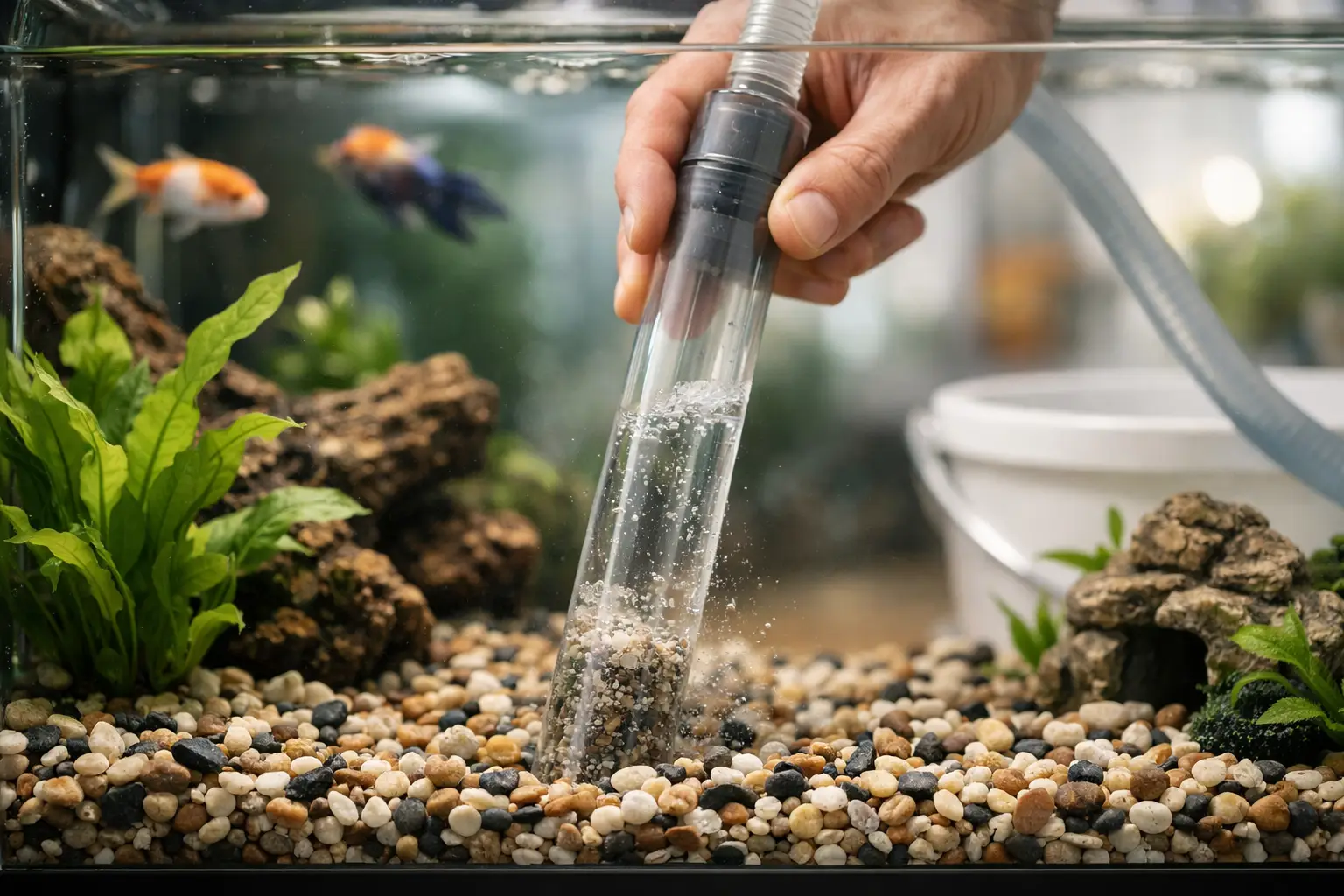
A clean aquarium is one of the simplest ways to help fish look, act, and feel their best. Aquarium gravel cleaning removes the hidden buildup that settles beneath the surface: leftover food, fish waste, plant debris, and other material that can make water quality harder to manage. The good news is that a regular gravel-cleaning routine does not need to turn into a full tank teardown.
For most home aquariums, the goal is not to make every pebble spotless. Gravel holds beneficial bacteria that help process waste, so the best approach is a gentle, consistent clean that freshens the tank without disrupting its natural balance. With the right tools and a little timing, it can become one more easy part of caring for your fish.
Gravel can look clean from the front of the tank while holding plenty of debris between the stones. As that debris breaks down, it adds waste to the water. In a small aquarium especially, water conditions can change quickly, which is why cleaning the substrate is about more than keeping the tank looking tidy.
Regular cleaning helps reduce cloudy water, unpleasant odors, and excess nutrients that may encourage algae growth. It also lets you remove some waste during a water change instead of stirring it around the aquarium. Fish benefit from a cleaner environment, and you get a clearer view of the colorful aquarium you worked hard to create.
That said, more cleaning is not always better. Scrubbing all the gravel at once, replacing every filter media piece, and doing a major water change on the same day can remove too much beneficial bacteria from the system. Steady maintenance is friendlier to fish than occasional extreme cleaning.
A gravel vacuum, also called a siphon, is the main tool for the job. It uses a wide tube to lift debris from the gravel while draining old water into a bucket. Many fish keepers prefer a hand-powered siphon for small and medium tanks because it is simple to control.
Set up a clean bucket used only for aquarium care. Household cleaning residue, soap, or chemicals can be dangerous for fish, so do not use a bucket that has been used for mopping or washing. You will also want water conditioner for the fresh tap water, plus a thermometer if you need help matching the new water to the tank temperature.
For an easy setup, keep these basic aquarium-care supplies together:
Having supplies in one spot makes routine care feel less like a chore. Pet parents building out a fish-care station can find everyday aquarium accessories alongside supplies for other pets at Doggodays.shop.
Start by turning off equipment that may run dry as the water level lowers, such as a filter or heater. Leave the aquarium light off if it makes your fish less active, but there is no need to remove fish from the tank. In fact, catching them for a routine cleaning often causes more stress than calmly vacuuming around them.
Place the siphon’s hose end in the empty bucket and put the larger vacuum tube into the aquarium. Follow the product directions to start the flow of water. Once water is moving, push the wide end gently into a section of gravel. Debris will swirl upward in the tube while the heavier gravel falls back down.
Lift the tube after a few seconds, then move to the next area. Work slowly across part of the tank rather than trying to clean every inch. For a standard weekly or biweekly water change, vacuuming about one-third to one-half of the gravel is usually plenty. Rotate which areas you clean from one session to the next.
Keep an eye on the bucket as it fills. Many established freshwater tanks do well with a 20% to 30% water change, though the right amount depends on tank size, number of fish, filtration, and water-test results. Smaller tanks, heavily stocked tanks, and tanks with messy eaters may need more frequent care. If you are new to fishkeeping, testing the water can help you build a schedule based on what your aquarium actually needs.
When you have removed the planned amount of water, stop the siphon. Refill the tank slowly with tap water treated with conditioner. Try to match the new water’s temperature closely to the aquarium water so fish are not hit with a sudden change. Once the water level is back where it should be, turn equipment on again and make sure the filter is flowing normally.
For many community freshwater tanks, gravel cleaning every one to two weeks works well. Pairing it with a partial water change keeps the routine simple and prevents debris from piling up. A tank with larger fish, goldfish, frequent feeding, or lots of visible waste may need weekly attention.
A lightly stocked planted tank can be different. Live plants use nutrients from fish waste, and some planted-aquarium keepers vacuum less aggressively around root zones. You can still remove obvious debris from open areas while leaving the substrate near delicate plants relatively undisturbed.
The clearest signals are in the tank itself. If debris rises when fish swim near the bottom, the water is becoming cloudy, algae is growing faster than usual, or your water tests show elevated nitrate, it may be time to clean. Do not wait for the gravel to look dirty from across the room. Most of the buildup sits out of sight.
The biggest mistake is treating a gravel vacuum like a deep-cleaning machine every time. A complete substrate clean can disturb helpful bacteria and kick too much debris into the water at once. Clean in sections instead, especially in an established aquarium.
Another common issue is changing too much water at one time. Large water changes can be appropriate in certain situations, but they require careful temperature matching and water conditioning. For everyday maintenance, partial changes are easier for most fish to adjust to.
Avoid rinsing gravel, decorations, or filter media under untreated tap water unless you are starting over with a brand-new setup. Chlorine and chloramine can harm the bacteria that support your tank’s nitrogen cycle. If filter media needs a quick rinse, swish it gently in the bucket of old aquarium water you just removed.
Overfeeding also makes gravel cleaning harder than it needs to be. Offer fish an amount they can eat promptly, then remove any excess food if it remains. Less wasted food in the tank means less decaying material in the substrate later.
A standard gravel vacuum is ideal for medium-sized aquarium gravel, but different substrates need a slightly different touch. Fine sand can get pulled into the siphon more easily, so hold the vacuum just above the surface and let loose debris lift away. Avoid plunging deeply into sand unless you know your substrate is safe to disturb.
For planted substrates or nutrient-rich soil, focus on visible debris and open areas. Heavy vacuuming may uproot plants or pull out the nutrients meant to feed them. Decorative stones and larger pebbles can trap waste in deeper pockets, so move the siphon slowly and check behind ornaments, driftwood, and artificial plants.
No matter what is on the bottom of your tank, the goal stays the same: remove waste while keeping the aquarium stable. A little patience matters more than aggressive cleaning.
Make gravel cleaning part of a calm, repeatable water-change day. Feed lightly beforehand or wait until after maintenance, work in one section at a time, and refill the tank with conditioned water at a similar temperature. Once you get used to the process, most tanks can be refreshed in a short, low-stress session.
Your fish do not need a perfectly polished aquarium floor. They need clean water, reliable care, and a home that stays comfortably balanced – and a gentle gravel-cleaning routine helps provide exactly that.









Leave a comment