A puppy zooming through the living room, a delivery at the door, a work call you cannot step away from – these are the moments when the dog crate vs playpen decision becomes more than a shopping question. Both tools can give your dog a safe, comfortable place to settle, but they do different jobs. The best choice depends on your dog’s age, habits, home setup, and how long they need to stay contained.
A crate is usually the better choice for sleep, travel, and focused potty training. A playpen gives a dog more room to move, play, and relax while staying out of trouble. Many pet parents find that using both makes daily life easier, especially during the puppy stage.
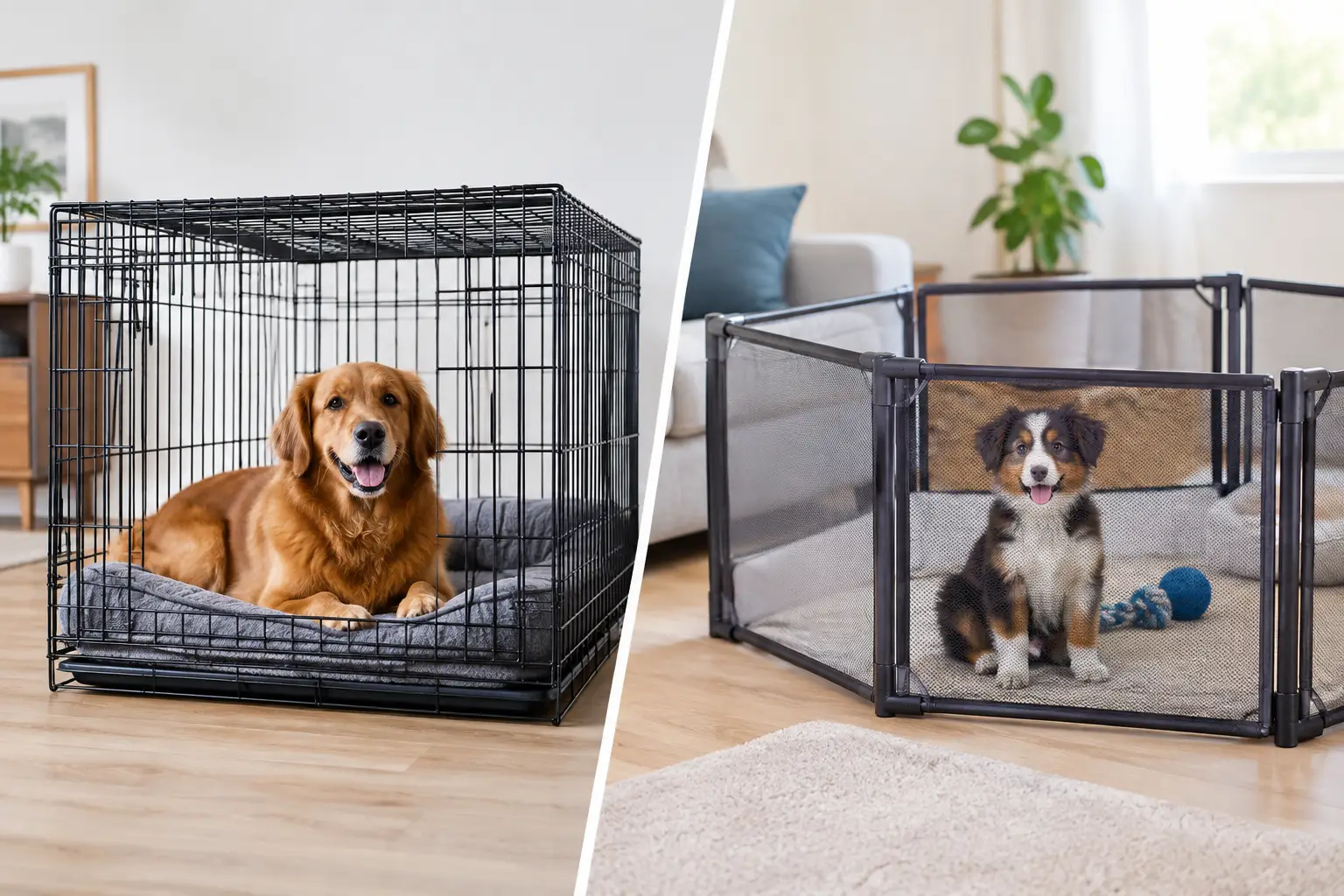
A dog crate is an enclosed, den-like space. It is designed for rest and short periods of safe confinement, and it can help a dog learn that settling down is part of the routine. Crates come in wire, plastic, soft-sided, and furniture-style designs, so you can choose one that fits your dog’s needs and your home.
A playpen, sometimes called an exercise pen or x-pen, is a larger enclosed area. It gives your dog room to stand, stretch, walk around, play with a toy, and access water. Some pens are freestanding, while others attach to a crate or can be shaped to fit a corner of a room.
Think of a crate as a bedroom and a playpen as a small, puppy-proofed room. Neither is automatically better. What matters is using the right space at the right time.
Crates are especially helpful when you are building predictable routines. Puppies often need frequent potty breaks, naps, and close supervision. A correctly sized crate can support house training because most dogs prefer not to soil the area where they sleep. It also gives you a clear starting point for teaching calm, independent rest.
For adult dogs, a crate can be useful during travel, overnight sleeping, recovery from an injury when directed by a veterinarian, or busy household moments. Guests may not be comfortable around dogs, for example, or your dog may need a quiet break from a noisy gathering. A familiar crate, paired with a cozy bed or crate mat, can feel reassuring rather than restrictive.
Your dog should be able to stand without crouching, turn around easily, and lie down in a natural position. A crate that is too small is uncomfortable. One that is far too large can make potty training harder for a young puppy, since they may use one end as a bathroom and the other as a sleeping area.
If you are buying for a growing puppy, a wire crate with a divider panel is a practical option. You can adjust the sleeping space as your puppy grows instead of replacing the crate right away. Add comfortable bedding only if your puppy will not chew or shred it when unsupervised.
A crate is not a place to park a dog for an entire workday. Puppies need regular bathroom trips, meals, social time, movement, and training. Adult dogs also need exercise, enrichment, and human connection before and after time in a crate.
The exact amount of time a dog can comfortably spend crated varies. Age, health, bladder control, temperament, and daily activity all matter. When in doubt, choose more breaks and a more generous routine. If your dog is suddenly having accidents, panicking, or showing distress around the crate, reassess the setup and speak with your veterinarian or a qualified trainer.
A playpen is a great middle ground when your dog needs boundaries without being in a small sleeping space. For puppies, it can hold a bed, water bowl, a few safe chew toys, and a designated potty area if needed. This gives you a manageable place for supervised play while you cook dinner, answer emails, or fold laundry nearby.
Playpens also work well for small dogs, senior dogs who need a low-key area, and dogs recovering from excitement-related habits such as jumping on visitors. Because there is more room, a pen is generally more comfortable than a crate for longer daytime periods, provided your dog has been introduced to it calmly and the setup is safe.
A pen can be especially useful when a puppy is learning the difference between playtime and free access to the whole house. Rather than following them from room to room and saying “leave it” every few minutes, you can give them a safe zone stocked with pet-approved entertainment.
Location matters. Place the pen in an area where your dog can still feel part of the household, not isolated in a distant room. Keep it away from stairs, cords, houseplants, small objects, and anything your dog could grab through the sides.
For most dogs, include water, a comfortable resting spot, and a limited selection of durable toys. Too many toys can create clutter and make it harder to notice if something has been chewed apart. Rotate toys to keep the space interesting. If your puppy is not fully house-trained, use a floor protector or a puppy pad holder only as part of a clear training plan, not as a reason to delay outdoor potty routines.
Check the pen’s height and stability. Athletic puppies and determined adult dogs may climb, push, or jump over a low pen. A taller model or a secure cover may be needed, but ventilation should never be blocked. Always supervise at first until you know how your dog responds.
Absolutely. A crate-and-pen setup is often one of the most flexible options for a new puppy. Place the crate inside or alongside the playpen with the crate door open. Your puppy can choose the crate for naps while still having room to play in the pen.
This arrangement helps the crate stay associated with rest instead of feeling like a sudden separation. It also gives your puppy a consistent home base while you gradually introduce more of the house. As reliability improves with potty training and chewing habits, you can slowly expand their freedom.
For adult dogs, the combination can work in a home office, apartment living area, or any spot where you want a contained comfort zone. Some dogs love having an open crate inside their pen because it creates a familiar place to retreat from activity.
The goal is for your dog to see the crate or pen as a good place, never as punishment. Start with the door or gate open. Toss in a favorite treat, offer a meal nearby, or give your dog a safe chew while they explore. Let them enter and leave voluntarily at first.
Once your dog is comfortable, close the door or gate for very short periods while you stay close. Build time gradually and keep your return calm. Big emotional greetings can make departures and arrivals feel more dramatic than they need to be.
Avoid forcing a fearful dog into a crate or pen. Whining can sometimes be a normal adjustment, but frantic escape attempts, heavy drooling, repeated panic, or self-injury are signs to slow down. A trainer can help you create a plan that fits your dog’s individual needs.
Choose a crate if your priority is sleeping, travel, potty-training structure, or a quiet place to rest. Choose a playpen if your dog needs a safer area with room for movement, water, and toys during supervised daily life. Choose both if you want an adaptable setup that can grow with a puppy or support a dog with changing needs.
Before you shop, measure the space where the crate or pen will go and consider your dog’s full-grown size, energy level, and ability to chew or climb. Doggodays.shop makes it easy to pair a containment setup with everyday essentials such as beds, toys, feeding accessories, and grooming supplies.
The best setup is the one your dog learns to enter with relaxed body language and a happy expectation. Add comfort, keep the routine fair, and let that space become a small, dependable part of your dog’s big, well-loved life.









Leave a comment