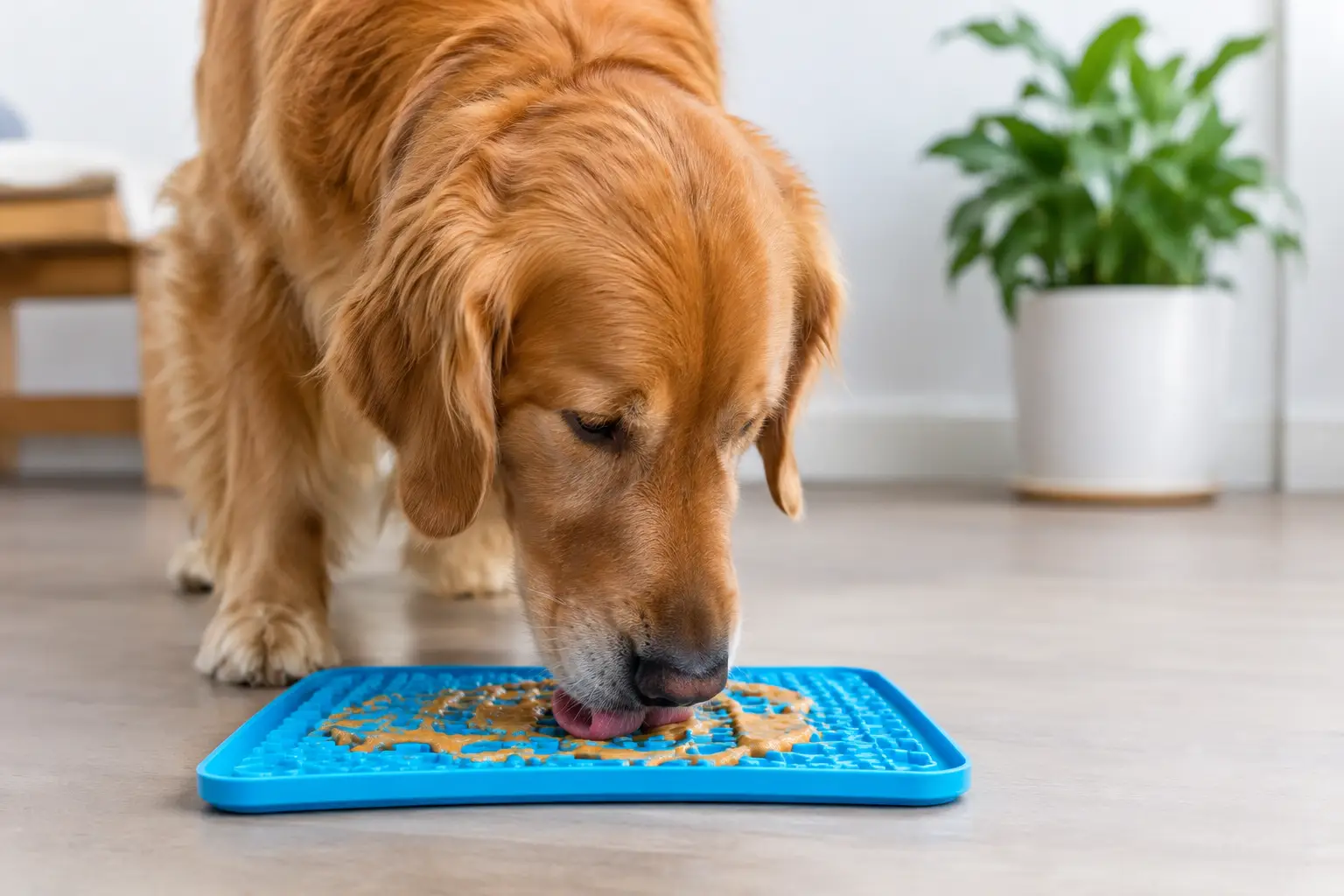
A lick mat can turn a few spoonfuls of dog-safe food into a calming activity, but good lick mat instructions matter just as much as the treat you spread on it. Used well, this simple feeding accessory gives dogs something satisfying to focus on during quiet time, grooming, crate rest, or those busy moments when you need them happily occupied nearby.
The best part is that you do not need complicated recipes or a pantry full of specialty items. Start with a clean mat, choose an appropriate spread, and supervise your dog as they learn. A little preparation helps make lick-mat time fun, safe, and easy to repeat.
Before serving a lick mat, check that it is the right size and texture for your dog. A small dog may do best with a compact mat and a thin layer of food, while a larger dog may need a larger surface to stay interested. If your dog is a powerful chewer, a standard soft silicone mat may not be the best choice unless you can watch closely. Lick mats are made for licking, not chewing.
Wash the mat before its first use with warm, soapy water, then rinse it thoroughly. Place it on a stable surface where your dog can settle comfortably. For enthusiastic lickers, a mat with suction cups can be pressed onto clean tile, a smooth floor, or the side of a tub during bath time. Always test the grip first. If the mat slides around, move it to a flatter, more secure spot.
Begin with a very small amount of food. Your dog does not need every groove packed full for the activity to work. A thin layer gives them the fun of licking without turning a snack into an oversized meal.
Soft, spreadable foods work best because they press into the textured surface and take longer to lick away. Plain pumpkin puree, unsweetened applesauce, plain Greek yogurt, wet dog food, mashed banana, or dog-safe peanut butter are popular choices. You can also soften your dog’s usual kibble with warm water and mash it into a paste.
Read ingredient labels carefully, especially on peanut butter and yogurt. Never use foods containing xylitol, which may also be listed as birch sugar. Xylitol is highly dangerous for dogs. Avoid chocolate, grapes, raisins, onions, garlic, alcohol, macadamia nuts, and any food your veterinarian has told you to avoid.
Some dogs have sensitive stomachs, food allergies, or dietary limits. In those cases, their regular wet food or a veterinarian-approved topper is often the simplest choice. Rich foods may be tempting, but too much dairy, fatty peanut butter, or unfamiliar ingredients can lead to digestive upset. When trying a new spread, offer a small amount first and see how your dog does.
For everyday use, keep toppings simple and portion-aware. A light smear of wet food is a great option for dogs who need to stick to their usual diet. For an occasional cool treat, mix plain yogurt with pumpkin puree, spread it thinly, and freeze it.
You can make the experience more interesting by combining two compatible foods in different sections of the mat. For example, use mashed banana in one area and plain pumpkin in another. Skip added sugar, salt, seasonings, and fancy human-food leftovers. Simple is usually better for both your dog and cleanup.
Use a spoon, butter knife, or flexible spatula to press the food into the mat’s grooves. Spread it across the surface in a thin, even layer. Pushing food into the texture, rather than leaving a big mound on top, encourages slower licking and gives your dog a longer activity.
For a first introduction, serve the mat at room temperature and stay nearby. Let your dog investigate it on the floor or in their regular feeding area. Many dogs understand the idea immediately. If yours seems unsure, let them lick a small taste from the spoon first, then place the mat down.
Once your dog is comfortable, you can use the mat strategically. Offer it before a calm grooming session, when visitors arrive, or while you prepare dinner. It can also be useful during a bath when secured to a smooth wall at a comfortable height. The goal is not to force your dog to tolerate something stressful, but to pair a routine moment with a pleasant, food-based distraction.
Keep sessions short at first. Pick up the mat when your dog has finished, or sooner if they begin biting at the edges. If chewing starts, calmly trade the mat for another appropriate toy and try again another day with closer supervision.
Freezing a prepared lick mat makes the treat last longer, especially for dogs who clear a fresh mat in minutes. After spreading the food, set the mat flat in the freezer until firm. A frozen mat can be especially refreshing on warm days or helpful when you need a little more quiet time.
The trade-off is that frozen food can be too challenging for some dogs, particularly puppies, seniors, or dogs with dental sensitivity. Start fresh before moving to frozen. You can also chill the mat in the refrigerator for a gentler version that still slows down licking.
Do not leave a frozen mat out for long periods. Serve it, supervise your dog, and remove any remaining food once the session is over. This keeps the treat fresh and prevents the mat from becoming a tempting chew item after the food is gone.
A lick mat is an enrichment tool, but the calories still count. Peanut butter, cheese, and full-fat yogurt can add up quickly, especially for small dogs or pups working toward a healthy weight. If you use treats on a lick mat, reduce the amount of treats offered elsewhere that day when appropriate.
A good everyday approach is to use part of your dog’s normal meal. Wet food, softened kibble, or a small portion of their regular topper makes lick-mat time feel special without adding lots of extras. For puppies, use tiny portions and choose foods that fit their current feeding plan.
If your dog has diabetes, pancreatitis, kidney concerns, allergies, or a prescription diet, ask your veterinarian which lick-mat foods make sense. The mat itself can still be enjoyable, but the topping needs to match your dog’s health needs.
Food can dry deep in the grooves, so clean a lick mat promptly after each use. Rinse it right away, then wash with warm water and dish soap, using a soft brush if needed to reach the textured areas. Check the product care instructions before putting it in the dishwasher, since dishwasher safety varies by material and design.
Let the mat dry completely before storing it. While cleaning, inspect it for cracks, torn edges, loose suction cups, or chew marks. Replace a damaged mat rather than continuing to use it. Small pieces of silicone can become a swallowing hazard if a determined chewer tears them off.
The most common mistake is loading the mat with too much rich food. A thick layer may seem generous, but it can mean excess calories and a messy cleanup. Another is leaving the mat with a dog who has already shown they like to chew rubber or silicone.
It is also wise not to rely on a lick mat as the only answer for anxiety or boredom. It can support calm moments and add variety to your dog’s day, but dogs still need exercise, training, rest, and time with their people. Think of it as one pet-approved part of a balanced routine.
With a safe spread, a sensible portion, and a few minutes of supervision, a lick mat can become one of those small everyday comforts your dog looks forward to. Keep a few easy toppings on hand, and you will always have a simple way to make quiet time feel a little more rewarding.








Leave a comment