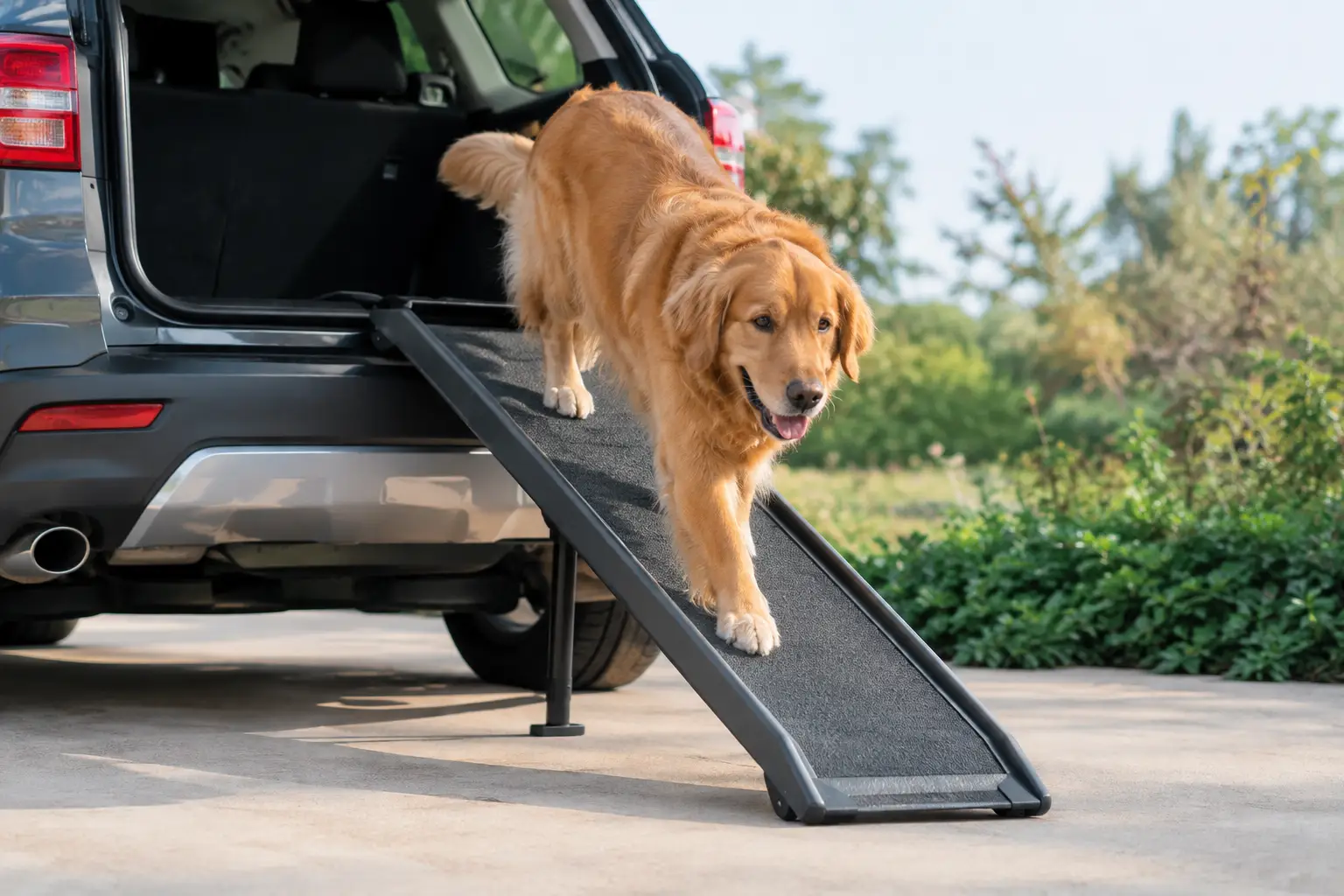
A jump into an SUV can feel routine when your dog is young and springy. For a senior dog, a short-legged breed, or a pup recovering from an injury, that same jump can be uncomfortable and risky. The best dog car ramps make getting in and out of the vehicle easier on your dog’s joints while giving you one less thing to worry about before a walk, vet visit, or weekend getaway.
A ramp is not just for dogs with mobility challenges, either. Repeated jumping down from a high cargo area puts pressure on the shoulders, elbows, hips, and knees. Starting a ramp habit early can be a simple, pet-friendly way to support comfortable travel at every life stage.
Dog car ramps create a gradual path between the ground and your vehicle. That matters most for larger SUVs, trucks, vans, and crossovers, where the drop can be significant. They can be especially helpful for dachshunds and other long-backed dogs, small breeds that cannot safely clear the height, and big dogs that are hard to lift without straining your own back.
The right ramp also gives your dog more independence. Instead of waiting to be picked up, many dogs learn to walk up and down with confidence. That can make everyday errands, boarding drop-offs, and family road trips feel calmer for everyone.
Still, a ramp is not automatically the right choice for every dog. Some dogs prefer steps because each step feels more familiar, while others find a ramp easier because it offers a smooth walking surface. Vehicle height, available cargo space, and your dog’s confidence all shape the best option.
Always check the stated weight capacity before adding a ramp to your travel setup. Choose a model rated comfortably above your dog’s current weight rather than one that only just meets it. The extra margin helps support stable use, especially when your dog pauses, turns, or walks toward one side of the ramp.
Weight limit is not the same as ramp width. A sturdy ramp may support a large dog but still feel too narrow for a broad-chested breed. Think about how your dog naturally walks, not only the number on the scale.
Ramp length affects the slope. A longer ramp usually creates a gentler incline, which is easier for senior dogs, dogs with arthritis, and pups new to using a ramp. The trade-off is storage: longer ramps may take up more room in the cargo area.
Measure from the ground to the spot where the ramp will rest, whether that is the back bumper, cargo floor, or side door. A ramp that works beautifully with a sedan may be too steep for a lifted SUV. If you use more than one vehicle, choose a design that fits the taller one first.
Grip is one of the most valuable features to look for. A textured surface, carpet-like tread, or high-traction rubber gives paws a more secure foothold, especially in wet grass, rain, or dusty parking lots. Smooth plastic alone can feel slippery and may make a hesitant dog refuse the ramp.
Look at the ramp’s top contact points, too. Non-slip feet or rubber grips help keep it from shifting at the ground and vehicle edge. A ramp should feel planted before your dog takes the first step.
A narrow ramp can make even a steady dog feel like they are walking a balance beam. Smaller dogs may be fine with a compact width, but medium and large dogs generally benefit from more room to place their paws naturally.
If your dog has poor vision, weak rear legs, or an anxious personality, extra width can make a noticeable difference. The goal is not to squeeze them up a ramp. It is to give them a path that feels safe enough to use without a struggle.
The ramp needs to stay in position where it touches your vehicle. Many styles use a raised lip, padded edge, or stabilizing design that rests against the bumper or cargo floor. Before every use, make sure the contact point is clean and secure, and avoid placing the ramp on loose gravel or slick ice.
A good fit protects more than your dog. Padding can help prevent scratches on the vehicle, while a stable connection reduces the chance of the ramp slipping away as your dog steps on.
Foldable dog ramps are a popular choice for pet parents who want to tuck the ramp into a trunk, garage, or closet. Telescoping ramps can be another space-saving option, often adjusting to different lengths. Lightweight designs are easier to carry, but make sure lighter construction does not mean a wobbly feel for your dog.
Think about who will lift and set up the ramp most often. A heavy-duty model may be worth it for a large dog, but it is only useful if you can comfortably handle it. For frequent quick trips, an easy-fold ramp with a carry handle can make a big difference.
Plastic ramps are usually lighter and simple to wipe clean. Aluminum designs can offer strong support with relatively low weight, while some ramps use fabric or carpet-style surfaces for extra traction. Each option has a place depending on your dog and your climate.
For muddy park visits or beach days, choose materials that are easy to rinse and dry. For dogs that track snow into the car, a surface that maintains grip when damp is a smart pick. If the ramp will live outside between uses, check that the materials are suited for weather exposure.
For small dogs, low weight and portability may be the priority, but do not overlook traction. Tiny paws can slip just as easily as large ones. Short-legged dogs often need a longer, lower-angle ramp even when they weigh very little.
For large dogs, focus on capacity, width, and stability. A ramp that flexes or shakes can discourage use, particularly for dogs that are already unsure on unfamiliar surfaces. Bigger breeds may need a wider model with a firm base and a generous weight rating.
Senior dogs and dogs with joint concerns usually benefit from the gentlest slope you can reasonably fit. Consult your veterinarian if your dog has a recent injury, has had surgery, or shows pain when walking. A ramp can support easier access, but it does not replace professional guidance for mobility issues.
The first attempt should not happen in a rushed parking lot. Set the ramp flat on the ground at home and let your dog sniff it. Reward calm interest with a favorite treat, cheerful praise, or a toy. Once they are comfortable walking across it, place one end on a low, stable surface and practice again.
When it is time to use the car, keep the sessions short. Stand beside your dog, use a familiar cue, and reward every successful trip up or down. Never pull your dog up the ramp by the collar or rush them over a surface that feels scary.
Some dogs need a few days of practice, while others understand immediately. If your dog freezes, slides, or repeatedly jumps off the side, pause and reassess the angle, width, and traction. The best ramp is the one your dog will actually use with confidence.
Before your dog climbs, make sure the ramp is fully opened or extended, locked if the design includes locks, and resting securely against the vehicle. Check for cracks, loose tread, muddy feet, and worn rubber grips. Keep your dog on a leash during training or in busy areas so they do not dart into traffic after reaching the ground.
After the ride, fold or retract the ramp carefully and store it where it will not slide around while driving. A clean, dry ramp is more inviting for your dog and easier to grab for the next outing.
The right car ramp turns a high jump into a calm, familiar routine. Choose one that suits your vehicle and your dog’s stride, then give your pup time to practice. Soon, the open car door can mean what it should mean: another happy adventure together.










Leave a comment