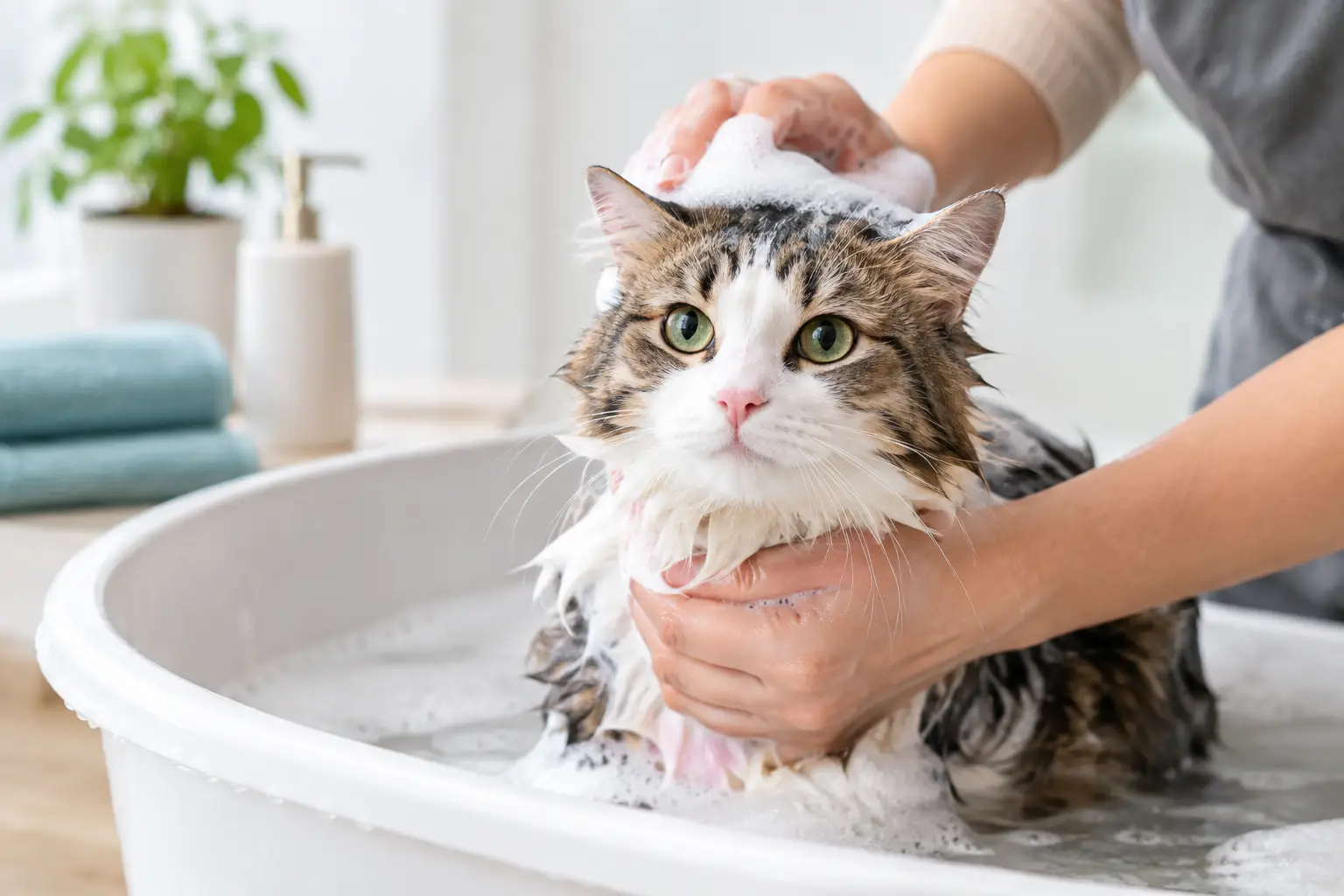
A cat who steps in something sticky, gets into a dusty corner, or comes home with a mystery mess may need more than a quick brush. These cat bathing tips can help you handle cleanup without turning bath time into a stressful event for either of you. The goal is not a spa day. It is a short, gentle reset that keeps your kitty clean, dry, and feeling secure.
Most cats are impressive self-groomers, so regular full baths are rarely necessary. When one is needed, a little preparation makes a big difference. Set up your supplies first, work calmly, and keep the experience as brief as possible.
A bath makes sense when your cat has something on their coat that they should not lick off, such as grease, dirt, litter residue, or a pet-safe topical mess. Long-haired cats may also need extra help if their fur becomes soiled around the back end. Senior cats, cats with mobility issues, and some cats with skin conditions can have trouble grooming themselves effectively.
That said, not every dirty-looking coat calls for running water. A gentle brush can lift loose fur and dust, while a warm, damp washcloth can handle small spots on paws or fur. For minor messes, a cat-safe grooming wipe may be the easier choice.
If your cat has ongoing greasy fur, flakes, bald patches, a strong odor, or irritated skin, skip the home experiment and call your veterinarian. Skin problems can have several causes, and the right shampoo depends on what is going on.
The best bath setup is small, warm, quiet, and ready before your cat enters the room. A bathroom with the door closed works well because it limits escape routes and distractions. Use a sink, tub, or plastic basin with a non-slip mat or folded towel on the bottom. Cats feel more secure when they can stand without sliding.
Gather everything within arm’s reach:
Use lukewarm water, not hot water. Fill the basin with only a few inches so your cat can stand comfortably. Running water can be startling, so filling the basin before bringing your cat in is usually kinder and faster.
Never substitute human shampoo, dish soap, essential oils, or dog flea shampoo unless a veterinarian has specifically directed you to use a certain product. A cat’s skin is sensitive, and some ingredients that are fine for people or dogs can be irritating or unsafe for cats.
Water can make mats tighten, especially in long or thick fur. Brush your cat before the bath and gently work through any loose tangles. If you find a tight mat close to the skin, do not pull at it or cut it with household scissors. A professional groomer or veterinarian can remove it safely.
Bring your cat into the bathroom with a calm voice and steady movements. If another adult can help, one person can support and reassure the cat while the other does the washing. For many cats, though, a single confident person and a short routine are less overwhelming than extra activity.
Place your cat on the non-slip surface and keep one hand gently on their body. Start by wetting the shoulders, back, sides, and tail with a cup of water. Avoid the face, ears, and eyes. Move slowly, but do not drag out the process. A calm, efficient bath is usually better than repeated attempts to make it perfect.
Use a small amount of cat shampoo and work it through the dirty areas with your fingers. Focus on the coat, not vigorous scrubbing against the skin. Pay attention to the belly and rear only if those areas need cleaning, since many cats dislike being handled there.
Rinse thoroughly with clean lukewarm water. Shampoo left behind can cause itchiness and encourage extra licking. Keep rinsing until the water runs clear and the fur no longer feels slick. If your cat becomes frightened or starts struggling hard, pause. Safety matters more than finishing every last detail.
A cat’s face usually does not need shampoo. For a dirty chin, cheeks, or forehead, use a separate damp washcloth and wipe gently away from the eyes and nose. Do not pour water over your cat’s head or spray directly toward their face. This simple adjustment can make the entire experience much easier.
As soon as rinsing is done, wrap your cat in a clean, absorbent towel. Blot and press the towel into the coat rather than rubbing roughly, which can tangle fur and irritate sensitive skin. Switch to a dry towel if the first one becomes soaked.
Keep your cat in a warm, draft-free room until their coat is dry. Many short-haired cats will finish drying on their own after a good towel-off. Long-haired cats may need more towel time and gentle combing as the fur dries to prevent tangles.
Hair dryers are a mixed bag. Some cats tolerate a dryer on the lowest heat and lowest airflow setting from a distance, but many find the sound frightening. If your cat shows signs of stress, such as flattened ears, rapid breathing, growling, or frantic escape attempts, turn it off. Never use high heat, and never leave a dryer aimed at one spot.
The first bath does not have to set the tone forever. Cats often respond better when they learn that the bathroom, towel, and handling are not automatically scary. On a day when no bath is needed, let your cat explore the dry tub or sink with a few treats nearby. Briefly touch their paws, shoulders, and tail while offering praise, then stop before they get annoyed.
You can also practice tiny steps. Place your cat on a dry towel for a few seconds, reward them, and let them leave. On another day, use a damp washcloth on one paw. These small, low-pressure moments can build tolerance much better than forcing a full bath when there is no urgent reason.
Rewards should fit your cat. A favorite treat, a little wet food, gentle praise, or quiet time in a cozy bed can all help create a better association. Doggodays.shop makes it easy to keep everyday grooming essentials, soft towels, brushes, and comfort items together when your household has pets of every kind.
Some cats simply do not do well with home baths, and that is okay. A cat who bites, panics, breathes with an open mouth, or becomes impossible to handle needs a different plan. Trying to push through can lead to injury for you and more fear for your cat.
Call a veterinarian if your cat has gotten into a potentially toxic substance, such as paint, chemicals, automotive fluids, or an unknown sticky product. Do not wait for a bath if you are unsure whether something is safe to lick. Your vet can tell you whether bathing is appropriate and what product, if any, should be used.
For routine grooming challenges, a cat-experienced professional groomer may be worth considering, particularly for a heavily soiled long-haired cat or a cat with recurring mats. The right help can turn a stressful chore into a manageable part of your pet-care routine.
A clean cat is nice, but a calm, safe cat is better. Keep baths rare, keep supplies simple, and let gentle spot-cleaning and regular brushing do most of the work between the occasional splashy cleanup.








Leave a comment