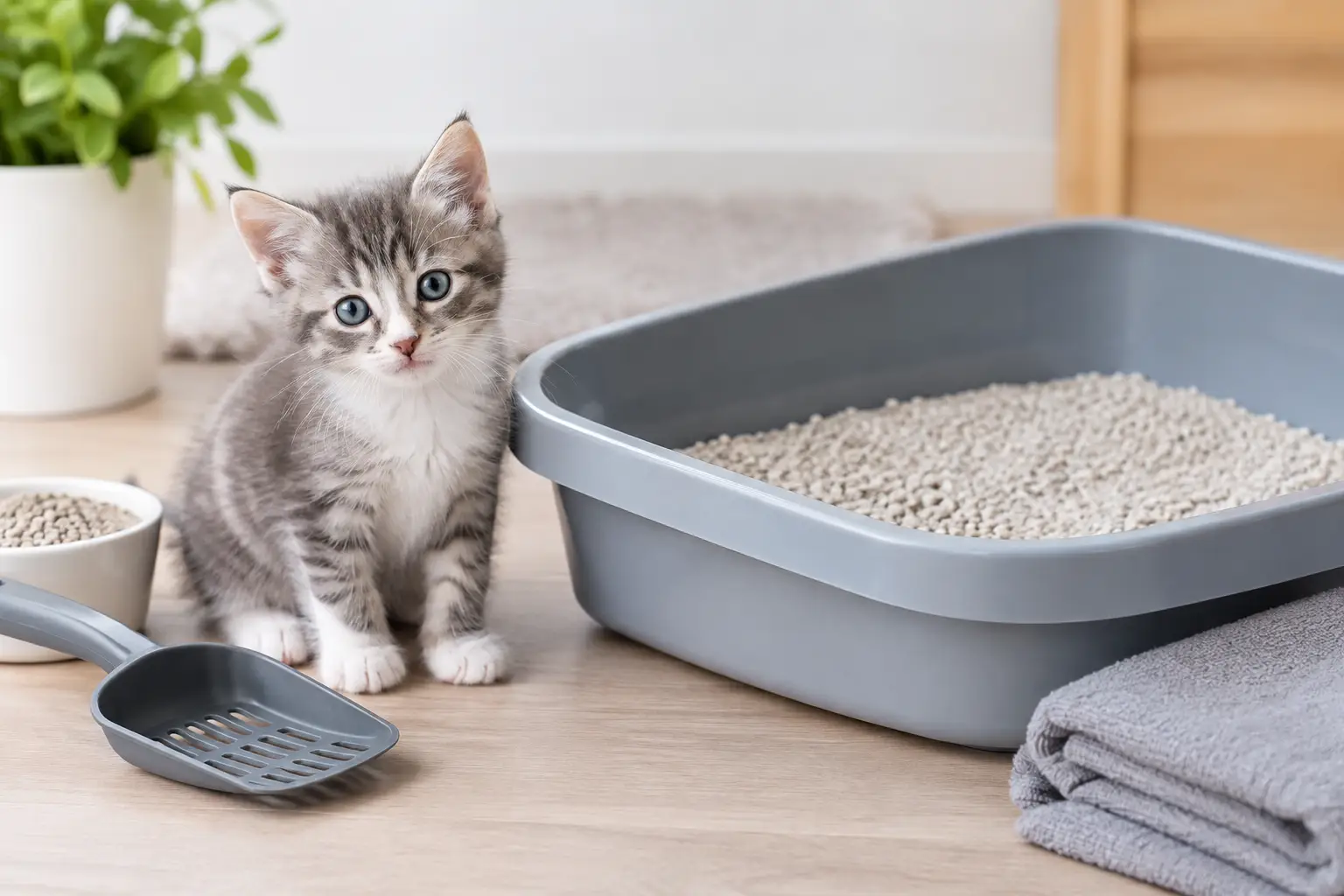
The first litter box moment can happen faster than you expect: one curious kitten steps out of the carrier, sniffs a corner, and needs to know exactly where to go. This kitten litter guide makes that first month easier, with simple choices that help your new cat feel secure and help your home stay fresher.
A little preparation goes a long way. Kittens are still learning the layout of their new home, adjusting to new smells, and building routines. The right box, litter, location, and cleaning schedule can turn a potentially messy transition into a comfortable everyday habit.
For a young kitten, easy access matters more than style. Choose a box with low sides so your kitten can step in and out without climbing or feeling trapped. A small, open box is usually the easiest place to begin, especially for kittens under about 12 weeks old.
Covered boxes can help contain scattered litter and reduce visual clutter for people, but some kittens dislike the enclosed feel or strong odors that can build up inside. Start open if you are unsure. Once your kitten is confidently using the box, you can decide whether a covered design suits your household.
Size still matters, even for a tiny pet. Your kitten should be able to turn around comfortably and dig without bumping into the sides. As your cat grows, plan to move up to a larger box. An adult cat needs enough room to use the box naturally, not squeeze into it.
If you have a multi-level home, place a litter box on each main floor. Young kittens have small bladders and may not make it across the house in time. A nearby box is a practical kindness that can prevent accidents.
The litter aisle has plenty of options, and the best choice depends on your kitten’s age, habits, and your cleaning preferences. For very young kittens, non-clumping litter is often the safer starting point. Curious kittens may taste or swallow litter while exploring, and clumping formulas can create a risk if eaten in larger amounts.
Paper pellets, wood-based litter, and other non-clumping options are gentle choices for young kittens. They tend to create less dust, which can be helpful for a small kitten’s sensitive nose. The trade-off is that they may not clump urine, so daily cleaning and more frequent full changes are especially helpful.
Once your veterinarian says your kitten is old enough and no longer tries to eat litter, many cat parents switch to clumping litter for easier scooping. Fine-textured, unscented litter is often well accepted because it feels more like natural soil under a cat’s paws.
Scented litter may smell pleasant in the package, but it is not always a favorite with cats. A kitten’s sense of smell is far stronger than ours, and perfume-heavy litter can make the box less inviting. If odor is a concern, consistent scooping usually works better than adding fragrance.
When choosing supplies, keep these four practical features in mind:
Do not switch litter abruptly unless you have to. If you want to try a new type, mix a small amount into the existing litter and increase it gradually over several days. A slow transition gives your kitten time to accept the new feel and scent.
Location can matter as much as the litter itself. Put the box in a quiet, low-traffic spot where your kitten can use it without being startled. A laundry room, bathroom, or calm corner of a living area can work well, as long as loud appliances, slamming doors, and busy foot traffic are not constant problems.
Keep the litter box away from food and water bowls. Cats generally prefer not to eat near their bathroom area, and separating these essentials makes the space feel more comfortable. Also avoid tucking the box so far away that your kitten cannot find it easily during those early days.
Give your kitten a gentle introduction after meals, naps, and playtime. Set them in the box, let them sniff, and allow them to step out when they are ready. There is no need to hold them there or move their paws through the litter. Most kittens learn quickly by instinct and observation.
If an accident happens, stay calm. Never scold or punish your kitten. Clean the area thoroughly with an enzyme-based pet cleaner, then consider what may have made the box less appealing. It may be too dirty, difficult to reach, too close to noise, or simply not available when your kitten needed it.
A clean litter box is one of the easiest ways to encourage reliable habits. Scoop solid waste and urine clumps at least once a day. With a young kitten or more than one cat, twice a day can make a noticeable difference in freshness and comfort.
How often you replace all the litter depends on the material you use. Non-clumping litter generally needs a full refresh more often than clumping litter because moisture collects throughout the box. Follow the package directions, then adjust based on smell, tracking, and your kitten’s preferences.
Wash the empty box with warm water and mild, unscented soap before refilling it. Avoid harsh cleaners with strong chemical smells. Cats may avoid a box that carries an unfamiliar or irritating scent, even if it looks perfectly clean to you.
Use a litter mat outside the box to catch loose granules before they travel across the floor. A small hand broom, dustpan, or pet-safe vacuum nearby can make quick cleanup feel less like a chore. These everyday accessories are especially handy during the playful kitten stage, when paws seem to carry litter everywhere.
A popular rule for cat households is one box per cat, plus one extra. For one kitten, that means two boxes if you have the room. This is not always required in a compact home, but it gives your kitten options and can be useful while they are still learning.
Multiple boxes become even more helpful in homes with resident cats. Cats can be particular about sharing bathroom space, and one confident adult cat may quietly block a kitten from reaching a box. Separate boxes in different locations reduce that pressure and give every pet a more comfortable choice.
Avoid placing boxes side by side and counting them as separate options. To a cat, two boxes in the same tight corner can feel like one bathroom. Spread them out when possible.
If your kitten suddenly stops using the box, start with the basics. Scoop it, make sure it is easy to enter, and check whether you recently changed the litter, box, or location. Small changes can feel big to a kitten settling into a new home.
A kitten that pees just outside the box may dislike the texture of the litter, need a cleaner box, or be unable to reach it quickly enough. A kitten that avoids the box altogether may be frightened by noise nearby or uncomfortable with a covered style. Try one change at a time, so you can tell what helps.
Frequent straining, crying while urinating, diarrhea, blood in the urine or stool, sudden repeated accidents, or a major change in litter habits can point to a health concern. Contact your veterinarian promptly rather than assuming it is a behavior issue. Kittens can become unwell quickly, and early care matters.
The best kitten litter setup is not necessarily the most expensive or complicated one. It is the one your kitten will use comfortably every day and that you can keep clean without stress. A low-entry box, suitable litter, a calm location, and a dependable scooping routine cover the essentials.
As your kitten grows, their needs will change too. You may upgrade the box, test a new litter texture, or add accessories that help with tracking and cleanup. Doggodays.shop makes it easy to gather everyday pet-approved essentials in one convenient place, so you can spend less time hunting for supplies and more time enjoying those tiny purrs, playful leaps, and well-earned cuddles.









Leave a comment