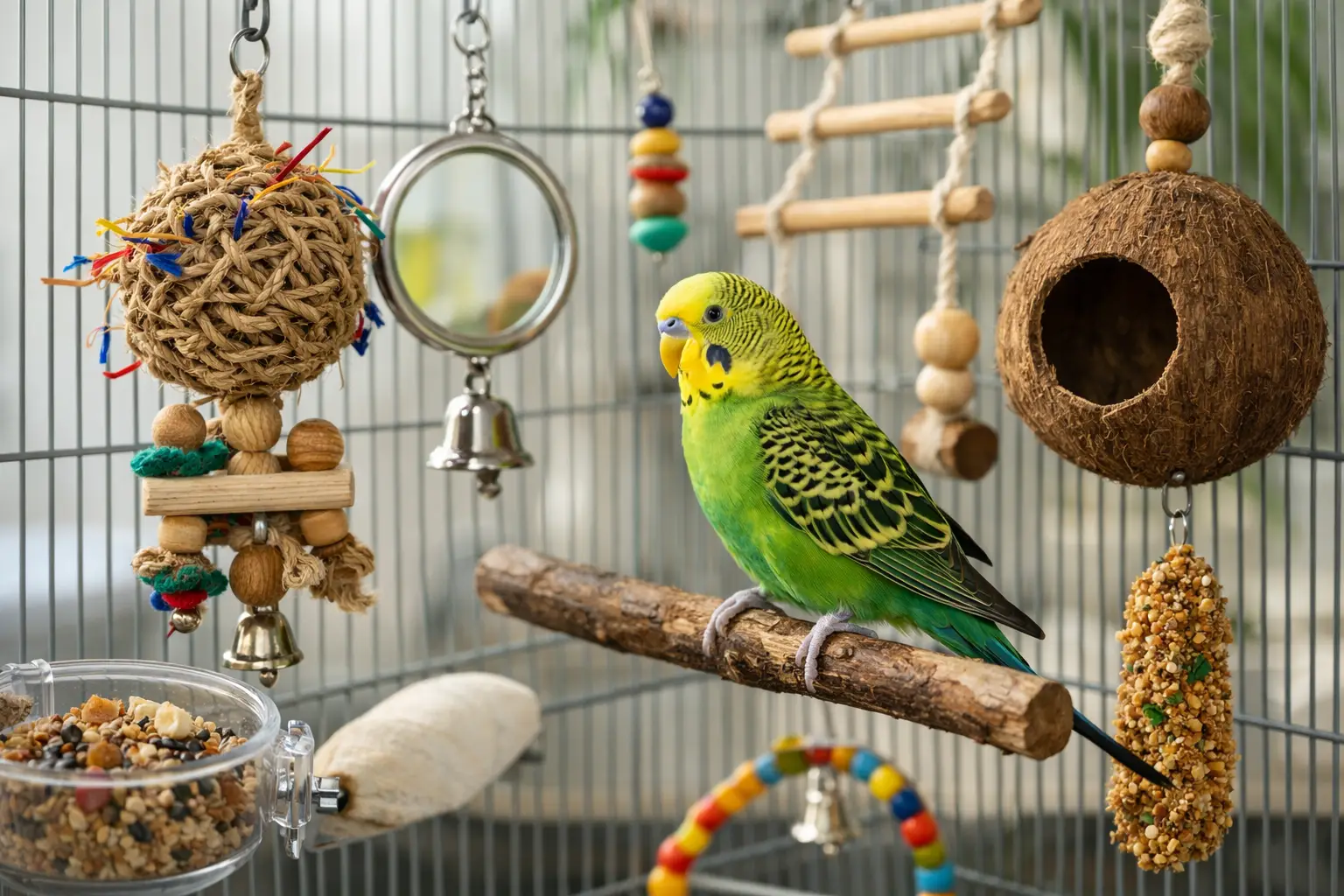
A parakeet cage can look fully stocked and still miss what your bird actually uses every day. The best bird cage accessories for parakeets are not the ones that make the cage look busy – they are the ones that help your bird climb, chew, perch, eat, bathe, and stay interested in its space.
If you are setting up a new cage or upgrading an older one, it helps to think in zones. Parakeets need a comfortable place to rest, a clean place to eat, safe ways to play, and enough variety to keep boredom from settling in. A few well-chosen accessories usually work better than filling every inch with extras.
Parakeets are active, curious, and light-bodied birds. That means cage accessories should be easy for small feet and beaks to use. Size matters more than many shoppers expect. A toy made for a larger parrot may be too heavy, too tough, or just awkward for a parakeet to enjoy.
Material matters too. Natural wood, bird-safe rope, stainless steel, and durable plastic all have their place, but every item should be easy to clean and free from loose parts, sharp edges, or questionable coatings. If an accessory is hard to sanitize or starts fraying, cracking, or rusting, it is usually time to replace it.
The other big factor is cage space. It is tempting to buy every cute ladder, swing, and hanging toy you see, but parakeets still need room to flap from perch to perch. A crowded cage can make movement harder and turn a fun setup into a frustrating one.
Perches are the foundation of a comfortable cage. If your bird only has one or two smooth dowel perches, the cage is missing one of the most useful upgrades. Parakeets benefit from a mix of perch shapes, widths, and textures because that gives their feet more natural exercise.
Natural wood perches are a popular everyday choice because they offer slight variations in diameter. Rope perches can add flexibility and softer footing, though they should be checked often for wear. A concrete or mineral-style perch can help with nail maintenance, but it should not be the only place your bird stands since rough surfaces all day can be hard on feet.
Placement matters just as much as the perch itself. Put one higher perch where your parakeet can rest and sleep comfortably, then add a few others at different levels to encourage movement. Try not to place perches directly above food and water dishes unless you enjoy cleaning them more often.
Food and water accessories are easy to overlook because they feel basic, but they shape your bird’s routine every single day. For most parakeet owners, a good setup includes sturdy food cups, a reliable water dish or bottle designed for birds, and at least one holder for fresh treats like leafy greens or millet.
Removable cups are especially convenient because they make quick cleaning easier. That may not sound exciting, but easier cleaning usually means better daily habits. Stainless steel cups are a favorite for many bird owners because they last well and wash easily, while clear or durable plastic options can make it simple to monitor food and water levels.
A separate treat clip is also worth having. It gives fruits and vegetables a cleaner place in the cage and helps keep softer foods from being trampled at the bottom. If your parakeet is shy around new foods, changing the position of a treat holder can sometimes make a difference.
Parakeets are playful birds, but not every toy holds their attention. The best toy accessories encourage natural behaviors like chewing, shredding, climbing, and investigating. That usually means lightweight toys made with bird-safe materials that are easy for small birds to grip and explore.
Shreddable toys are a strong choice because many parakeets enjoy picking apart paper, palm leaf, or soft wood pieces. Bell toys can also be fun, though the design should be bird-safe and sized for smaller birds. Ladders, small hanging toys, and foraging-style accessories can all add variety without overwhelming the cage.
Rotation helps more than quantity. Three or four thoughtfully chosen toys that change every week or two often do more than a cage packed with ten toys your bird has stopped noticing. If a toy goes ignored, it may not be a bad product – your parakeet may just prefer a different texture, sound, or placement.
A swing is one of those cage accessories that many parakeets enjoy right away. It adds motion, creates a fun perch option, and gives your bird another place to hang out between meals and play sessions. Some birds love swings immediately, while others need time to trust movement, so a slow introduction is normal.
Ladders and climbing ropes can also make a cage more interactive. They work especially well in taller cages where vertical space might otherwise go unused. The goal is not to create an obstacle course. It is to offer a few fun ways for your bird to move around and stay engaged.
When choosing these extras, keep scale in mind. Small, lightweight accessories tend to work best for parakeets. If something looks bulky compared to your bird, it probably is.
Many parakeets enjoy bathing, and a bird bath accessory can turn that into a regular part of the routine. Some baths attach to the cage door or side, while others sit inside the cage for short supervised sessions. A shallow design is usually best for smaller birds.
Not every parakeet takes to a bath right away. Some prefer a light mist, while others like to splash in a dish when they are in the mood. This is one of those areas where it depends on the bird. If your parakeet seems unsure, keep bath time low-pressure and let curiosity do the work.
Beak-friendly accessories deserve a place in most parakeet cages. Cuttlebones and mineral blocks are common picks because they give birds something to nibble and help support beak wear. They are also easy to mount and replace, which makes them convenient for everyday cage setups.
Chew accessories are helpful too, especially for birds that like to gnaw on wood or shred softer materials. They give your parakeet a safe outlet for beak activity and can help direct that energy away from food cups, cage bars, or other accessories.
As with any cage item, these should be monitored for wear and cleanliness. If they become dirty or stop being used, replacing or repositioning them may help.
One of the easiest mistakes to make when shopping bird cage accessories for parakeets is buying too much at once. A full cart can feel like a caring choice, but a crowded cage can reduce flight space, make cleaning harder, and leave your bird with fewer clear paths to move around.
A better approach is to build the setup in layers. Start with the daily essentials – varied perches, feeding dishes, water access, and one or two toys. Then add a swing, ladder, bath, or foraging toy based on how your parakeet uses the cage.
This approach also makes shopping easier. Instead of guessing what your bird might tolerate, you can watch what gets the most attention and buy the next accessory with more confidence.
A good cage setup usually includes a few perch types, simple feeding accessories, a cuttlebone or mineral item, and a small selection of toys your bird can actually use. From there, climbing accessories and a bath can round things out.
The best setups feel open, not crowded. Your parakeet should be able to move easily, hop between stations, and still have visual variety throughout the cage. That balance between comfort and stimulation is where accessories really earn their place.
For shoppers who want convenience, it helps to browse by function instead of buying at random. Think perch, feeding, play, chewing, and bathing. That keeps your setup practical and pet-friendly, which is exactly what most bird owners want from an everyday shopping experience.
If you are updating your bird supplies along with the rest of your pet essentials, stores with broad category coverage can make the process much simpler. Doggodays.shop fits that easy, one-stop approach, especially for pet parents managing shopping for more than one animal at home.
A parakeet does not need a fancy cage packed with gadgets. It needs a comfortable, clean, interesting space that supports daily life, and the right accessories make that much easier to create.








Leave a comment