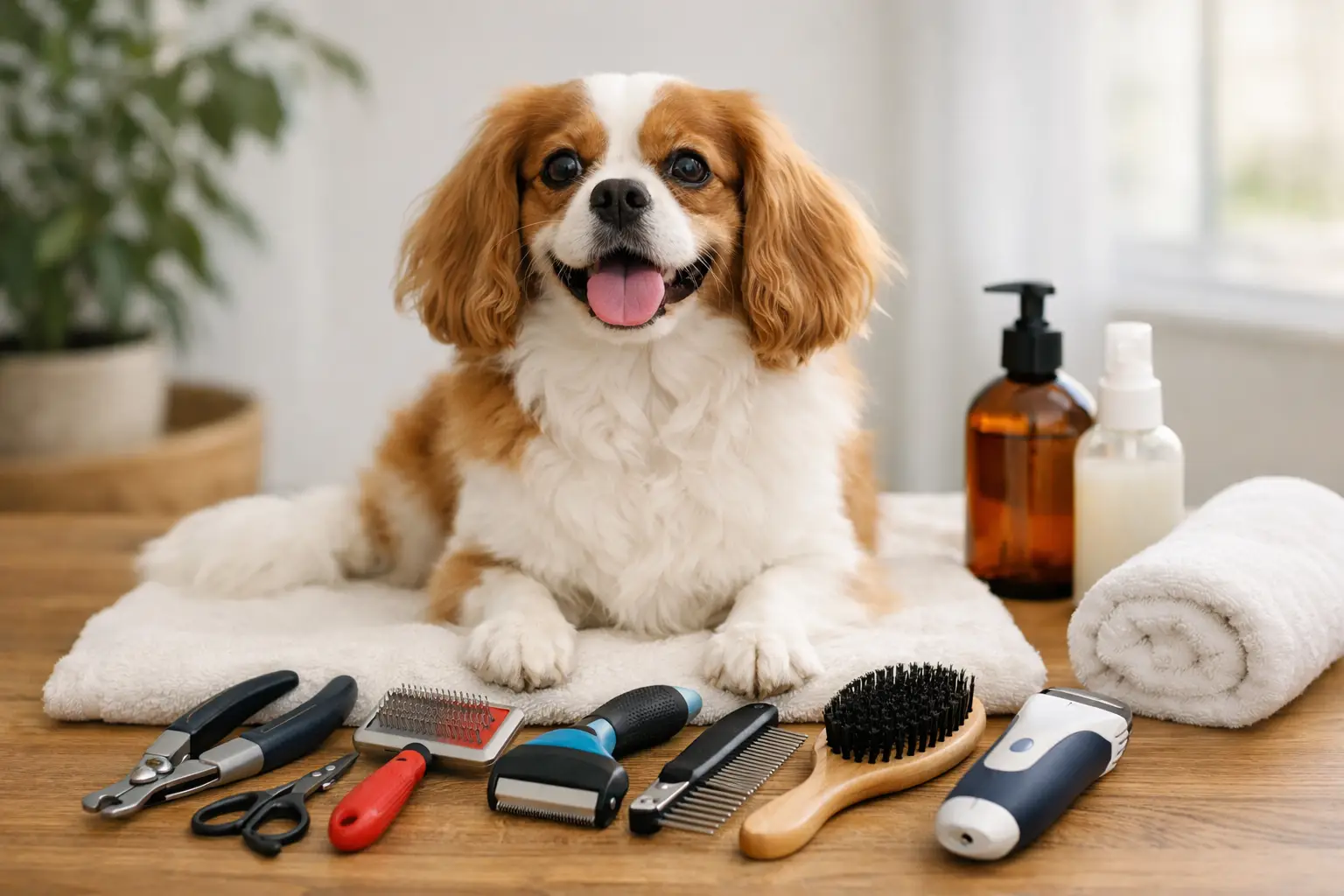
A brush that works on one dog can be useless on another, and that is where home grooming usually gets frustrating. If you are trying to find the best dog grooming tools at home, the goal is not to buy everything. It is to build a simple kit that matches your dog’s coat, size, and tolerance for grooming so everyday care feels easier for both of you.
Home grooming is less about salon-perfect results and more about comfort, cleanliness, and staying ahead of tangles, shedding, and overgrown nails. The right tools help you keep your dog looking tidy between appointments or handle the whole routine yourself if that works better for your budget and schedule.
The best tools are the ones you will actually use consistently. That usually means they are easy to hold, simple to clean, and suited to your dog’s coat type instead of being marketed as a one-size-fits-all solution.
A short-haired dog may only need a grooming glove, a soft brush, nail clippers, and a gentle shampoo. A doodle, spaniel, or double-coated breed often needs a more complete setup, including a slicker brush, comb, de-shedding tool, and clippers for light touch-ups. Puppies, seniors, and anxious dogs also do better with quieter tools and shorter sessions.
It helps to think in categories. Most at-home grooming kits come down to brushing tools, bathing tools, trimming tools, and nail care. Once you cover those basics, the routine gets much more manageable.
Brushing is where most home grooming success starts. It removes loose hair, spreads natural oils, and helps you catch mats before they get tight and uncomfortable.
A slicker brush is one of the most useful all-around picks for medium to long coats. It works well for dogs that tangle easily and can help fluff the coat while lifting out loose fur. If your dog has wavy or curly hair, this is often the first brush to reach for.
The trade-off is pressure. A firm slicker can be too harsh on sensitive skin if you brush aggressively. Look for one with flexible pins and use short, gentle strokes.
For short-haired breeds, a bristle brush is simple and effective. It smooths the coat, removes surface dirt, and gives a nice finished look without pulling too much. It is also a good option for dogs who dislike more intense brushing.
This type will not do much for deep tangles, so it is best for maintenance rather than problem-solving.
If your dog seems to shed enough fur to build a second dog every week, an undercoat tool can make a big difference. These are especially useful for double-coated breeds like huskies, shepherds, and retrievers.
The key here is moderation. A good de-shedding tool removes loose undercoat without wrecking the topcoat, but overuse can thin the coat more than you want. Once or twice a week is usually enough during heavy shedding seasons.
A metal comb is not the most exciting tool in the drawer, but it is one of the smartest buys. It checks your work after brushing, helps you find hidden knots, and works well around the face, ears, and feathering.
For long coats, a comb is often what tells you whether the coat is truly tangle-free. If the comb cannot glide through, the brush job is not finished yet.
Bath time goes smoother when you are not chasing supplies with one wet hand while your dog plots an escape route.
A gentle dog shampoo is a must, and it is worth choosing one that matches your dog’s skin and coat condition. Some dogs need moisturizing formulas, while others do better with deodorizing or shed-control options.
Human shampoo is not a good substitute. Dogs have different skin needs, and the wrong formula can leave them itchy or dry. If your dog has ongoing skin issues, it is better to check with your vet before trying heavily scented or specialty washes.
A rubber bath brush or grooming glove helps loosen dirt and fur while massaging shampoo through the coat. These are especially handy on short-haired dogs and dogs who shed a lot.
They are not ideal for heavy mats, but they do make bathing feel faster and less messy. For many dogs, they are also less intimidating than a traditional brush.
A basic item, yes, but a very useful one. Thick, absorbent towels make drying easier and cut down on the post-bath zoomies spreading water through the house. For long-coated dogs, blotting well before any blow-drying also helps prevent tangles from tightening.
Not every dog needs full-body haircuts at home, but many pet parents want tools for light trimming between professional grooming visits.
Good pet clippers are one of the best dog grooming tools at home if your dog’s coat keeps growing and matting. They are useful for sanitary trims, paw pad cleanup, and small touch-ups around the legs or body.
Quieter clippers are usually the better pick for nervous dogs. Cordless models add convenience, but they may have less power than corded ones for thick coats. If your dog has dense curls or heavy matting, a weak clipper can snag and stall, which makes the whole process harder.
Rounded-tip scissors are helpful for careful finishing work around the face, feet, and tail. They are not a replacement for clippers on full coats, but they are great for quick neatening.
The obvious caution is safety. Even calm dogs can turn suddenly, so trims around the eyes and ears should always be slow and minimal.
Nail trimming is the part many pet parents put off, but it matters for comfort and mobility. Long nails can affect the way a dog stands and walks, especially over time.
Standard nail clippers are a reliable choice for most dogs. They are straightforward, affordable, and easy to store in a basic grooming kit. For small to medium dogs, they are often all you need.
The downside is that some owners feel nervous about trimming too much at once. Taking tiny amounts off regularly is safer and usually less stressful than waiting until nails get very long.
A nail grinder can be a great alternative if you want smoother edges or your dog has thick nails. Many pet parents like the extra control, especially after a few practice sessions.
Not every dog loves the sound or vibration, though. If your dog is unsure, introduce it gradually and keep the first few sessions short and reward-filled.
This is one of those products you hope not to use, but you will be glad to have it nearby. If a nail gets trimmed too short, styptic powder helps stop minor bleeding quickly.
The easiest mistake is overbuying. You do not need a packed grooming drawer to get good results. A short-coated dog may be perfectly covered with a bristle brush, bath glove, shampoo, nail tool, and towel. A long- or curly-coated dog usually needs more brushing support and maybe clippers for maintenance.
Think about your dog’s behavior as much as the coat. If your dog is impatient, choose tools that keep sessions short. If your dog is sensitive, softer brushes and quieter clippers are worth it. If you only want to handle touch-ups at home, focus on basics and leave full cuts to a groomer.
Convenience matters too. A simple, easy-to-store kit is more likely to be used regularly than a pile of specialty tools scattered across cabinets. That is one reason many pet parents prefer shopping in one place where they can compare everyday grooming essentials without making it a whole project.
For most dogs, brushing once or twice a week is enough to stay ahead of loose fur and small tangles. Heavy shedders or long-coated breeds may need more frequent sessions, especially during seasonal coat changes. Bathing every few weeks, regular ear checks, and nail trims every few weeks keep the routine practical and less overwhelming.
Short sessions usually work better than marathon grooming days. Five or ten calm minutes with treats and praise can do more than an hour of wrestling with a stressed-out dog. If you are building your kit from scratch, stores with broad pet categories, like Doggodays.shop, make it easier to pick up grooming basics alongside the rest of your routine pet supplies.
The best setup is the one that keeps your dog comfortable and your routine realistic. Start with the essentials, learn what your dog responds to, and let your grooming kit grow from there.







Leave a comment