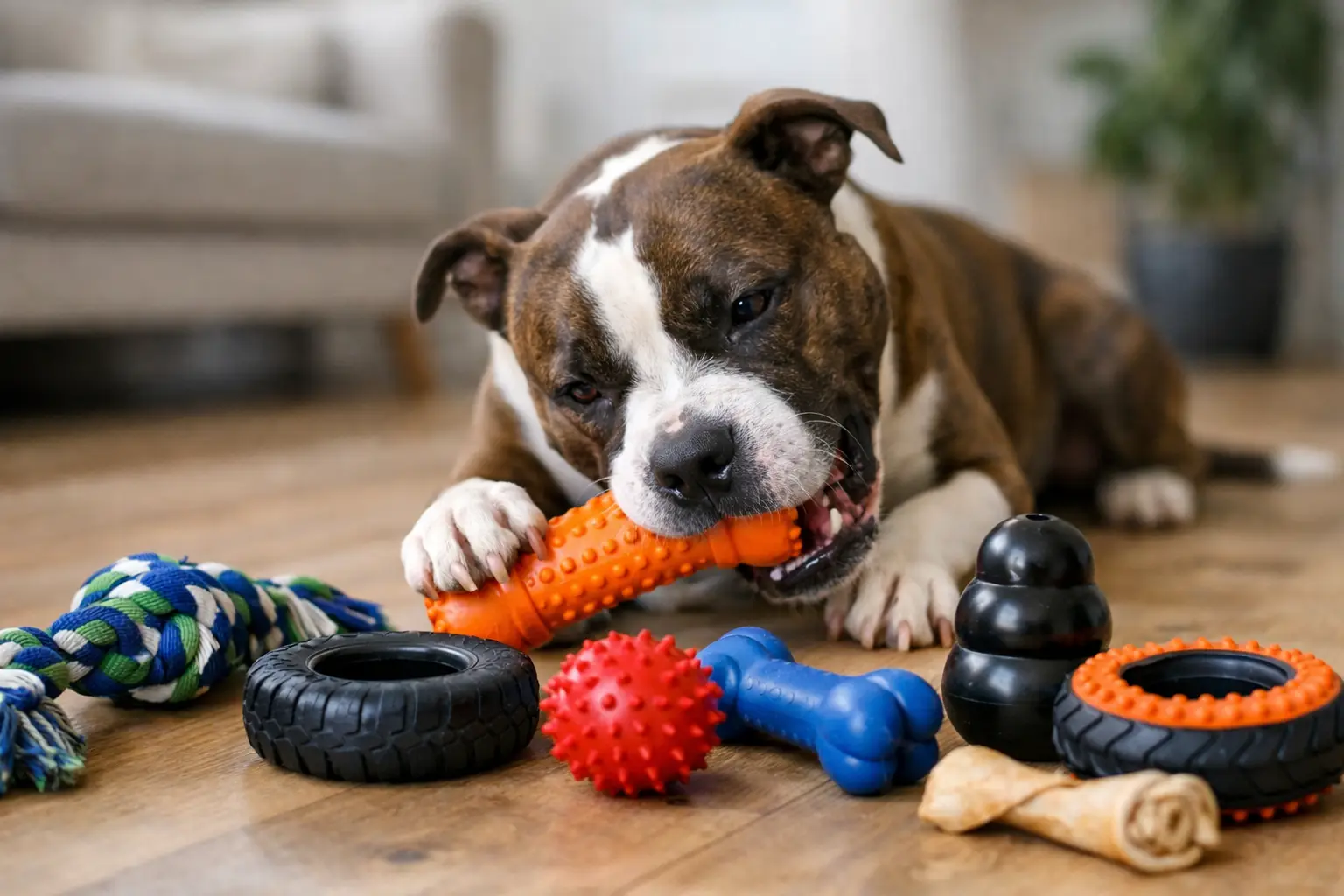
If your dog can turn a brand-new toy into scraps before dinner, you already know that finding the best dog toys for aggressive chewers is less about cute colors and more about survival. Strong chewers need toys that can handle serious jaws, hold their interest, and give them a safer outlet than your shoes, couch cushions, or table legs.
A good chew toy does two jobs at once. It helps burn off boredom and gives your dog a satisfying way to chew, tug, chase, or carry something around. The tricky part is that no toy is truly indestructible for every dog. A toy that lasts weeks for one pup might last ten minutes for another, so the smart move is choosing by material, shape, and your dog’s actual chewing style.
Durability starts with the material. Dense natural rubber is usually one of the best bets because it has some give, which makes it more satisfying to chew than a hard plastic shell. Tough nylon can also last a long time, especially for dogs that like to gnaw steadily, but it can be too hard for some dogs and may not be the right fit for every mouth.
Shape matters more than many shoppers expect. Thick, compact toys usually hold up better than toys with thin tails, stitched ears, or decorative extras. The more edges, seams, and soft points a toy has, the more opportunities your dog has to peel it apart.
It also helps to think about how your dog destroys toys. Some dogs are shredders that go after fabric and stuffing first. Others are power gnawers that focus on one spot until they break through. Then there are dogs that love tugging and whipping toys side to side. The best choice depends on which camp your dog falls into.
For most households, the strongest toy lineup includes more than one style. Rotating a few durable options can keep your dog interested longer and can save you from replacing the same kind of toy every week.
This is the category many pet parents start with, and for good reason. Thick rubber toys are usually the most versatile option for strong chewers because they can be chewed on their own, bounced across the floor, or filled with treats for longer play sessions.
They work especially well for dogs that need a little mental stimulation along with the chewing. If your dog loses interest in plain toys quickly, a hollow rubber toy with treats or peanut butter can turn five minutes of chaos into a much calmer stretch of focused play. Just make sure the rubber is firm enough for aggressive chewing but not so rock-hard that it feels like a brick.
Nylon chew toys are a popular pick for dogs that like to settle in and gnaw. They tend to last longer than plush toys and many softer chews, and they come in shapes that are easy for dogs to hold with their paws.
The trade-off is texture. Some dogs love the firm feel, while others do better with a toy that has more bounce. If your dog has sensitive teeth or you notice excessive wear, a softer rubber option may be a better everyday choice. Nylon can be a strong option, but it is not a one-size-fits-all answer.
Rope toys can be a great addition for dogs that like tug-of-war or want something they can carry around between play sessions. A thick, tightly woven rope is usually better than anything loosely braided or decorated with extra fabric parts.
That said, rope toys are often best used with supervision for aggressive chewers. Once a dog starts pulling out long strands, the toy is ready to be replaced. Rope can still earn a spot in the rotation, especially for interactive play, but it usually is not the longest-lasting solo toy in the basket.
Some aggressive chewers are really just bored dogs with strong jaws. A durable treat-dispensing toy gives them a job to do, which can reduce destructive chewing around the house.
These toys are most useful when made from heavy rubber or another thick material designed for active chewing. The appeal here is convenience for pet parents too. You can turn snack time into play time without needing a complicated setup, which makes it easier to keep your dog entertained on busy days.
Not every aggressive chewer wants to sit and gnaw all day. Some want to chase, pounce, and then chew on the prize after the catch. For those dogs, a durable rubber ball made for strong jaws can pull double duty.
Standard tennis balls usually wear out fast and can become messy quickly with hard chewers. A thicker ball made specifically for dogs tends to last longer and hold its shape better. Look for something that is solid enough to survive chewing but still light enough for active play.
This one comes with a big asterisk. Plush toys are rarely the longest-lasting option for aggressive chewers, but some dogs simply love them. If your dog wants a comfort toy or enjoys carrying something soft, a reinforced plush with fewer seams and minimal stuffing can be a better compromise than a standard stuffed toy.
These are usually best for supervised play rather than all-day chewing. For the right dog, they can absolutely have a place, just not as the only toy you rely on.
Start with size. A toy that is too small can become a choking hazard, while one that is too large may be awkward and ignored. Most dogs do best with a toy sized for their weight and jaw strength, but if your dog is between sizes and is a serious destroyer, sizing up is often the safer bet.
Next, match the toy to your dog’s play style. If your dog likes to work on one toy for an hour, a firm chew toy is a smart choice. If they get bored fast, treat-dispensing toys and balls usually keep things more interesting. If they only want to play with you, ropes and tug-friendly rubber toys can be more satisfying than a solo chew.
You should also think about your home routine. Busy households often do better with easy-clean toys that can handle daily use without much fuss. That is one reason many pet parents prefer durable rubber toys. They are simple, practical, and easy to keep in regular rotation.
Even the best dog toys for aggressive chewers need regular checks. If a toy has cracks, missing chunks, loose strands, or pieces coming off, it is time to toss it. A worn toy is not a bargain if it becomes a safety problem.
Supervision is a good idea whenever you introduce a new toy, especially if your dog has a history of ripping through products quickly. This gives you a chance to see whether your dog licks, gnaws, shreds, or tries to swallow pieces. That first session usually tells you a lot.
Rotation helps too. Dogs often stay more engaged when toys are switched out instead of left in a pile all week. A smaller collection of tough, pet-approved picks can be more useful than a giant basket of toys your dog ignores.
A lot of pet parents hope there is one perfect toy that solves everything. Usually, the better answer is a mix. A rubber chew toy for downtime, a rope for interactive play, and a ball or puzzle toy for activity can cover more needs than a single purchase.
This approach also makes shopping easier because you are not asking one product to do every job. At Doggodays.shop, that kind of variety is part of the appeal – you can build a simple toy rotation alongside the rest of your dog’s everyday supplies without bouncing between stores.
The best toy is not always the hardest one on the shelf. It is the one that fits your dog’s size, habits, and energy level while lasting long enough to feel worth it. For some dogs, that means dense rubber. For others, it means nylon for chewing, rope for tug, or a treat toy that keeps their brain busy.
If your dog is a determined destroyer, think less about finding a miracle toy and more about building a better lineup. A few well-chosen, durable toys can go a long way toward keeping your dog engaged, your home a little safer, and playtime a lot more enjoyable.








Leave a comment