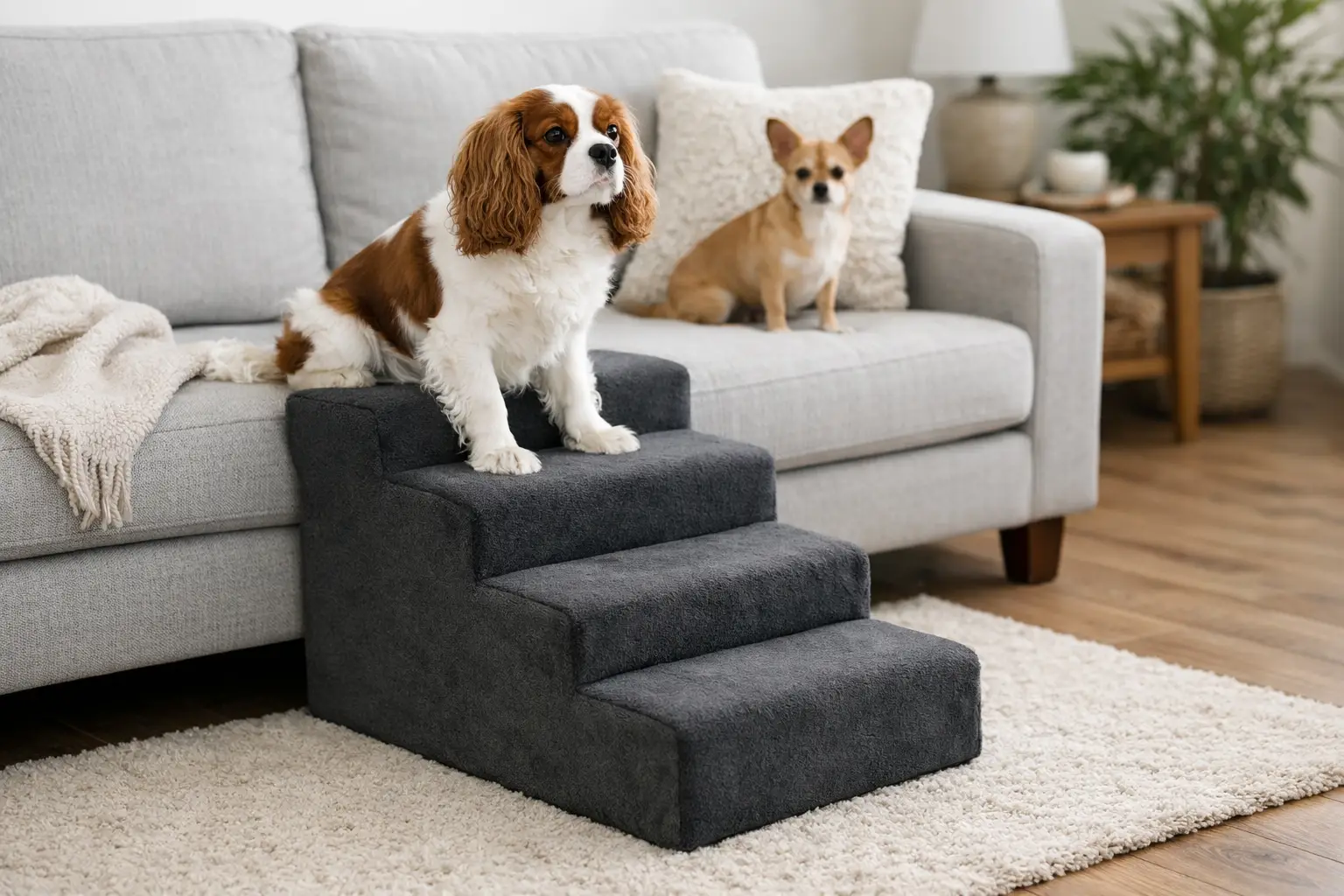
That little hop onto the couch looks harmless until your dog starts hesitating, misses the landing, or asks for a lift every time. Pet stairs for couch use can make daily lounging easier on joints, safer for small pets, and a lot more convenient for pet parents who want a simple comfort upgrade.
For many households, couch stairs are not just for senior dogs. They are helpful for puppies with short legs, small breeds that cannot clear the height comfortably, cats that like an easier path to a favorite spot, and pets recovering from strain or surgery. Even healthy adult pets can benefit when repeated jumping puts extra stress on hips, knees, shoulders, and backs.
A couch is one of the most-used pieces of furniture in a pet-friendly home. That means your pet may be jumping up and down from it several times a day. Over time, that repeated impact adds up, especially for dachshunds, corgis, French bulldogs, chihuahuas, shih tzus, older labs, and any pet with joint sensitivity or balance issues.
Stairs give pets a predictable, lower-impact route. That matters most if your pet is aging, dealing with arthritis, or simply not built for vertical leaps. It also matters if your couch sits high off the floor. A low sofa may only need two steps, while taller couches often call for three or four to create a gentler climb.
There is also the everyday convenience factor. Instead of constantly lifting your pet, you can give them more independence while keeping access to their favorite cuddle zone easy.
The best choice depends less on style and more on fit. A cute set of stairs that slides, feels too steep, or sinks under your pet’s weight will not get much use. Good pet-approved picks start with the basics.
Measure from the floor to the top of the couch cushion, not just the frame. Cushions compress, and that affects the final step. If the top stair lands too low, your pet still has to jump. If it lands too high, climbing can feel awkward.
For lower couches, compact stairs can work well in smaller rooms. For taller couches, look for more steps rather than taller individual steps. Shorter rises between steps usually feel easier and safer, particularly for older pets and short-legged breeds.
A common mistake is focusing only on overall height. The depth of each step matters just as much. Pets need enough paw space to place their feet without feeling cramped. Narrow steps can make nervous pets pause or misstep, especially on the way down.
Wider stairs are usually a better fit for medium and large dogs, while smaller pets may be fine with a compact footprint. If your dog tends to turn around before settling on the couch, a little extra width can help them feel more secure.
Steeper is not always better, even if it saves floor space. A steep angle can defeat the purpose of reducing strain. If your pet is hesitant around stairs, a gentler incline is often the difference between a product they use and one that gets ignored in the corner.
This is one of those it-depends details. In a small apartment, you may need a more compact design. Just be honest about your pet’s mobility. Saving a few inches of space is not worth it if the stairs feel too challenging.
Pet stairs come in foam, plastic, wood, and mixed-material designs. Each one has trade-offs.
Foam stairs are lightweight and often easier on joints because they have a softer feel. They are a popular choice for small dogs, senior pets, and bedroom or living room use where comfort matters more than heavy-duty structure. The downside is that low-density foam may compress too much, especially under heavier pets.
Plastic stairs are usually light, easy to move, and simple to wipe down. They can work well for routine use, but only if they have strong traction on both the steps and the base. Without that grip, they can feel slick.
Wood or reinforced stairs tend to feel more stable and often support more weight. They can be a smart pick for larger dogs or multi-pet homes. The trade-off is weight and bulk. They are not always as easy to shift from room to room.
If your pet is cautious, a soft fabric cover or carpeted tread can help. Texture gives them confidence. Smooth surfaces may look neat, but they are not always the friendliest choice for paws.
If the base slides on hardwood, tile, or laminate, the stairs will feel untrustworthy. Look for non-slip feet, rubberized bottoms, or a design that stays planted. The top of each step should also offer traction. A stair that’s soft but slippery is still a problem.
Always check the listed weight limit, then give yourself a little margin. If your dog is near the maximum, sizing up is usually the safer move. Stability matters as much as capacity. Some products technically hold the weight but wobble more than pet parents expect.
Couch stairs get daily use, so fur, dirt, drool, and the occasional accident are part of the deal. Removable, washable covers make life easier. That matters even more in busy households with multiple pets.
This comes up a lot, and there is no one-size-fits-all answer. Stairs are often better for pets that are comfortable stepping up in stages and for homes where space is limited. They tend to fit naturally beside a couch without taking over the room.
Ramps can be a better option for dogs with severe mobility issues, very short legs, or conditions that make stepping difficult. The trade-off is footprint. A ramp long enough to be gentle usually needs more floor space than stairs.
If your pet already uses household stairs confidently, couch stairs may feel familiar. If they struggle with steps in general, a ramp may be the better comfort pick.
Even a well-designed set of pet stairs for couch access may need a little introduction. Some pets climb right away. Others act like you placed a spaceship in the living room.
Start with the stairs anchored in place so they do not shift. Use treats, praise, or a favorite toy to guide your pet up one step at a time. Keep sessions short and upbeat. If your pet seems nervous, do not force it. A little patience usually works better than trying to rush the process.
It also helps to place the stairs at your pet’s usual access point. If they always approach the couch from the left side, setting the stairs on the opposite end may confuse them at first. Familiar patterns matter more than many shoppers expect.
Small dogs often do best with soft, lower-rise steps that reduce the effort needed to climb. Medium dogs usually need a sturdier frame and wider surface area. Large dogs can use stairs too, but support and stability become much more important.
Senior dogs benefit from gentle inclines, strong grip, and predictable footing. Puppies may need stairs simply because they are too small to jump safely, especially during growth stages. Cats can also enjoy couch stairs, although some prefer taller, narrower designs or may ignore them entirely if they already have a route they like.
That is why the best pick is not always the fanciest one. It is the one that matches your pet’s body, habits, and confidence level.
When pet parents shop for home comfort items, stairs often end up in the same category of must-haves as beds, blankets, and feeding accessories. They are practical, but they also support the little routines pets love most – morning snuggles, evening lounging, and claiming their favorite corner of the couch.
For shoppers who want easy browsing in one place, stores like Doggodays.shop make it simpler to pair comfort products with other daily pet essentials. That kind of convenience matters when you are stocking up for a pet-friendly home without wanting to bounce between specialty sites.
Your pet uses them without hesitation, the stairs stay put, and getting on and off the couch looks easier than it did before. That is really the goal. Not a showroom piece, not the cheapest option, and not the biggest model on the page – just a safe, comfortable fit that makes everyday life a little easier for both of you.
If your pet loves the couch, a good set of stairs can turn that favorite spot into a more comfortable routine they can enjoy for years.








Leave a comment