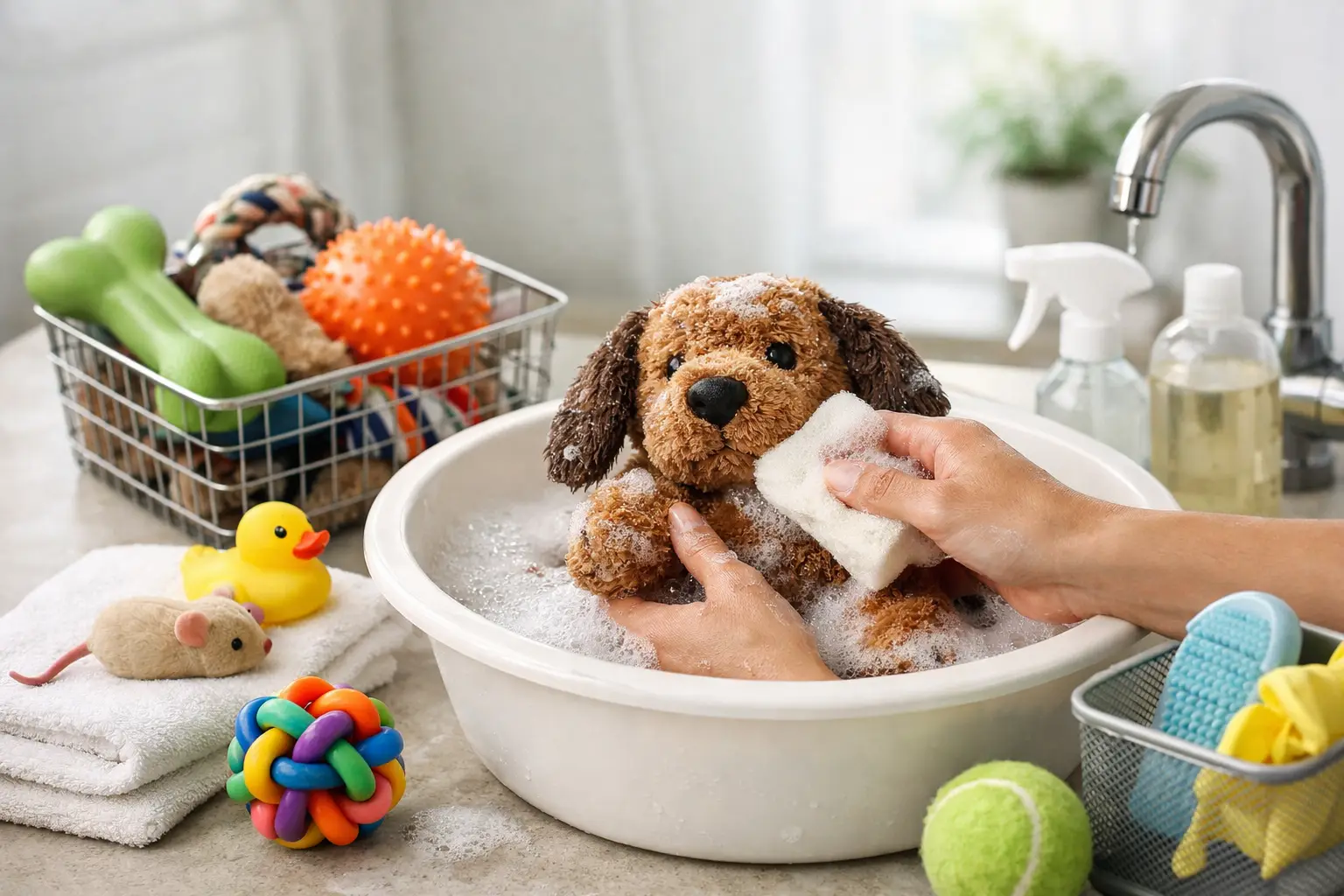
That slobbery tennis ball under the couch is not just a toy anymore. It is also collecting dirt, bacteria, food residue, and whatever else your pet dragged in from the backyard. If you have been wondering how to clean pet toys without making the job complicated, the good news is that most toys can be cleaned quickly with a few basic supplies and a little sorting.
Clean toys do more than look better in the toy basket. They help cut down on odors, reduce grime your pet puts right back into their mouth, and make everyday play feel a little fresher. The trick is knowing that not every toy should be cleaned the same way. Plush squeakers, rubber chews, rope toys, and hard plastic puzzle toys all hold mess differently, so the safest cleaning method depends on the material and the condition of the toy.
Before you wash anything, separate toys into categories. This saves time and helps you avoid damaging a favorite toy with the wrong method. A soft plush toy can often handle the washing machine, while a treat-dispensing rubber toy usually needs hand washing to get into the crevices.
Plush toys are usually the easiest to freshen up, but they also wear out the fastest. If the care tag is still attached, start there. Many soft pet toys are machine washable on a gentle cycle. Put them in a mesh laundry bag or pillowcase to help protect seams, then wash with a mild, fragrance-free detergent.
Skip bleach and heavily scented products. They can be too harsh, and strong smells may bother some pets. After washing, air drying is usually the safest choice. High heat from the dryer can damage fabric, melt parts, or weaken glue around squeakers and details.
If the toy is already fraying or has loose stuffing, washing may finish the job. In that case, it may be better to replace it than risk your pet pulling out stuffing or swallowing small pieces.
Rubber and silicone toys do a great job of keeping pets busy, but they are magnets for slobber and old treat residue. Wash these by hand in warm water with a small amount of mild dish soap. Use a bottle brush, small cleaning brush, or even a clean toothbrush to scrub inside grooves, holes, and treat compartments.
Rinse thoroughly until there is no soap left. Any leftover residue can affect taste and may upset your pet’s stomach. Let the toy dry fully before adding treats again, especially if it has a hollow center where moisture can get trapped.
Some rubber toys can go in the top rack of the dishwasher, but it depends on the brand and material. If you are not sure, hand washing is the safer choice. It takes a few extra minutes, but it lowers the chance of warping or breaking down the toy.
Rope toys are a little tricky. They can look fine on the outside while holding drool, dirt, and debris deep in the fibers. A simple soak in warm water with mild soap can help loosen buildup. After soaking, rinse very well and squeeze out as much water as possible.
Air drying matters here. A rope toy that stays damp too long can start to smell musty. Some pet parents use the washing machine for rope toys, and that can work for sturdier ones, but only if the rope is still tightly wound and not unraveling.
If the ends are frayed or strands are coming loose, cleaning is not really the main issue anymore. That toy is becoming a chewing hazard. Once ropes start shedding fibers, it is usually time to toss them.
Hard plastic toys are usually the most durable and one of the easiest categories to sanitize well. Wash with warm soapy water, paying close attention to corners, sliders, lids, and hidden compartments where crumbs and saliva can build up.
For extra odor control, you can wipe them down with a pet-safe vinegar and water solution after washing, then rinse again. Just do not rely on vinegar alone to cut through heavy grease or sticky treat residue. Soap and scrubbing still do most of the work.
If the toy comes apart, take it apart every time you clean it. Puzzle toys are great for enrichment, but they can hide a surprising amount of old food.
You do not need a cabinet full of specialty cleaners. For most toy-cleaning days, a simple setup works best: warm water, mild dish soap or fragrance-free laundry detergent, a mesh bag for plush toys, and a small brush for crevices. Paper towels or a clean towel also help with drying.
What you should avoid is just as important. Skip bleach, strong disinfectants, essential oils, and heavily perfumed cleaning products. A toy goes straight back into your pet’s mouth, so simple and well-rinsed is better than over-cleaned with harsh chemicals.
It depends on the toy and how your pet uses it. Toys that hold food or treats should usually be cleaned after each use or at least every couple of uses. Plush toys and everyday chew toys can often be cleaned weekly or every other week, especially if they stay indoors.
Outdoor toys need more attention. Balls, frisbees, and fetch toys pick up mud, grass, sidewalk grime, and who knows what from the park. If a toy comes back from outside wet, muddy, or slimy, clean it before the next round of play.
Homes with multiple pets also need a slightly faster cleaning routine. Shared toys collect more saliva and wear, and they move from one mouth to another all day. A quick check every few days makes a difference.
Knowing how to clean pet toys is useful, but it is just as important to know when a toy has reached the end of the line. Washing cannot fix deep cracks, torn seams, exposed squeakers, broken plastic, or chunks missing from a chew toy.
If a toy has damage that could be swallowed, replace it. The same goes for toys that still smell bad after washing, feel sticky even when clean, or show mold-like spots in seams or inside hollow areas. Once a toy starts breaking down, a fresh replacement is usually the safer and easier move.
This is also a good reason to rotate toys instead of leaving every single one on the floor all the time. Fewer toys in active use means less mess, less wear, and easier cleaning.
The easiest way to stay on top of toy hygiene is to stop treating it like a big project. Keep a small bin or basket for dirty toys, especially food toys and outdoor fetch items. When you notice a toy getting grimy, toss it in the bin instead of putting it back with the clean ones.
Then pick one day a week for a quick reset. Machine wash the plush toys that are still in good shape, hand wash rubber and hard toys, and check rope toys for fraying. In one short session, you can sort what stays, what gets cleaned, and what needs replacing.
If your pet has clear favorites, it helps to own a couple of similar options so one can dry while the other is still in rotation. That is especially handy for treat toys, chew toys, and the one stuffed animal they somehow carry everywhere.
For busy households, convenience matters. A simple routine, a few easy-clean toy choices, and a backup or two can make pet care feel less like another chore on a long list. That is one reason many pet parents like shopping broad collections in one place, whether they are replacing a worn rope toy, grabbing washable plush picks, or stocking up on everyday pet-approved essentials at Doggodays.shop.
You do not need to sanitize every toy like it belongs in an operating room. For most healthy pets, regular washing, thorough rinsing, and full drying are enough. The goal is a clean toy your pet can safely enjoy, not a complicated process that gets skipped because it feels like too much.
A little common sense goes a long way. If it smells bad, looks grimy, feels sticky, or has been outside in the mud, clean it. If it is cracked, shredded, or falling apart, replace it. And if your pet uses a toy every day, give it the same basic care you would give their bowls, bedding, or feeding gear.
Fresh toys make playtime better for pets and easier for pet parents. Once you get into the habit, cleaning them takes less time than hunting down where that mystery smell is coming from.







Leave a comment