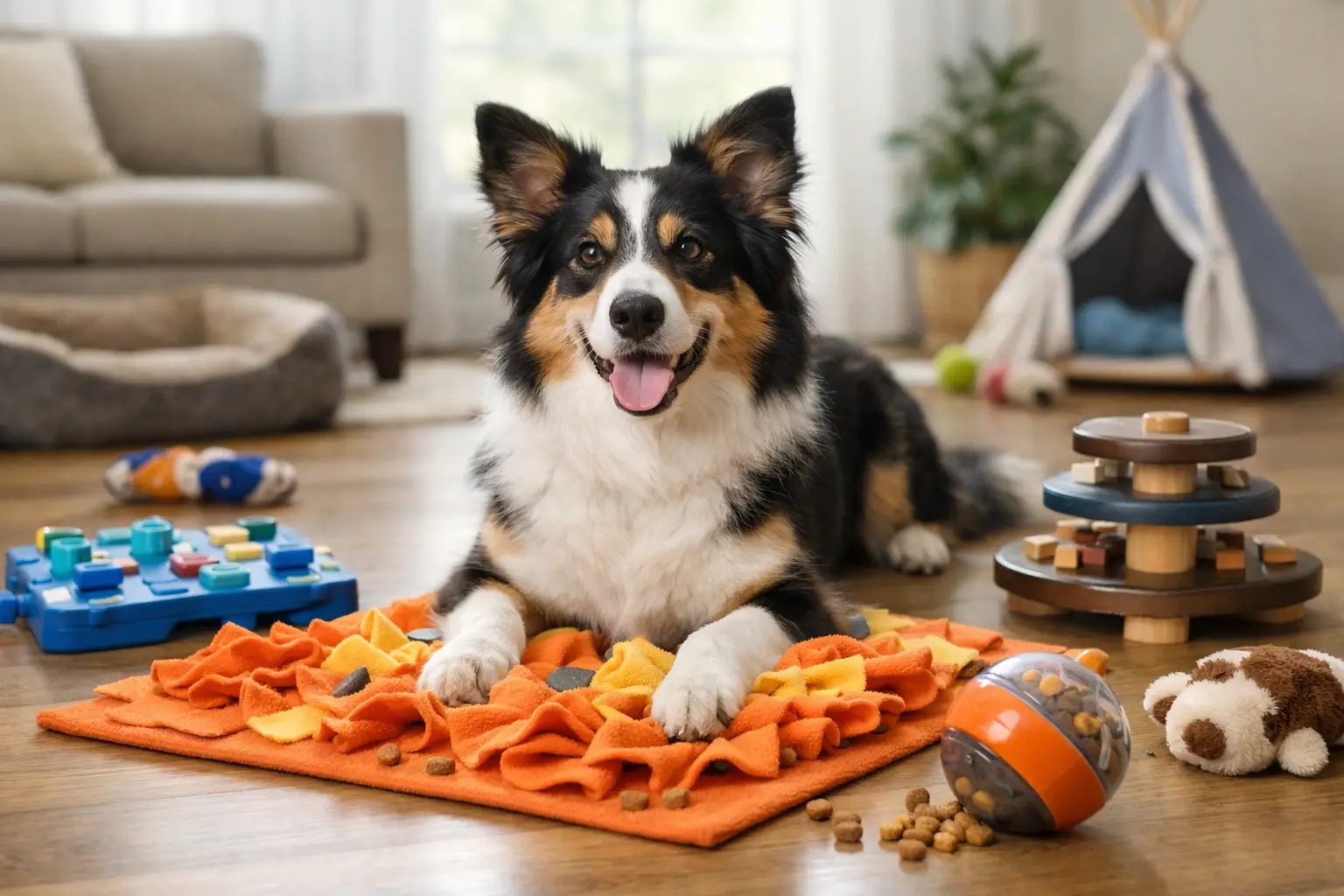
Rainy afternoon, surprise work calls, freezing sidewalks, or a dog who still wants action at 7 p.m. – every pet parent runs into days when a regular walk is not enough or just not happening. That is where smart indoor dog enrichment ideas can make home feel a lot more fun, while also helping with boredom, restlessness, and the kind of mischief that starts when your dog has too much energy and nowhere to put it.
The good news is you do not need a huge house or a complicated setup. A few well-chosen activities, rotating toys, and food-based challenges can turn ordinary indoor time into something your dog actually looks forward to. The key is picking enrichment that fits your dog’s age, energy level, chewing style, and attention span.
A tired dog is not always a fulfilled dog. Physical exercise helps, but mental stimulation matters too. Dogs were built to sniff, search, chew, lick, solve little problems, and interact with their environment. When they do not get enough of that, you may see barking, pacing, counter surfing, shredding, or clingy behavior.
Indoor enrichment gives dogs a job to do. Sometimes that job is simple, like licking a food spread from a mat. Sometimes it is more active, like searching for treats hidden around the living room. Both count. What matters is that the activity engages your dog in a safe and satisfying way.
It also helps to think in terms of balance. Some enrichment options burn mental energy fast but do not last long. Others keep a dog occupied for more time but are less active. Mixing both usually works best.
If your dog finishes dinner in 30 seconds, that meal is an easy place to add enrichment. Slow feeders, puzzle feeders, and treat-dispensing toys make dogs work a little for their food, which naturally stretches out eating time and adds mental effort.
This is one of the easiest upgrades because you are not adding extra calories. You are simply changing the way food is delivered. For fast eaters, it can also help reduce gulping. The trade-off is that some dogs get frustrated if the puzzle is too hard, so start simple.
Licking can be soothing for many dogs, which is why lick mats are great during busy afternoons or while you need your dog to settle nearby. A thin layer of dog-safe soft food, plain pumpkin, or peanut butter made for dogs can turn a few quiet minutes into a nice reset.
This works especially well for dogs who need help winding down after excitement. It is less useful for heavy chewers who may try to destroy the mat, so supervision matters until you know your dog’s style.
Scatter a few treats in one room while your dog watches, then make it a little harder by hiding them behind chair legs, under a towel, or near furniture edges. Once your dog understands the game, you can move to multiple rooms and let scent do the work.
Sniffing games are excellent for dogs who do not need high-impact indoor activity but still need a challenge. They are also beginner-friendly. If your dog gets too excited and starts searching with their mouth before their nose, use easy hiding spots first and build from there.
A giant toy pile looks generous, but it often makes toys less exciting. Rotating a smaller group every few days keeps interest higher and helps old favorites feel new again.
This is one of the simplest indoor dog enrichment ideas because it does not require more floor space or constant new purchases. Mix textures and play styles – plush toys, chew toys, balls, rope toys, and puzzle toys all offer different kinds of engagement.
You do not need agility equipment to make indoor movement more interesting. A hallway can become a recall lane, couch cushions can become stepping spots, and a broom balanced low between boxes can create a tiny jump for dogs who are physically able.
Keep it low impact and age appropriate. Puppies, senior dogs, and dogs with joint concerns should focus on easy stepping, weaving, or going around objects instead of jumping. The point is not athletic perfection. It is variety.
Training counts as enrichment, especially when it stays upbeat and brief. Five minutes of sit, down, touch, place, spin, or leash manners can work a dog’s brain more than people expect.
This is also a smart way to build real-life skills while using up energy. If your dog loses focus quickly, keep sessions short and end on a win. Several mini sessions through the day usually work better than one long drill.
For dogs who love to sniff out every crumb, a snuffle mat is a strong choice. You can also roll treats into a towel, fold it, and let your dog figure out how to uncover the goodies.
Foraging taps into natural search behavior and slows dogs down in a satisfying way. Just be realistic about your dog’s habits. If they tend to shred fabric and swallow pieces, choose a tougher product and supervise closely.
Chewing is not bad behavior by itself. It is normal, enjoyable, and often calming for dogs. The trick is giving them appropriate outlets before they decide your table leg looks interesting.
Long-lasting chew toys and dog-safe chews can be a solid part of your indoor routine. The best pick depends on your dog. Aggressive chewers need durable options, while dogs with sensitive teeth may prefer something softer. Size matters too – too small is a safety risk, and too hard can be tough on teeth.
Tug is one of the easiest indoor games because it takes very little space and creates instant engagement. It can be great for dogs who want interaction more than solo play.
The key is structure. Teach a simple start and stop, and use a cue for release so the game stays fun and controlled. If your dog gets over-aroused easily, keep rounds short and follow with a calming activity.
Some dogs enjoy having a safe perch or comfortable spot where they can watch the world go by. A bed near the window, paired with a toy or chew, can add low-key enrichment during the day.
This works best for dogs who enjoy observing without spiraling into nonstop barking. If outdoor sights make your dog too reactive, skip this one or manage the view more carefully.
Indoor fetch does not have to mean chaos. A soft ball or plush toy in a hallway can give your dog a controlled burst of movement without turning the house upside down.
This depends a lot on your home and your dog’s size. Small spaces and slippery floors are not ideal for fast turns. In those cases, rolling a toy instead of throwing it can keep things safer.
One random puzzle toy on a Tuesday is nice. A simple routine is better. Dogs often do well when enrichment shows up in predictable ways – maybe a puzzle feeder in the morning, a short training session in the afternoon, and a chew or lick mat in the evening.
This does not need to be complicated. The goal is to spread mental activity across the day so your dog is not waiting for all their stimulation to come from one walk or one play session.
The best activity is the one your dog will actually enjoy and use safely. High-energy dogs often like movement plus problem-solving, so fetch, tug, and food puzzles may be a good mix. Nervous dogs may prefer sniffing, licking, and gentle training games. Heavy chewers need sturdy materials, while seniors may benefit from slower, lower-impact options.
It also helps to watch what your dog naturally chooses. If they sniff every corner on walks, scent games are a smart bet. If they love carrying toys and bringing them to you, interactive games may be the better fit. Enrichment is not one-size-fits-all, and that is part of what makes it useful.
Supervision matters when introducing any new toy, chew, or puzzle. Make sure products match your dog’s size and chewing strength, and remove anything that starts breaking into pieces. Food-based enrichment should also fit your dog’s diet, especially if they have allergies, weight concerns, or a sensitive stomach.
And if your dog seems frustrated instead of engaged, make the activity easier. Enrichment should be stimulating, not discouraging.
The biggest win with indoor enrichment is not just wearing your dog out. It is making home life smoother. A dog with something satisfying to do is often calmer, happier, and less likely to invent their own entertainment with your shoes, couch pillows, or kitchen trash.
If you are building a better at-home routine, it helps to keep a few pet-approved picks on hand – puzzle toys, feeders, chew options, training accessories, and comfort items can all make a real difference without making daily care more complicated. That is exactly why many pet parents like shopping broad, easy categories in one place, including stores like Doggodays.shop.
Start with one or two indoor dog enrichment ideas that fit your space and your dog’s personality, then build from there. A little variety goes a long way, and even small changes can make a home day feel a lot more exciting for your best friend.







Leave a comment