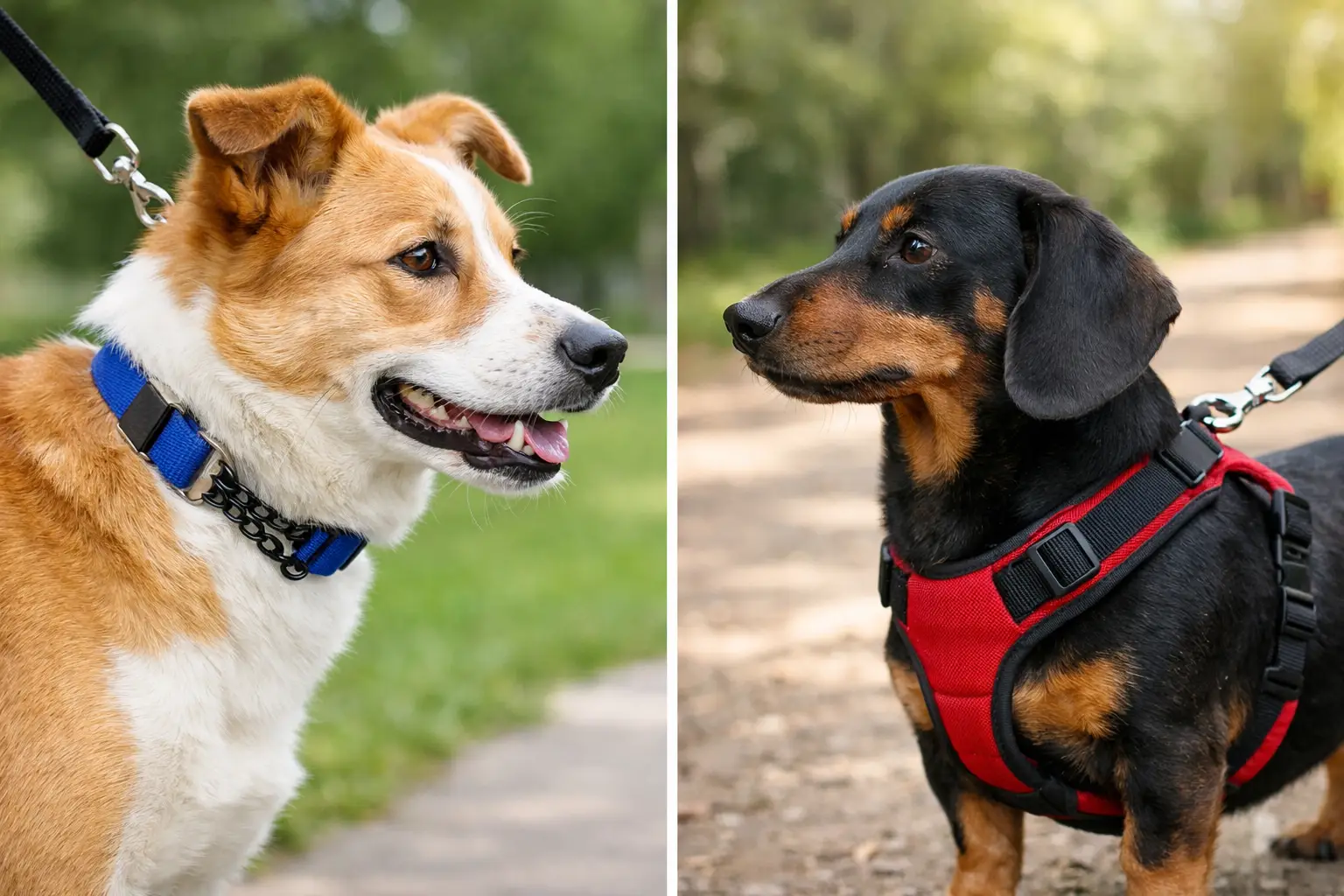
That excited bounce at the door can turn a simple walk into a tug-of-war fast. When choosing a martingale collar vs harness, the best pick is not about what looks cutest on the leash. It is about where pressure lands, how securely your dog is contained, and what helps both of you enjoy the walk.
A martingale collar can be a smart, simple choice for dogs that slip out of regular collars. A harness can offer more control and take pressure away from the neck. Both have a place in a well-stocked dog gear drawer, but they are built for different needs.
A martingale collar sits around your dog’s neck and has a smaller loop that gently tightens when the leash is pulled. Unlike a choke chain, it has a limited closure point. When fitted correctly, it should tighten only enough to prevent your dog from backing out of the collar, not keep tightening without limit.
A harness wraps around the chest and torso. The leash attaches to a ring on the back, chest, or sometimes both. Because the pulling force is spread across more of the body, a harness is often a more comfortable choice for dogs that pull hard or have sensitive necks.
Neither option is automatically better for every dog. A calm adult dog who walks beside you may do beautifully in a martingale collar. A young, enthusiastic dog who launches toward every squirrel may be safer and easier to manage in a well-fitted harness.
Martingale collars are especially popular for dogs with narrow heads or necks. Greyhounds, whippets, salukis, and similar breeds can sometimes slip a standard buckle collar when they pull backward. The martingale design gives pet parents a little extra peace of mind because it closes down to a pre-set size when tension is applied.
They can also work well for dogs that already walk politely on leash. If your dog does not lunge, cough, or pull constantly, a martingale collar offers a lightweight, less bulky option for neighborhood walks and quick potty breaks.
The trade-off is that all leash pressure still reaches the neck. For a dog that pulls with real force, this can be uncomfortable and may encourage coughing or gagging. A martingale is also not a hands-off solution for escape behavior. It needs correct sizing and supervision to work safely.
Never leave a martingale collar on an unattended dog in a crate, kennel, or while playing with other dogs. The loop can catch on objects or another dog’s jaw. It is best treated as walking gear, then removed once you are home.
Harnesses are a favorite for puppies, strong pullers, and dogs with neck or airway concerns. Flat-faced breeds, small dogs prone to tracheal sensitivity, and dogs recovering from certain injuries may be more comfortable with pressure directed across the chest instead of the throat. Your veterinarian can offer guidance if your dog has a medical condition or a history of coughing on walks.
For training, a front-clip harness can be particularly useful. When your dog pulls ahead, the front attachment gently turns their body back toward you rather than allowing them to drive forward with full strength. It does not replace loose-leash training, but it can make practice more manageable while your dog learns.
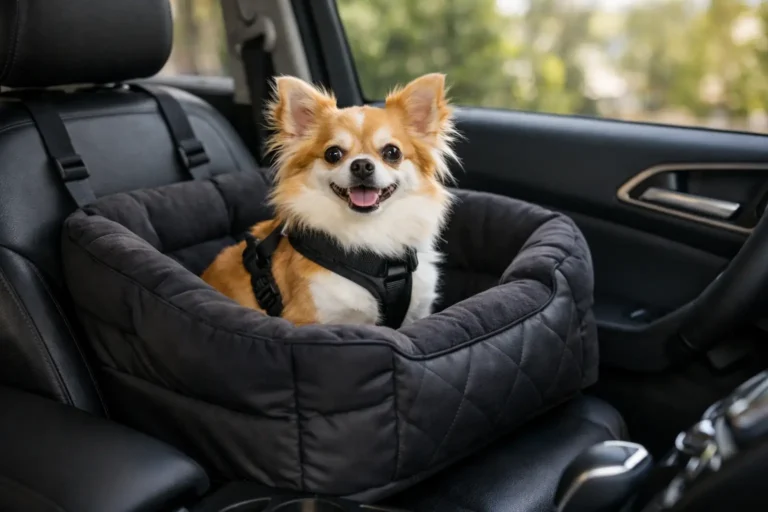
Back-clip harnesses are easy to use and comfortable for many relaxed walkers. They are also commonly used for small dogs and for car rides when paired with a harness-compatible restraint. Keep in mind that some back-clip styles can make it easier for a determined puller to lean into the leash, much like a sled dog. If pulling is your biggest challenge, consider a front-clip or dual-clip design instead.
A harness must fit well to do its job. One that is too loose can let a dog wriggle free. One that is too tight can rub behind the front legs, restrict shoulder movement, or make your dog reluctant to walk.
Start with what happens during a normal walk. Think about your dog’s size, strength, body shape, and habits instead of relying on breed alone. A mellow beagle and a high-energy beagle may need completely different gear.
A martingale collar may be a good match if your dog walks with a loose leash, has a narrow head that slips standard collars, and has no reason to avoid neck pressure. It can also be useful as a backup identification collar when properly supervised, although many pet parents prefer to use it only for walks.
A harness is often the more practical pick if your dog pulls, lunges, is still learning leash manners, or has a delicate neck. It is also worth considering if you need more control in busy areas, around traffic, or when meeting unfamiliar dogs. For very large or powerful dogs, a dual-clip harness can give you more handling options without putting all the force on the neck.
Watch your dog’s response, too. If your dog freezes, scratches at the gear, coughs, or develops rubbed spots, pause and reassess the fit and style. The right equipment should support comfortable movement, not make your dog dread getting ready to go out.
Fit matters as much as the product type. Before every walk, take a few seconds to check buckles, straps, stitching, and leash clips. Worn hardware is not something to gamble on when your dog spots a rabbit across the street.
For a martingale collar, adjust the larger loop so you can comfortably slide two fingers beneath it when it is relaxed. Then pull the control loop gently to make sure the two metal slides do not touch. If they meet, the collar may tighten too far or be adjusted incorrectly. If your dog can back out of it, it is too loose.
For a harness, use the two-finger check around the straps, especially behind the front legs and around the chest. The chest piece should sit across the breastbone, not press high into the throat. Let your dog take a few steps indoors and check that the harness does not shift, twist, or pinch at the armpits.
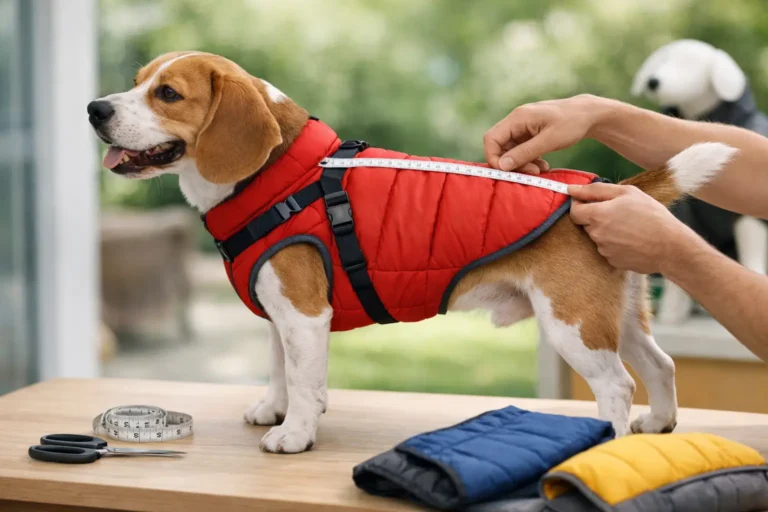
If your dog is between sizes, measurements matter more than weight labels. Measure the widest part of the chest and the neck area recommended by the product design. A little patience during fitting can prevent a lost dog, a sore shoulder, or a frustrating walk later.
Absolutely. Many pet parents keep both a harness and a martingale collar because daily life is not one-size-fits-all. A harness may be your go-to for long walks, training sessions, hikes, and busy sidewalks. A martingale can be useful for a calm walk close to home or for a dog whose head shape makes standard collars unreliable.
Some owners use a harness for leash attachment and a separate flat collar for ID tags. Others attach a safety connector between a harness and collar for extra security with an escape-prone dog. If you use two pieces of gear together, make sure neither rubs, tangles, or limits your dog’s natural movement.
The most helpful setup is the one you can put on correctly every time. Look for easy-adjust straps, secure buckles, comfortable materials, and a leash attachment that matches your goals. At Doggodays.shop, choosing pet-approved walking essentials alongside treats, toys, and everyday supplies makes it easier to keep your dog’s routine ready for whatever the day brings.
Gear can improve control, but it works best alongside calm, consistent practice. Reward your dog for checking in with you, walking near your side, and keeping the leash loose. If they pull, stop or change direction rather than letting the pull earn forward movement. Small, repeatable lessons add up.
Choose the martingale collar or harness that lets your dog breathe, move, and explore comfortably while giving you the confidence to guide them safely. Then clip on the leash, grab a few treats, and make the next walk a good one for both of you.
[…] Being between sizes is common, and the right choice depends on the jacket style and your dog’s build. For a lightweight raincoat with adjustable belly straps, the smaller size may work if the chest measurement is only slightly over the chart. For a thick, insulated jacket, the larger size is usually safer because the lining takes up room and your dog may wear it over a harness. […]








Leave a comment