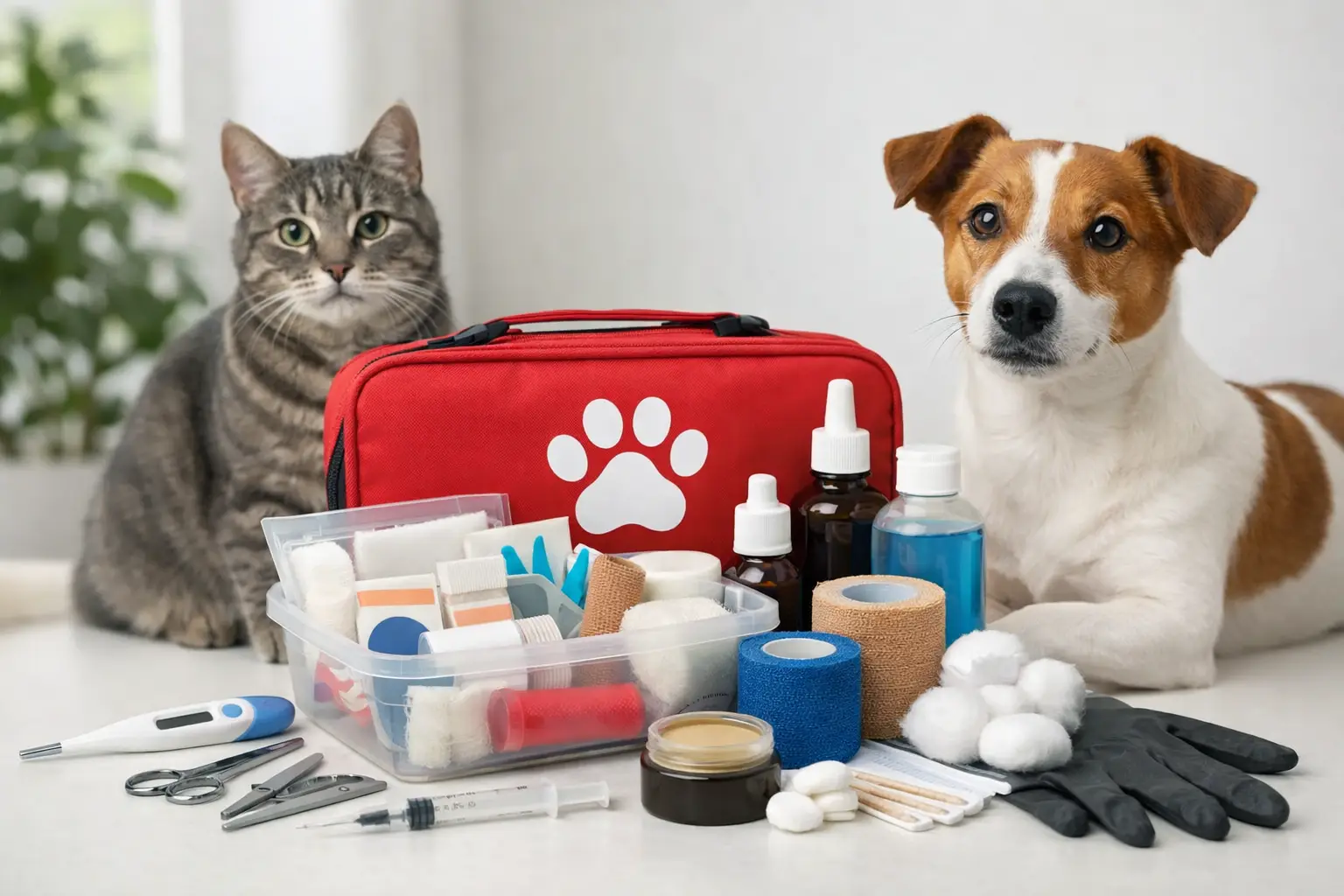
A torn nail after an enthusiastic backyard zoomie, a paw pad irritated by a rough trail, or a surprise bee sting can turn a normal day with your pet into a stressful one fast. Keeping pet first aid supplies close by gives you a calm, practical way to handle minor problems while you contact your veterinarian or head in for care when needed.
A pet first aid kit is not meant to replace veterinary treatment. It is there for the in-between moments: cleaning a small scrape, protecting a sore paw on the drive to the clinic, or safely removing a splinter when your pet is comfortable and cooperative. A few well-chosen essentials can make home, car, and travel days feel much more prepared.
Start with a clean, sturdy container that is easy to grab and large enough to hold everything without becoming a jumble. A zippered pouch works well for travel, while a handled plastic box is handy for a home kit. Keep it somewhere dry, out of reach of pets and children, but easy for adults to access.
For most dog and cat households, these are the supplies worth keeping together:
You do not need to buy every item at once. Build your kit around the pets in your home and the places you go together. A city dog who walks on sidewalks may need paw-care basics, while a hiking companion may benefit from tick-removal tools and an extra roll of bandage wrap. Cat owners may keep a smaller kit indoors, but it should still be easy to locate during an emergency.
Human first aid products are not always safe for animals. Pets lick, chew, and absorb products differently, and some common medications can be dangerous even in small amounts. Never give your pet pain medicine, cold medicine, or other over-the-counter medication unless your veterinarian has told you exactly what to use and how much.
The same goes for creams, antiseptics, and ointments. Read labels carefully and ask your veterinary team which options suit your pet. A simple saline rinse and clean gauze are often safer starting points for a small surface wound than a crowded medicine cabinet full of questionable choices.
The first step is to slow down. Even the gentlest pet may snap, scratch, or struggle when in pain. Speak softly, keep other pets and children away, and ask another adult to help if possible. If your pet is growling, panicking, bleeding heavily, or unable to move comfortably, focus on getting professional help rather than trying to complete a home treatment.
For a minor cut or scrape, rinse away visible dirt with saline, then pat around the area dry with clean gauze. Apply gentle pressure with gauze if there is light bleeding. If you use a wrap, it should be snug enough to stay in place but never tight. Check toes and skin below the bandage for swelling, coldness, or color changes, and remove the wrap if you see them.
For a thorn, burr, or small piece of debris, use clean tweezers only if the object is easy to see and remove without digging. Stop if your pet pulls away, the area is very tender, or the object is deeply embedded. A veterinarian can remove it more safely and check for infection.
If your pet has a minor burn, rinse the area with cool running water. Do not apply ice directly to skin, butter, oils, or household remedies. If a pet gets a sting, watch closely for facial swelling, hives, repeated vomiting, weakness, or trouble breathing. Those signs need urgent veterinary attention.
First aid can buy time, but some situations call for immediate care. Call a veterinarian or emergency animal hospital right away for trouble breathing, collapse, seizures, suspected poisoning, heatstroke, uncontrolled bleeding, eye injuries, broken bones, deep wounds, repeated vomiting, bloated abdomen, or trouble urinating.
It is also wise to call if your pet seems unusually quiet, disoriented, painful, or unlike themselves after an accident. Pets are good at hiding discomfort. Trust the change you notice, especially if it follows a fall, rough play, a car ride mishap, or access to something they should not have eaten.
Keep your regular veterinarian’s number, the nearest emergency clinic, and an animal poison support contact saved in your phone and written inside the kit. When you are worried, having those details ready saves valuable minutes.
One large home kit is a great starting point, but a smaller travel pouch can be just as useful. Add a few basics to the bag you use for road trips, camping weekends, visits to family, or long walks. Gauze, wrap, saline, tweezers, gloves, and a collapsible bowl take up little room and can help you manage a problem before you get back home.
For summer outings, pack fresh water and a portable bowl alongside your first aid essentials. Heat can become dangerous quickly, especially for flat-faced breeds, senior pets, puppies, and dogs with thick coats. In colder weather, a towel and paw balm can help with wet paws and exposure to salt or de-icing products, though persistent limping or irritation should still be checked by a veterinarian.
If your pet takes prescription medication, keep a current medication list in the kit rather than storing extra doses where heat or moisture could affect them. Include your pet’s name, weight, allergies, medical conditions, and your veterinarian’s contact details. This small note is useful if someone else needs to care for your pet or drive them to a clinic.
A first aid kit only helps if the supplies are clean, current, and within reach. Check it every few months, and always check before a big trip. Replace used gauze and gloves, restock saline, and remove expired products. Make sure scissors still cut and that the thermometer has a working battery.
It also helps to practice the calm parts before you need them. Let your dog or cat see and sniff the kit. Reward relaxed behavior around a towel, paw handling, and gentle touch. This is not about turning your pet into a perfect patient. It simply makes a stressful moment a little more familiar for both of you.
For pet parents who prefer to keep everyday care simple, Doggodays.shop makes it easy to browse practical pet essentials alongside the comfort, travel, grooming, and play items your household already uses. Choose a dedicated container, add the basics that fit your pet’s routine, and keep it stocked where you can reach it without searching. The best time to prepare is when your pet is happily napping nearby, not when they need help.








Leave a comment