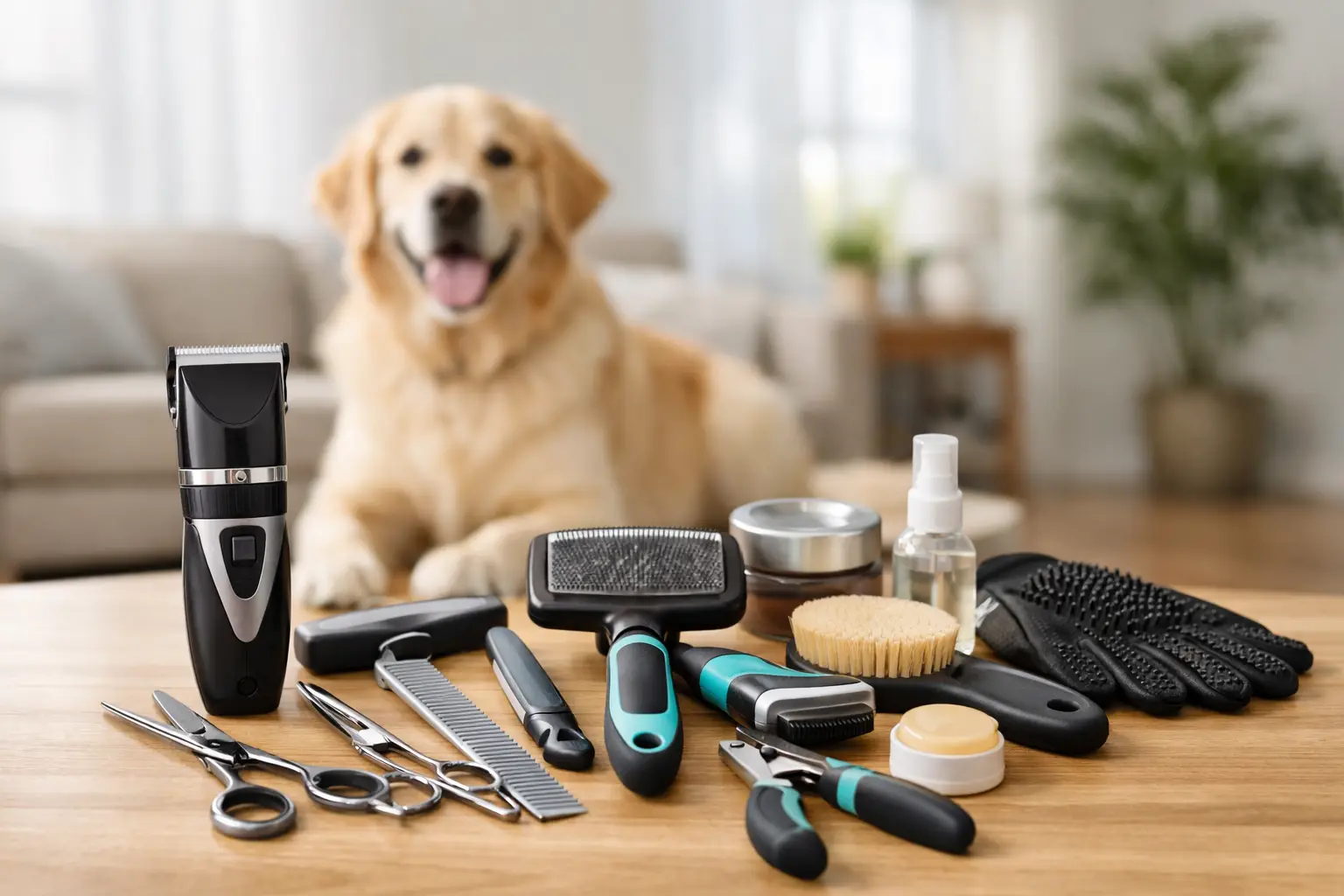
A grooming kit can turn a fur-covered couch, a few stubborn tangles, and a nervous nail-trimming day into a calmer routine for both you and your dog. The right tools help you care for your pet between professional appointments, while the wrong ones can sit untouched in a drawer. This dog grooming kit review focuses on what makes a kit genuinely useful for everyday home care, not just impressive in a product photo.
A complete kit does not have to mean the biggest possible bundle. For most pet parents, the best set includes tools that work together: a brush for regular coat care, a comb for checking behind the ears and around the legs, a safe nail-care tool, and a pair of grooming scissors for small touch-ups. Dogs with longer or thicker coats may also benefit from a dematting tool or undercoat rake.
Start by thinking about your dog’s real routine. A short-haired Beagle does not need the same collection of tools as a fluffy Goldendoodle, and a senior dog with sensitive skin may need softer bristles than an energetic young Husky. A practical kit is one you will reach for often, not one packed with specialty pieces your dog will never need.
The handle design matters more than it may seem. Brushes, combs, and clippers should feel secure in your hand, especially when you are working around wiggly paws or a thick coat. Look for smooth edges, easy-grip handles, and materials that are simple to wipe clean after use.
A brush is the everyday hero of most grooming kits. Slicker brushes are popular for medium, long, curly, or dense coats because their fine wires can lift loose fur and work through small tangles. Use gentle strokes, though. Pressing too hard can make grooming uncomfortable, particularly on thin-skinned areas such as the belly and underarms.
For short, smooth coats, a rubber curry brush or soft bristle brush is often the better choice. It helps remove loose hair while giving your dog a gentle massage. A metal comb is valuable for a different reason: it lets you check whether a brushed section is truly free of tangles. If the comb cannot pass easily through the coat, slow down and work on that spot before it turns into a mat.
Nail care is one of the most useful reasons to buy a home grooming kit. Long nails can catch on rugs, make walking less comfortable, and create that familiar click-click sound across hard floors. The choice between clippers and a grinder comes down to your comfort level and your dog’s temperament.
Traditional clippers are quick and quiet, which can make them easier for dogs who dislike buzzing sounds. Choose a size that fits your dog’s nails and use a model with a safety guard if you are still building confidence. A nail grinder smooths sharp edges and can be easier to control in tiny increments, but some dogs need time to get used to the vibration and sound.
Whichever tool you choose, trim a little at a time. For light-colored nails, stop before the pink quick. Dark nails are harder to read, so take off very small amounts and inspect the center of the cut nail as you go. Keeping styptic powder on hand is a smart extra precaution for accidental nicks.
Rounded-tip scissors are helpful for neat, careful touch-ups around the paws, face, and sanitary areas. They are not meant to replace a full professional haircut, especially if your dog has a matted coat or a breed-specific style. Their job is simple: trim a few stray hairs where precision matters.
Use scissors only when your dog is relaxed and standing or sitting as still as possible. Never cut directly toward the skin, and avoid trying to cut through mats. Mats can pull the skin upward, making it surprisingly easy to cause an injury. In that situation, a professional groomer is the safer choice.
Some kits include shampoo bottles, bath brushes, ear wipes, or microfiber towels. These can be convenient, but they should be judged on usefulness rather than quantity. A bath brush can help work dog shampoo through a thick coat, while a quick-dry towel makes post-bath cleanup easier.
If your dog has itchy skin, frequent ear concerns, or a history of allergies, choose products carefully and ask your veterinarian for guidance. A general grooming kit is great for routine care, but it is not a substitute for medical treatment.
Coat type should guide almost every grooming purchase. Short-haired dogs generally need a simple brush, comb, nail tool, and towel. Their grooming sessions are usually fast, but regular brushing still reduces shedding and lets you spot dry skin, bumps, or pests early.
Double-coated breeds such as German Shepherds, Labradors, and Huskies shed heavily during seasonal coat changes. An undercoat rake or deshedding tool can be useful, but moderation matters. Aggressive daily use may irritate the skin or damage the healthy topcoat. A few careful sessions each week are often enough when shedding is at its peak.
Curly, long, and continuously growing coats need the most consistent attention. Poodles, doodle mixes, Shih Tzus, and similar dogs can develop mats close to the skin, even when they look fluffy on the surface. A slicker brush and metal comb are a strong everyday pairing, and small sections are easier to manage than one rushed full-body brushing.
Dogs with wiry coats, very sensitive skin, or unusual grooming needs may need more specialized tools. In those cases, a basic kit still covers brushing and nail care, while a professional groomer can help you choose the right maintenance plan.
A lower price can be appealing, especially if you are putting together your first home grooming setup. Still, a bargain kit is only a good value if the tools are comfortable, durable, and appropriate for your dog. Flimsy clipper springs, sharp brush edges, and scissors that do not open smoothly can make grooming frustrating.
Pay attention to the tool mix. A kit with five nearly identical brushes may look generous but offer less value than one quality brush, one comb, nail clippers, and rounded scissors. Storage is another practical detail. A compact case keeps smaller tools together and makes it easier to take your dog’s essentials on trips or store them out of reach of children and pets.
Electrical clippers deserve extra thought. They can be useful for light trimming, but they require patience, maintenance, and a dog who can tolerate the sound. Cordless options are convenient, although battery life matters for larger dogs. Check blades often during use because warm blades can be uncomfortable against the skin.
The best kit cannot do its job if your dog sees it and runs away. Build a positive association slowly. Let your dog sniff the brush, reward calm behavior, and start with a few gentle strokes in a favorite spot. End before your dog becomes restless. A two-minute success is better than a stressful 20-minute struggle.
For nail care, begin by touching the paw and offering a treat, then progress to handling individual toes. You do not have to finish every nail in one sitting. Many dogs do better with one or two nails at a time, especially when they are learning.
Choose a calm, well-lit space with a non-slip surface. Regular grooming is also a chance to notice changes such as new lumps, irritated skin, fleas, ticks, or ear odor. If you find anything concerning, contact your veterinarian rather than trying to solve it with another grooming product.
A thoughtfully chosen kit gives pet parents an easy way to keep coats comfortable, paws tidy, and cuddle time a little less furry. At Doggodays.shop, everyday pet-approved grooming essentials can help make that routine feel simple, calm, and full of well-earned treats.
[…] Doggodays.shop makes it easy to browse practical pet essentials alongside the comfort, travel, grooming, and play items your household already uses. Choose a dedicated container, add the basics that fit your pet’s […]










Leave a comment