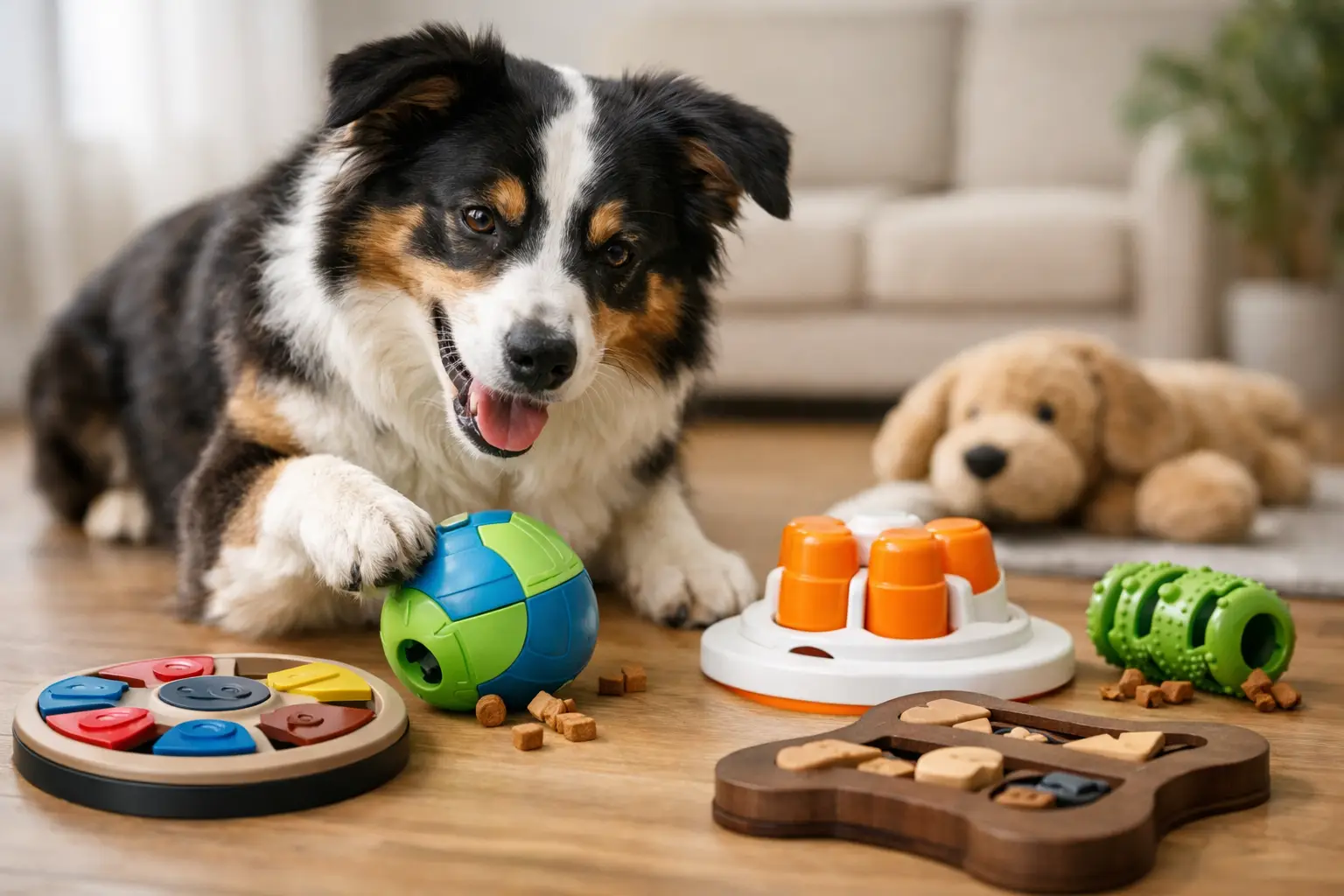
A dog who races through breakfast, patrols the kitchen for crumbs, or turns a quiet afternoon into a sock-hunting mission may simply need a better job to do. The best dog puzzle toys give dogs a fun, rewarding challenge while slowing down snack time and bringing more purpose to indoor play.
Puzzle toys are not just for high-energy dogs. They can make a rainy day more interesting for any curious pup, help food-motivated dogs eat at a calmer pace, and give pet parents an easy way to add variety to the daily routine. The right choice depends on your dog’s size, chewing style, patience, and favorite rewards.
A good puzzle toy should be interesting without being frustrating. Your dog needs a realistic chance of figuring it out, especially at the beginning. If the toy is too difficult, many dogs will paw at it once or twice, then walk away. If it is too easy, the fun may be over before you have finished your coffee.
Look for a toy with a size and material that fits your dog. Small treats can fall too deeply into an oversized toy, while a toy that is too small can be a choking concern for a larger dog. For enthusiastic chewers, choose sturdy materials and inspect the toy regularly for cracks, loose pieces, and worn edges.
The treat itself matters, too. Dry kibble works beautifully in many dispensers and helps turn a regular meal into playtime. Tiny training treats, freeze-dried pieces, or a thin layer of dog-safe spread can add extra excitement when your pup is ready for a bigger challenge.
There is no single perfect toy for every dog. These popular puzzle styles make it easier to match the challenge to the dog in front of you.
A treat-dispensing ball is a classic starter puzzle. Your dog nudges, rolls, and paws at the ball until kibble or treats tumble out through an opening. The movement keeps dogs engaged and encourages them to use their nose and problem-solving skills.
These are especially useful for dogs who enjoy chasing toys and tend to eat meals too quickly. Start with a larger opening so rewards come out easily, then adjust the difficulty if the toy allows it. On hard floors, a rolling ball can be noisy, so it may be better suited for daytime play or a room with a rug.
Snuffle mats turn snack time into a scent game. You tuck kibble or treats among soft fabric strips, and your dog searches with their nose to find every bite. This is a gentle, low-impact option for dogs who love sniffing more than chasing.
They are a great fit for puppies, senior dogs, and dogs recovering from a busy walk who still want something to do. Supervision is smart, particularly for dogs that like to pull apart fabric or chew non-food items. Shake out crumbs and wash the mat as needed to keep it fresh for the next search.
Board-style puzzles have compartments, sliding covers, or small doors that hide treats. Dogs use their nose, paws, and sometimes a little trial and error to reveal the reward. This type of toy is satisfying for dogs that enjoy working close to the ground and investigating every detail.
Begin with treats placed in open or easy-to-reach compartments. Once your dog understands that moving a piece reveals a snack, you can close more sections or add a few empty spaces. These toys are best used while you are nearby, since some determined dogs may try to chew the moving parts instead of solving the puzzle.
Lick mats and stuffable rubber toys offer a different kind of enrichment. Instead of chasing treats, dogs lick or work food out gradually. A thin spread of dog-safe peanut butter without xylitol, plain pumpkin puree, wet dog food, or softened kibble can make these toys especially appealing.
Licking can be a calming activity, making this style a nice choice after a walk, during quiet time, or when guests are at the door. Freezing the filled toy can make the challenge last longer, but start with an unfrozen version if your dog is new to food puzzles. Choose a shape that is easy to clean so old food does not get trapped in hard-to-reach spots.
For dogs that adore soft toys, hide-and-seek puzzles can bring plenty of tail-wagging fun. These usually include small plush toys tucked inside a larger toy, inviting dogs to pull them out one by one. Squeakers and crinkly textures often add to the excitement.
This option is more about play than slowing a meal, and it is not ideal for dogs that destroy plush toys quickly. Still, for gentle dogs who love carrying and retrieving toys, it can turn a few minutes of independent play into a cheerful little mission.
The most successful puzzle is one your dog can solve with a bit of effort. Start easy, even if your dog seems very smart. Your goal is to build confidence and teach them that trying leads to good things.
A beginner dog may do best with a snuffle mat, an open treat ball, or a stuffed toy with loosely packed kibble. Intermediate dogs can move on to adjustable dispensers and simple sliding puzzles. Dogs with more puzzle experience may enjoy multiple compartments, layered obstacles, or toys that combine rolling, lifting, and sniffing.
Pay attention to your dog’s behavior. Focused sniffing, gentle pawing, and happy tail wags are good signs. Repeated barking, hard biting, or giving up quickly may mean the toy is too difficult, not rewarding enough, or simply not your dog’s preferred style. It depends on personality as much as skill. Some dogs love a complicated puzzle board, while others would happily search a snuffle mat every day.
Puzzle toys work best as part of a supervised routine, especially when your dog is learning. Show them the toy, let them see or smell the reward, and celebrate their first success with a little praise. There is no need to make every play session a test.
Use part of your dog’s normal meal whenever possible. This helps avoid adding too many extra calories, particularly if puzzle time happens every day. If you use high-value treats, keep portions small and reduce meal portions accordingly.
Rotate toys instead of leaving every option out all the time. Bringing out two or three choices each week can help old favorites feel fresh again. Clean food toys after use, check for damage, and retire any item that has become unsafe for your dog to enjoy.
Puzzle toys are most helpful when they fit naturally into real life. Offer a food puzzle while you prepare dinner, use a snuffle mat on a rainy morning, or reserve a lick mat for the time when deliveries or visitors make your dog extra alert. A five- or ten-minute activity can make a noticeable difference for a dog who needs a little more attention and engagement.
For multi-dog homes, give each pet their own puzzle in separate spaces. This reduces competition and lets every dog work at their own pace. It also makes it easier to see which puzzle styles each pet enjoys most.
At Doggodays.shop, pet parents can browse playful everyday picks alongside feeding accessories, training essentials, and other supplies that make caring for a dog feel simpler. Choose one easy puzzle to start, load it with a few familiar bites, and let your dog show you what kind of challenge makes their day brighter.







Leave a comment