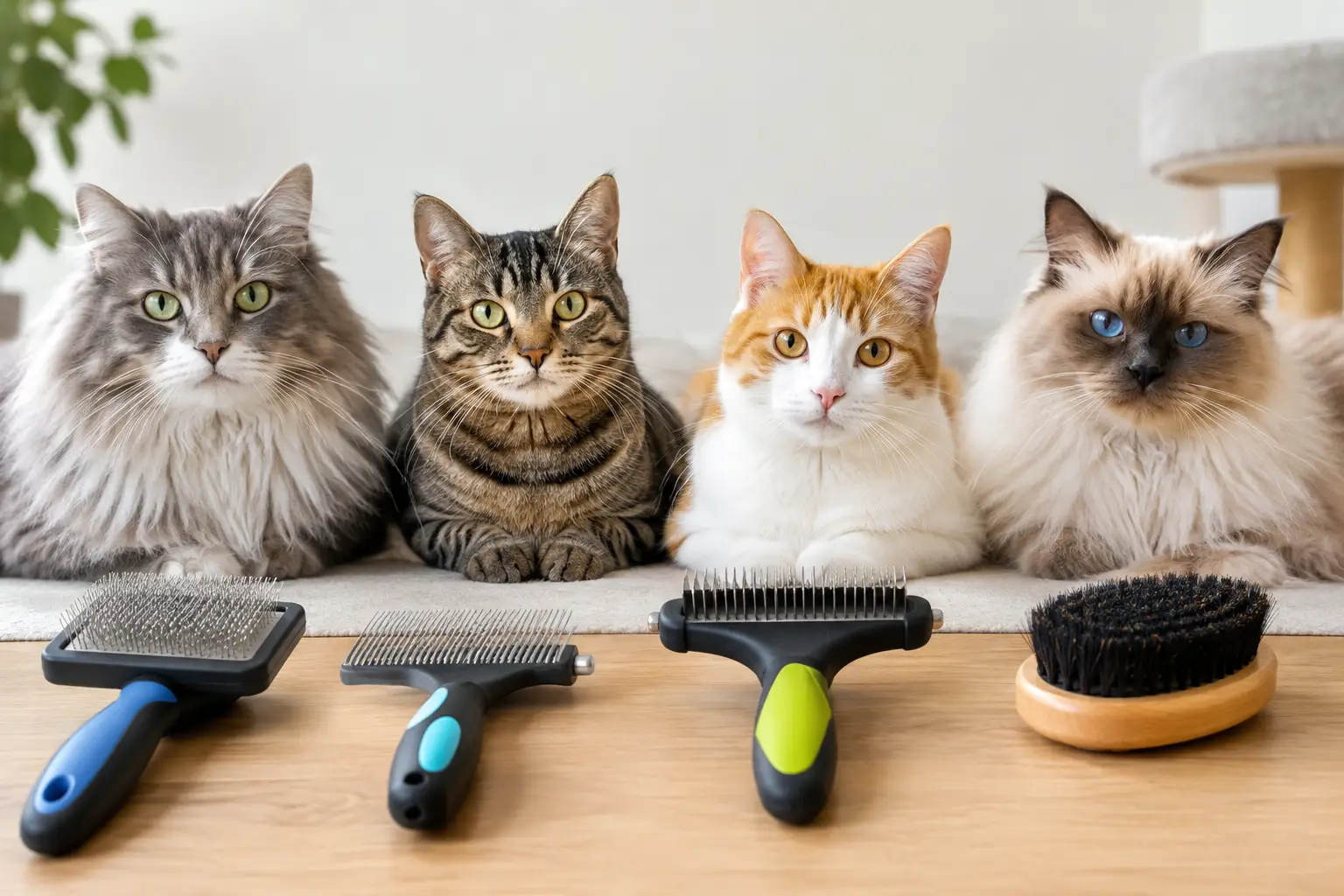
A brush that feels great on one cat can be completely wrong for another. A sleek short-haired cat may only need a quick pass to lift loose fur, while a fluffy long-haired cat needs a tool that can reach through the coat before tangles become mats. This cat brush comparison makes it easier to choose a pet-approved grooming tool based on your cat’s coat, comfort level, and everyday shedding needs.
Brushing is not just about keeping fur off the sofa, although that is certainly a welcome benefit. Regular grooming helps remove loose hair before your cat swallows it during self-grooming. It can also help you notice dry skin, small tangles, or changes in the coat sooner.
The best brush is the one your cat will tolerate comfortably and that works with their coat rather than pulling against it. Some cats enjoy long, gentle grooming sessions. Others prefer a few quiet strokes while they are relaxed beside you. Choosing the right tool helps make the experience easier for both of you.
There is no single brush that suits every cat, and many multi-cat households keep two or three options on hand. Here is how the most common grooming tools compare.
| Brush type | Best for | What it does well | Keep in mind | |—|—|—|—| | Slicker brush | Medium and long coats | Loosens shedding fur and light surface tangles | Use a light touch to avoid irritating skin | | Pin brush | Long, silky, or fluffy coats | Separates longer fur and smooths the outer coat | May not remove dense undercoat alone | | Bristle brush | Short, smooth coats | Removes light loose fur and adds a neat finish | Less effective on thick shedding coats | | Grooming glove | Nervous cats and short coats | Collects loose fur while feeling like petting | Usually not enough for tangles or heavy shedding | | Undercoat rake or deshedding tool | Thick double coats | Reaches loose undercoat during shedding seasons | Use sparingly and choose a cat-sized tool | | Wide-tooth comb | Long coats and early tangles | Checks for knots and reaches close to the skin | Work slowly around sensitive areas |
A slicker brush has many fine, closely spaced wires designed to catch loose fur and gently work through small tangles. It is a popular choice for medium-haired and long-haired cats, especially when shedding picks up in spring or fall.
The trade-off is that slicker brushes can feel too sharp if used with pressure. Brush in the direction of fur growth and keep strokes short and gentle. If your cat flinches, pauses, or tries to leave, ease up or switch to a softer tool.
Pin brushes look similar to small human hairbrushes, with widely spaced metal pins that may have rounded tips. They are especially useful for cats with long, flowing coats because they separate the fur without aggressively pulling out undercoat.
A pin brush is a good everyday option for a long-haired cat whose coat is already in decent shape. It is not always the best first choice for a dense knot near the belly or behind the ears. For those spots, start with a wide-tooth comb and patience.
For sleek short-haired cats, a soft bristle brush can be all you need. It picks up light loose fur, smooths the coat, and feels gentle enough for cats that dislike more structured grooming tools.
Bristle brushes are also a nice finishing brush after using another tool. They do not reach deeply into thick fur, so they are better for routine touch-ups than major shedding control.
A grooming glove is a friendly starting point for cats that see brushes as suspicious objects. The textured palm catches loose fur while you pet your cat in familiar, calming motions. This can be particularly helpful with kittens, shy adult cats, or cats that only accept grooming for a minute or two.
Gloves work best on short coats and for light maintenance. They are convenient, but they will not prevent matting in a long-haired coat. Think of them as a comfort-first tool rather than a complete grooming solution.
Cats with thick double coats can shed an impressive amount of fur. An undercoat rake or cat-specific deshedding tool reaches below the topcoat to pull out loose undercoat before it ends up around the home.
These tools can make a noticeable difference, but more is not always better. Using one too frequently or pressing too hard may irritate the skin or remove healthy fur. A gentle session once a week during heavy shedding is often plenty, depending on your cat’s coat and tolerance.
Combs are simple, useful, and often overlooked. A wide-tooth comb is excellent for checking long fur for hidden knots, especially around the collar area, chest, armpits, belly, and back legs. It can reach closer to the skin than many brushes, helping you catch a tangle before it tightens.
Fine-tooth combs are better for finishing work on smoother coats or for checking smaller areas. If you meet resistance, do not pull. Hold the fur near the skin to reduce tugging, then work outward from the end of the tangle in small motions.
A colorful brush or a clever feature can be tempting, but coat type should lead the decision. Short-haired cats usually do well with a bristle brush, rubber grooming tool, or glove used once or twice a week. These options lift loose fur without overworking the skin.
Medium-haired cats often benefit from a slicker brush paired with a comb. The slicker handles general shedding, while the comb helps check places where tangles tend to form.
Long-haired cats usually need the most regular care. A wide-tooth comb is essential for finding knots, and a pin brush or soft slicker can help keep the coat separated and tidy. Daily or near-daily sessions are often easier than waiting for one long grooming appointment.
Curly or wavy coats need a gentle approach. Fur can knot close to the skin even when the surface looks fine. Use a comb first, go slowly, and avoid trying to brush through a mat. Severe mats can pull painfully on the skin and may need help from a professional groomer or veterinarian.
When comparing cat brushes, look beyond the brush head. A comfortable handle gives you better control, especially during longer grooming sessions. Rounded tips and flexible pins can be kinder to sensitive skin. A self-cleaning button can also make cleanup quicker when the brush collects a lot of fur.
Size matters, too. A compact cat brush is easier to use around the face, neck, legs, and belly than a large brush made for dogs. For a household with both cats and dogs, separate grooming tools are often the better fit. Their coats and skin sensitivity can be very different.
Start when your cat is calm, perhaps after a meal or while settling into a favorite resting spot. Let them sniff the brush first. Begin with a few strokes on the shoulders or back, where many cats are most comfortable, and stop before they become annoyed.
Avoid forcing a session to finish every inch of the coat. A few successful minutes create a better routine than a stressful struggle. Offer gentle praise, and if your cat responds well to treats, make brushing part of a positive everyday ritual.
Be extra gentle around the belly, tail, hind legs, and under the front legs. These are common tangle zones, but they are also sensitive areas. If your cat shows discomfort, switch tools, shorten the session, or try again later.
For most short-haired cats, a weekly brush is a practical starting point. Long-haired cats may need quick daily combing, with more thorough brushing several times a week. During seasonal shedding, you may need to increase sessions for any coat type.
Keep the brush somewhere easy to reach, not tucked away in a cabinet. A grooming tool beside the cat bed, near the sofa, or with other daily pet supplies makes it much more likely that you will use it regularly.
The right choice in a cat brush comparison comes down to your cat’s coat and personality. Pick a tool that feels gentle, use it consistently, and let each calm grooming session become one more small way to keep your cat comfortable, clean, and happily cared for.








Leave a comment