A litter box is one of those everyday cat essentials that becomes very noticeable when it is not working. If odors linger, wet spots stick to the pan, or your cat starts avoiding the box, the litter itself may be part of the problem. Understanding clumping versus nonclumping cat litter makes it much easier to choose a setup that fits your cat, your cleaning routine, and your household budget.
Neither style is automatically best for every cat. The right choice depends on how many cats use the box, how often you scoop, whether your cat has sensitive paws, and how much tracking your home can handle.
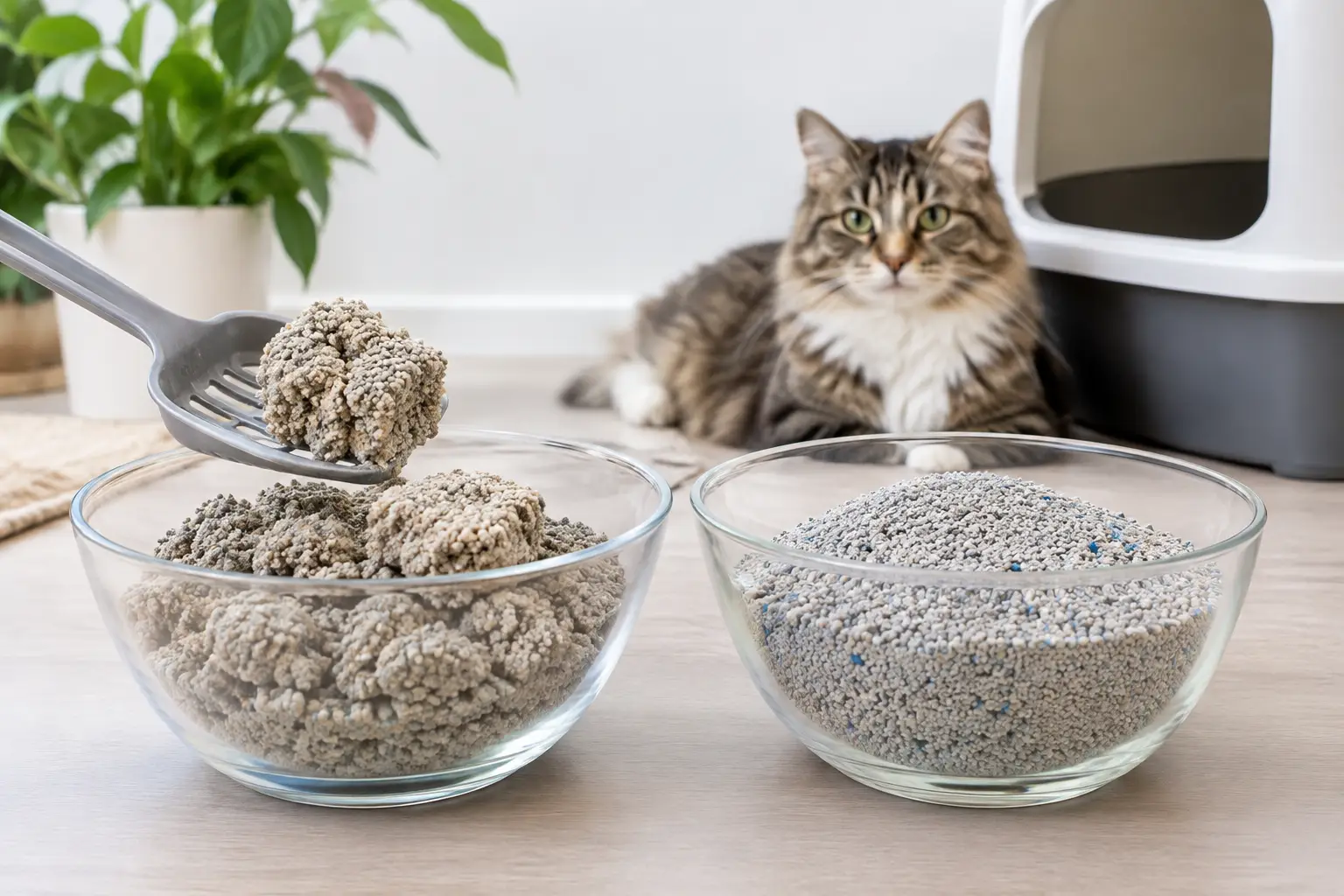
Clumping litter forms solid, scoopable clumps when it comes in contact with urine. Most clumping formulas use bentonite clay, although plant-based options made from corn, wheat, tofu, wood, or other natural materials are also available. When you scoop daily, you remove the used litter while leaving much of the clean litter behind.
Nonclumping litter absorbs liquid but does not turn it into firm clumps. Traditional nonclumping clay litter soaks up urine until the entire box needs to be emptied and refilled. Some crystal and natural litters also work this way, though their absorption and odor-control methods vary.
That difference changes nearly everything about litter box care. Clumping litter is built for spot cleaning. Nonclumping litter is generally handled by removing solid waste daily, stirring the litter, and replacing the full box on a more regular schedule.
For busy households, clumping litter is often the convenient choice. A good clump lifts out cleanly with a scoop, so the litter box can stay fresher between full changes. This is especially helpful in multi-cat homes, where urine can build up quickly and odors can become a daily challenge.
Clumping litter also makes it easier to see how often your cat is urinating. That may sound like a small detail, but changes in litter box habits can be worth noticing. If a cat suddenly produces very large clumps, very small clumps, or avoids the box altogether, it can be useful information to share with a veterinarian.
Because you only remove the soiled portion, a bag of clumping litter can last longer than expected. The upfront price may be higher than basic nonclumping clay, but the cost over time can be reasonable when you scoop consistently and avoid dumping clean litter too soon.
There are trade-offs. Some clay clumping litters create dust, particularly when poured into the box. Fine-grain formulas can also track on paws and end up around the litter area. A textured litter mat and a box with higher sides can help keep cleanup simpler.
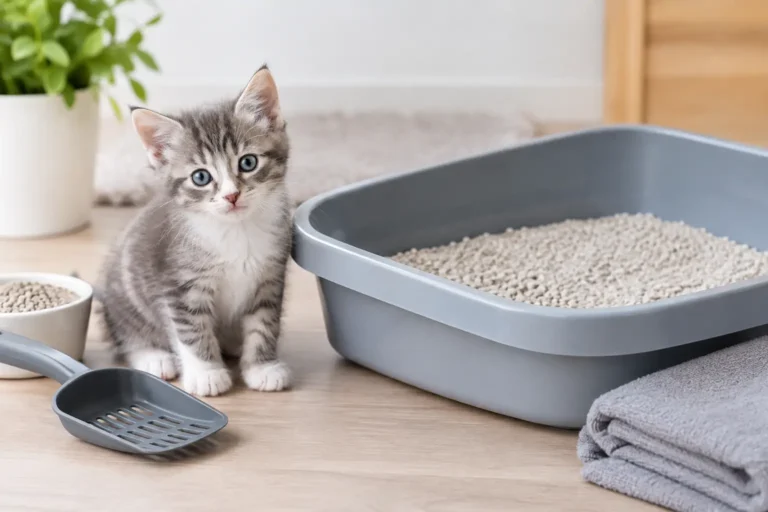
Clumping litter is not ideal for every cat or every life stage. Kittens may be tempted to taste litter, and swallowed clumping material can be a concern. Very young kittens should use the litter recommended by their veterinarian, often a nonclumping option until they are older. Cats with respiratory sensitivities may also do better with a low-dust, unscented formula.
Clumping litter is a strong everyday pick for adult cats, multi-cat homes, and pet parents who prefer quick daily scooping instead of frequent full-box changes. It is also a practical match for covered boxes, high-sided pans, and litter box furniture, where trapped odors need regular removal.
Nonclumping litter is simple, familiar, and often budget-friendly at checkout. Its job is to absorb moisture rather than form a removable mass. For a single cat with a regularly maintained box, that straightforward approach can work well.
Many pet parents first encounter nonclumping clay litter because it is widely available and easy to use. Scoop solid waste every day, stir the remaining litter to spread moisture, and replace the entire box once it becomes damp or starts to smell. The exact schedule depends on your cat, the size of the box, and the amount of litter used.
Nonclumping options can also be useful for young kittens, as mentioned above, because they do not create expanding clumps when wet. Some cats prefer the softer feel of a particular nonclumping formula, and preference matters more than marketing claims. A litter that looks great on paper will not help if your cat refuses to step in it.
The biggest drawback is that urine stays in the box until the litter is replaced. Even with odor-control additives, the box may need a full refresh more often than a clumping setup. That can mean using more litter over the month, especially in homes with two or more cats.
Nonclumping litter can be a good choice for kittens, cats with specific veterinary guidance, households that prefer a simple full-change routine, and shoppers looking for a lower initial price. It is usually less convenient for a busy multi-cat household unless the boxes are changed very frequently.
Odor control is not just about fragrance. In fact, heavily scented litter can bother some cats and may make a litter box less inviting. The best odor control starts with the right box size, enough litter depth, daily solid-waste removal, and a litter type that matches your cleaning habits.
Clumping litter usually has an advantage because urine leaves the box when you scoop the clump. Nonclumping litter can control odor well for a short time, but the moisture remains in the pan. If the box is in a small apartment, laundry room, or bathroom, that difference may matter a lot.
Dust and tracking require a little more trial and error. Clay litters can be dusty, while lightweight natural formulas may travel farther on fluffy paws. Pellet-style litter often tracks less, but some cats dislike its larger texture. Crystal litter can be low-dust and very absorbent, yet the sharper feel may not suit every cat. An unscented, low-dust formula is usually a smart starting point for sensitive cats and sensitive humans.
It is easy to compare litter by sticker price, but it helps to think about how much you throw away. Nonclumping clay may cost less per bag, but you may replace most or all of the box every few days. Clumping litter may cost more upfront, while letting you remove only the used material and top off the box.
Natural and specialty litters can cost more, too. Their value may be lower dust, lighter weight, renewable ingredients, or easier disposal rules. Always check the product label and local waste guidance before flushing any litter, even if the package says it is flushable.
A practical way to compare options is to try one formula for two to three weeks. Track how often you add litter, how often you fully change the box, how much odor you notice, and whether your cat uses it comfortably. Your cat’s behavior should carry the most weight in the final decision.
Cats notice change, especially around their bathroom routine. If you are moving from nonclumping to clumping litter, or trying a new material, do not make a sudden full swap unless you have to. Start by mixing a small amount of the new litter into the old one, then gradually increase it over about a week.
Keep the box in its usual location during the transition. Scoop it often, avoid strong cleaners, and give your cat a calm, clean place to use it. If your cat stops using the box, strains to urinate, cries, or has a major change in bathroom habits, contact a veterinarian promptly rather than assuming the litter is the only issue.
The best answer to clumping versus nonclumping cat litter is usually the one that keeps your cat comfortable and makes daily care realistic for you. A clumping, low-dust litter can make fast scooping easier in a busy home, while a nonclumping formula may be the better fit for a kitten or a cat with a clear preference. Keep the box clean, give your cat enough space, and let their paws have the final say.








Leave a comment