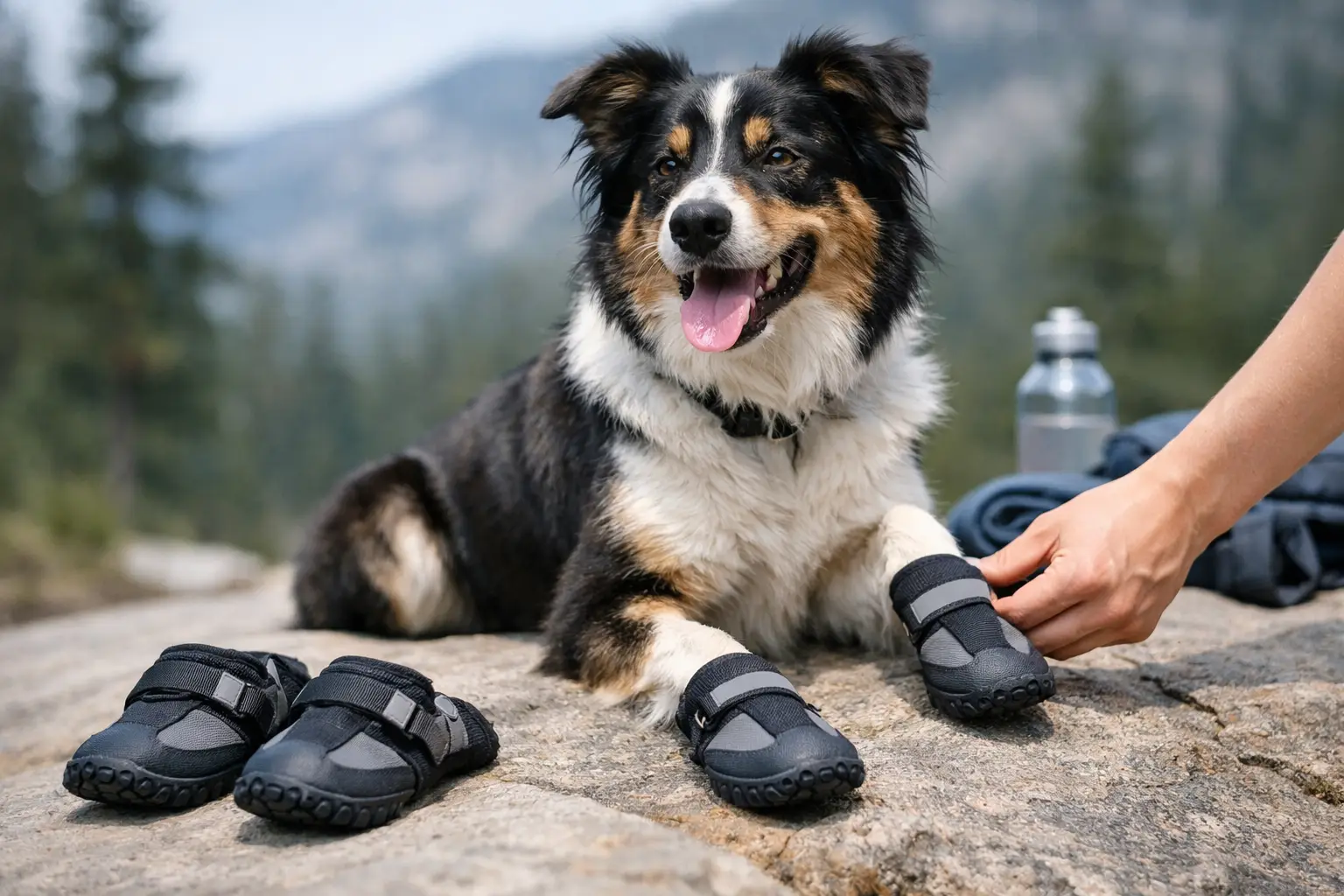
A summer walk can turn painful faster than most pet parents expect. Sidewalks, parking lots, and patios hold heat long after the air starts to cool, while winter streets can be covered in ice melt and gritty salt. Dog booties give your pup a protective layer between sensitive paws and the surfaces they explore every day.
They are not only for snow days or serious hiking trips. The right pair can make neighborhood walks, travel, recovery time, and outdoor play more comfortable for many dogs. The key is choosing booties that fit well, match your routine, and give your dog a little time to adjust.
Paw pads are tough, but they are not invincible. Hot asphalt can cause burns, sharp gravel can lead to cuts, and winter de-icers may irritate the skin between toes. Booties are a simple, practical option when your dog regularly encounters these conditions.
Heat is one of the biggest reasons pet parents reach for paw protection. A good rule is to place the back of your hand on the pavement for about seven seconds. If it is too hot for your hand, it is too hot for your dog’s paws. Booties can help on warm walks, though choosing shaded routes and heading out during cooler hours is still the best plan.
In colder weather, a bootie helps keep snow, slush, salt, and icy grit away from the paw. This can be especially helpful for dogs that lift their feet, stop walking, or lick their paws repeatedly after going outside. Long-haired dogs may also benefit because snow can form uncomfortable little ice balls around their toes and between their pads.
They are useful away from the sidewalk, too. Trail walkers may want extra traction and protection from thorny ground or rugged rocks. Older dogs can appreciate non-slip soles on smooth indoor floors. A dog with a minor paw injury may need a covering for short trips outdoors, but check with your veterinarian first. A bootie should not replace proper wound care or keep a damp, irritated paw covered for long periods.
The cutest pair is not always the best pair. A bootie that twists, slides down, or rubs the dewclaw will frustrate your dog and may create sore spots. Focus first on fit, fastening, sole grip, and the weather you are shopping for.
Measure your dog’s paw while they are standing, since the paw spreads under their body weight. Place it on paper, mark the widest points, and measure across. Many booties are sized by width rather than weight or breed, so follow the sizing chart for the specific style you choose.
If your dog falls between sizes, the answer depends on the product’s shape and closure. A roomy bootie can rotate or slip off, while one that is too snug can limit natural movement. Look for an adjustable strap around the ankle area and enough room for toes to rest flat without being squeezed.
Front and back paws are not always the same size. For dogs with noticeably larger front paws, measure both sets and choose accordingly. It can feel like an extra step, but it saves the hassle of receiving a pair that looks right and performs poorly.
For quick potty breaks on salted sidewalks, a lightweight water-resistant style may be all your dog needs. For frequent walks on hot pavement or rough trails, choose a more durable rubber sole with grip. The goal is to protect the paw while allowing your dog to walk naturally.
Indoor traction socks and booties are usually softer and more flexible. They can help a senior dog feel steadier on hardwood, tile, or laminate floors, but they may not hold up outdoors. Outdoor booties are generally sturdier, although a heavier sole can take more getting used to for a small dog or a pup that has never worn footwear.
A wide adjustable strap is often easier to secure than a narrow elastic opening. Reflective trim is a nice bonus for early morning or evening walks. Water-resistant fabric can be useful in slush and mud, while breathable materials are more comfortable for dry, warm conditions.
Check the inside of each bootie for rough seams, stiff tags, or areas that could rub. A soft lining can add comfort, but it should not hold moisture against the paw. After wet walks, remove the booties promptly and let them dry fully before the next outing.
Most dogs do not immediately understand why their feet suddenly feel different. Some will lift their paws high, walk sideways, freeze in place, or try to shake the booties off. That does not mean booties are a bad choice. It usually means the introduction needs to be slower.
Begin indoors with one bootie for a minute or two. Offer praise, a favorite treat, or a short game while your dog wears it. Once they seem relaxed, try a second bootie, then all four. Keep the first few sessions short and cheerful. Your dog should associate the gear with something positive, not a long and uncomfortable outing.
When your dog can walk normally around the house, take a brief trip outside on a familiar surface. Check the fit after a few minutes. If a bootie has turned sideways, the strap may be too loose, the size may be too large, or the style may not suit your dog’s paw shape.
A few dogs truly dislike wearing anything on their paws. For those pups, shorter walks during cooler parts of the day, paw wipes after winter outings, and choosing gentler routes may be better options. Comfort matters more than forcing a product that creates stress.
The most common mistake is fastening booties too tightly. They should be secure enough to stay in place but never leave deep marks, cause swelling, or make your dog limp. Check circulation by making sure the toes are warm and the paw looks normal after use.
Another mistake is putting booties on dirty or damp paws. Grit and moisture trapped inside can rub the skin, especially during longer walks. Wipe paws dry first, then inspect them after the walk for redness, cracks, or anything caught between the toes.
Do not leave booties on all day. Even breathable styles can trap heat and moisture over time. They are best treated like outdoor gear: put them on for the activity, remove them afterward, and give paws a chance to air out.
Finally, remember that booties are one part of smart paw care. They cannot make unsafe surfaces safe. Avoid dangerously hot pavement, deep ice, and trails with obvious hazards whenever possible. For a sudden limp, bleeding, persistent licking, swelling, or a paw injury that does not improve, contact your veterinarian.
A quick paw check can become an easy part of your routine. After walks, look at the pads, nails, and skin between the toes. Remove small bits of dirt, rinse away winter salt when needed, and dry thoroughly. Keeping nails trimmed also helps booties fit and feel better, since long nails can push the foot into an awkward position inside the shoe.
It helps to keep your dog’s booties near the leash, harness, and waste bags so they are ready when the weather changes. Having the right everyday essentials in one place makes it easier to turn paw protection from an afterthought into a simple habit.
Whether your dog is a trail-loving adventurer, a city sidewalk regular, or a senior who needs a little extra grip at home, the best booties are the ones that let them move comfortably and happily. A little patience with sizing and training can mean more safe walks, more tail wags, and fewer sore paws.








Leave a comment