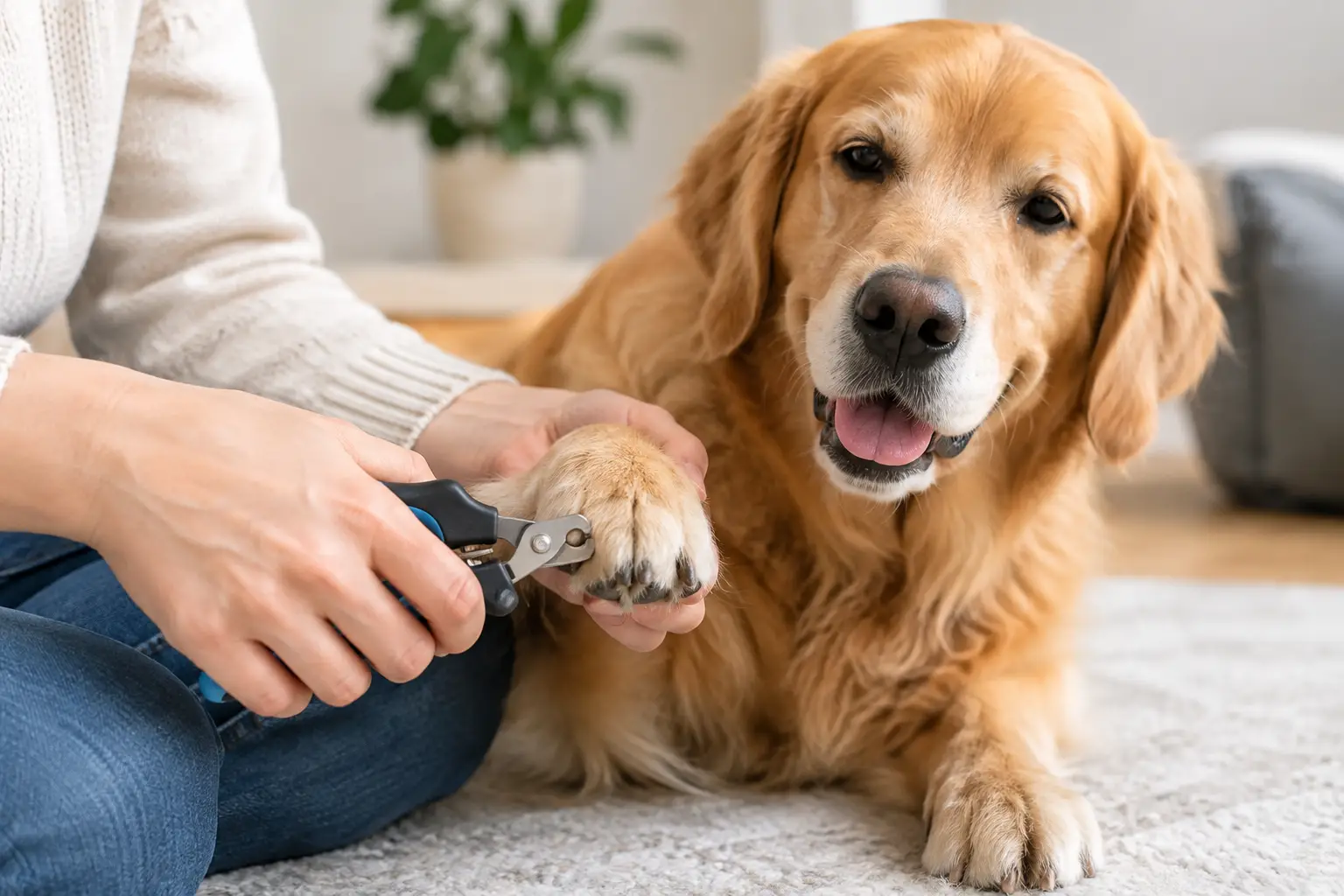
A happy dog can still have strong opinions about having their paws handled. That is why dog nail trimming works best as a calm, familiar routine, not a once-in-a-while wrestling match. With a little preparation, the right grooming tool, and plenty of patience, most pet parents can make nail care a more comfortable part of life at home.
Long nails are more than a cosmetic issue. They can click loudly on hard floors, snag on rugs, affect how your dog stands, and make everyday walks less comfortable. Keeping nails at a healthy length helps support comfortable movement, whether your dog spends the day zooming around the yard or napping on the sofa.
A dog’s nails naturally wear down at different rates. Dogs that walk often on sidewalks may file their nails down a bit, while dogs who mostly play on grass, carpet, or soft ground usually need more regular trims. Dewclaws, the nails higher up on the inside of the leg, often need special attention because they may not touch the ground at all.
A simple check can tell you a lot. If you hear a steady click-click across the kitchen floor, or if your dog’s nails touch the ground while they are standing squarely, it is probably time for a trim. Some dogs need care every two to four weeks, but the right schedule depends on their activity, nail growth, and surface habits.
Regular trimming also helps keep the quick at a manageable length. The quick is the sensitive inner part of the nail that contains blood vessels and nerves. When nails get very long, the quick grows longer too, which makes it harder to shorten the nail in one session. Small, routine trims are gentler for both you and your dog.
There is no single best tool for every pup. The goal is a safe, comfortable option that you can hold confidently and use consistently. For many households, having a few everyday grooming supplies ready in one spot makes the whole routine easier.
Scissor-style clippers are a familiar choice for medium and large dogs with thicker nails. Guillotine-style clippers can work well for smaller nails, although some pet parents find them less intuitive. A nail grinder gradually files down the nail and can feel less stressful when you are worried about taking off too much at once. It can be especially helpful for smoothing sharp edges after clipping.
Your dog’s personality matters, too. A sound-sensitive dog may prefer quiet clippers, while a dog who dislikes the pressure of clipping may be more comfortable with a grinder introduced slowly. If you choose a grinder, let your dog hear it from a distance first, then reward calm behavior before bringing it near a paw.
Keep a small pet first-aid supply nearby, including styptic powder or a pet-safe clotting product. Even careful pet parents can nick the quick occasionally, especially with dark nails. Being prepared helps you stay calm if it happens.
Timing can make a big difference. Try nail care after a walk, a relaxed play session, or a cozy afternoon when your dog is naturally less bouncy. Choose a well-lit area where you can see the nails clearly. A non-slip mat, towel, or favorite bed can help your dog feel more secure than a slippery bathroom floor.
Start well before you plan to trim. Gently touch one paw, offer praise and a small treat, then let go. Repeat this for a few days if your dog pulls away. Next, hold each toe for a moment. Let your dog inspect the clippers or grinder without using it. These tiny practice sessions teach your dog that paw handling does not automatically mean something scary is about to happen.
For a nervous dog, one nail is a successful session. There is no prize for finishing all four paws in five minutes. Trim one or two nails, reward your dog, and come back later. Short, positive experiences build trust much faster than pushing through a stressful appointment at home.
Use treats your dog genuinely loves, not the everyday biscuit they barely notice. A lickable treat, a few pieces of chicken, or another special snack can keep the mood positive. Some dogs do well with one person offering treats while another handles the trimming.
Give a reward after each nail at first. As your dog gets more relaxed, you can reward after each paw or at the end of the session. Keep your voice light and steady. Your calm energy is part of the routine.
Hold your dog’s paw gently but securely, separating the toe you are working on. For light-colored nails, look for the pink quick inside the nail. Trim only the curved tip, staying a small distance in front of the pink area. Taking tiny amounts is always safer than trying to achieve the perfect length in one cut.
Dark nails take more patience because the quick is harder to see. Clip a very small amount at a time and inspect the center of the freshly cut nail. As you get closer to the quick, the center may look darker, softer, or slightly moist. Stop before that point. A grinder can be useful here because it allows you to remove a little material at a time.
Keep the clipper angle in mind. Follow the natural curve of the nail and avoid cutting straight across too deeply. After clipping, use a grinder or file to soften rough edges if your dog will tolerate it. Smooth nails are less likely to scratch skin, catch on blankets, or snag during play.
If you accidentally cut the quick, stay calm. Apply styptic powder with gentle pressure according to the product directions. Most minor nicks stop bleeding quickly. Offer reassurance, end the session if your dog is upset, and try again another day. Do not scold your dog or yourself. Accidents happen, and a calm recovery matters.
At-home grooming is not the best choice for every dog or every situation. Ask a veterinarian or professional groomer for help if your dog becomes highly fearful, growls or snaps when paws are touched, has curled or overgrown nails, or seems painful when walking. Dogs with arthritis, paw injuries, or medical conditions may also need a more tailored approach.
A professional can show you where to cut, especially if your dog has dark nails or a tricky dewclaw. Watching a calm demonstration can make future at-home sessions feel much less intimidating. There is nothing wrong with combining professional grooming visits with quick touch-ups at home.
The easiest dog nail trimming routine is the one your household can maintain. Leave your grooming tool somewhere safe but accessible, so it is not forgotten in the back of a cabinet. Check paws after walks for dirt, cracked pads, or nails that need attention, and make gentle paw handling part of everyday cuddles.
Comfortable paws help make every walk, play session, and curl-up on the couch feel better. Start small, celebrate the calm moments, and let your dog set the pace. With patient practice and pet-approved grooming essentials close by, nail care can become just another caring moment you share.









Leave a comment