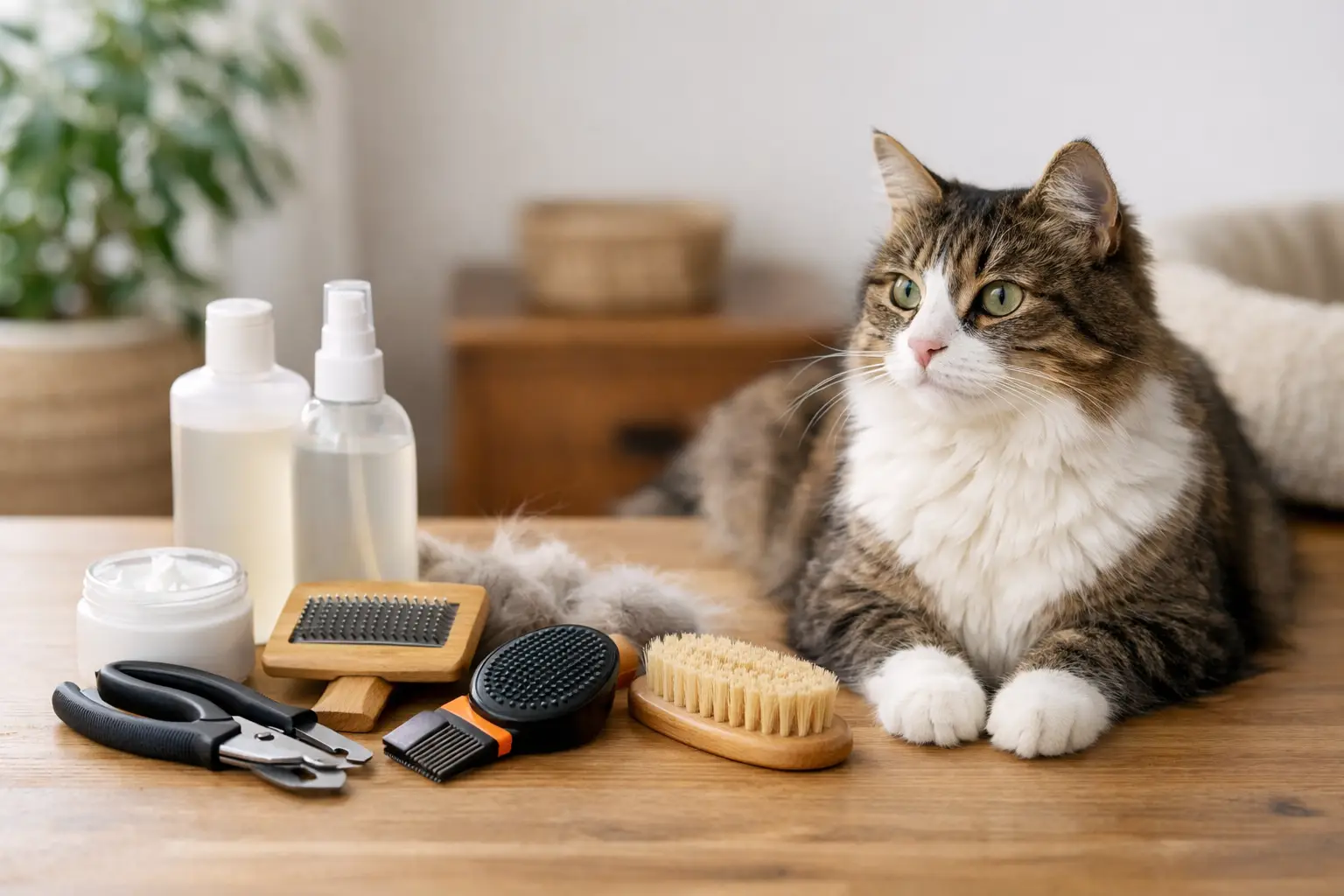
A cat who leaves a little fur on the sofa is normal. A cat who is swallowing loose hair, developing tangles, or snagging every blanket with sharp nails may need a better grooming routine. This guide to cat grooming supplies makes it easier to choose the everyday tools that keep your cat comfortable without filling a cabinet with items you will rarely use.
Cats are famously good self-groomers, but they still benefit from gentle help. The right supplies can reduce loose fur around the house, spot skin or coat changes early, prevent painful mats, and make nail care less stressful. Your cat’s coat length, age, personality, and health all affect what belongs in your grooming kit.
For most households, a brush or comb, cat-safe nail clippers, and a few gentle cleaning basics cover the essentials. Long-haired cats usually need more frequent brushing and a wider selection of tools than short-haired cats. Senior cats, heavier cats, and cats with limited mobility may also need extra grooming support because reaching every part of their coat can become difficult.
Avoid choosing tools based only on how many features they have. A simple brush that your cat tolerates is more useful than a complicated tool that stays in its package. Look for smooth edges, a comfortable handle, and a size that gives you good control around a small body.
A brush is often the first grooming supply pet parents buy, and the best style depends on coat type. For short-haired cats, a soft bristle brush, rubber curry brush, or grooming glove can lift loose hair while feeling like a gentle massage. These are great options for cats that are wary of traditional brushes.
For medium- and long-haired cats, a slicker brush with fine, flexible pins can work through surface tangles and loosen shedding fur. Use a light touch. Pressing a slicker brush into the skin can make grooming uncomfortable, especially along the belly, legs, and underarms.
A deshedding tool can be helpful during heavy shedding seasons, but it should not replace routine brushing. These tools reach deeper into the coat and can remove a surprising amount of hair. Used too often or too aggressively, they may pull healthy fur or irritate sensitive skin. For many cats, a brief session once a week is plenty, while a soft brush can be used more often.
A metal comb with both wide and narrow teeth is a practical addition for long-haired cats. Start with the wide-tooth side to check the coat, then use the finer side only where it glides easily. Combs are especially useful behind the ears, beneath the collar area, under the front legs, along the belly, and around the back legs. These are common spots for hidden knots.
If you find a small tangle, hold the fur close to the skin with one hand and gently work from the outer edge of the knot inward. Never yank through it. A mat that is tight, large, close to the skin, or located near the rear should be handled by a professional groomer or veterinarian. Scissors can easily cut a cat’s thin skin, even when the mat seems easy to reach.
Indoor cats still need nail trims. Their nails may catch in carpet, furniture, or bedding, and overgrown claws can curl toward the paw pad. Cat nail clippers are usually smaller than dog clippers and make it easier to see exactly where you are trimming.
Choose a compact scissor-style or guillotine-style clipper made for small pets. Either can work well if the blades are sharp and you feel comfortable holding them. Keep a small amount of pet-safe styptic powder in your kit, too. It can help stop minor bleeding if you accidentally nick the quick, which is the pink area inside the nail.
Trim only the clear, hooked tip of each claw. If your cat has dark nails or is wiggly, take off less rather than guessing. One or two nails at a time is perfectly fine. Pair the experience with a favorite treat, calm praise, or a short play session afterward so nail care does not become a battle.
Paw wipes are useful for an occasional cleanup after a litter box mess or a walk on a screened patio, but they should be fragrance-free and made for pets. Do not use household disinfecting wipes or heavily scented baby wipes on paws. Cats lick their feet, so any residue matters.
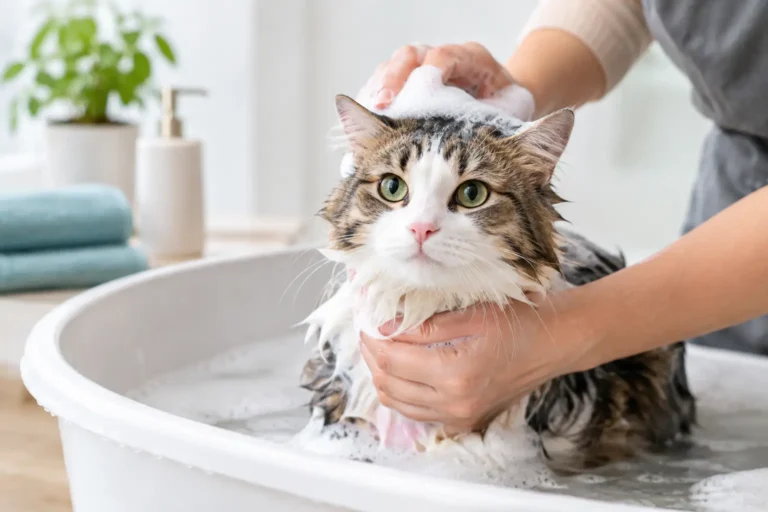
Most cats do not need frequent baths. A healthy cat’s own grooming habits handle much of the job. Still, pet-safe grooming wipes, a soft microfiber cloth, and a mild waterless cat shampoo can be handy for sticky fur, mild dirt, or an unexpected mess.
For the face, use a damp, soft cloth to wipe away minor eye discharge. Work outward from the eye, use a clean section of cloth for each side, and never rub directly over the eye. Persistent tearing, thick discharge, squinting, redness, or swelling calls for a veterinarian rather than a new cleaning product.
Ear care deserves the same restraint. Buy a cat-specific ear cleaner only if your veterinarian has recommended regular cleaning or your cat is prone to wax buildup. Healthy cat ears usually do not need routine deep cleaning. Never insert cotton swabs into the ear canal. If you notice a strong odor, dark debris, frequent head shaking, or scratching, schedule a vet visit because ear mites or infection may be involved.
Long-haired cats and kittens may occasionally need help around the rear end. Unscented pet wipes and a comb can manage small, surface-level messes. Repeated soiling, diarrhea, or matted fur in this area is a reason to call your veterinarian. It may point to a health issue, mobility problem, or a diet that needs attention.
Short-haired cats are usually the easiest to outfit. A rubber brush or soft bristle brush, nail clippers, and pet-safe wipes create a simple, useful kit. Brush once or twice a week, then increase frequency when your cat is shedding more heavily.
Medium-haired cats benefit from a soft brush plus a wide-tooth comb. Brushing two or three times weekly helps catch tangles before they turn into mats. Pay attention to friction areas where harnesses, collars, or cozy beds may rub the coat.
Long-haired cats need the most regular attention. Keep a slicker brush, a wide-and-fine tooth comb, nail clippers, and gentle wipes on hand. Daily combing may be ideal for some coats, but a few calm minutes every other day is far better than letting knots build up. Persian-type coats, especially, can mat quickly and may need professional grooming support.
Hairless cats have different needs. They do not require brushes for shedding, but skin oils can collect on the body and in skin folds. A soft cloth, cat-safe wipes, and veterinarian-approved shampoo for occasional baths are more useful than traditional brushing tools. Keep their skin protected from cold, sun, and irritating products.
The best grooming supplies work better when introduced slowly. Leave a new brush near your cat’s favorite resting spot for a day or two. Let your cat sniff it, then begin with one or two gentle strokes in an area they enjoy, such as the shoulders or cheeks. Stop before they become irritated.
Choose a quiet time when your cat is relaxed, not when they are hungry, playful, or watching birds from the window. Keep sessions short and predictable. A cat who walks away after three peaceful minutes has had a successful grooming session.
Watch your cat’s body language. A relaxed tail, slow blink, or gentle lean toward the brush is encouraging. Flattened ears, twitching skin, a thumping tail, growling, or repeated attempts to leave mean it is time to pause. Forcing the issue can turn a useful routine into something your cat dreads.
A small, well-chosen kit makes everyday grooming easier for both of you. Start with the basics, add tools only as your cat’s coat requires them, and replace worn clippers or bent brush pins promptly. With pet-approved picks ready at home, those quiet brushing sessions can become one more easy way to help your cat feel clean, comfortable, and cared for.








Leave a comment