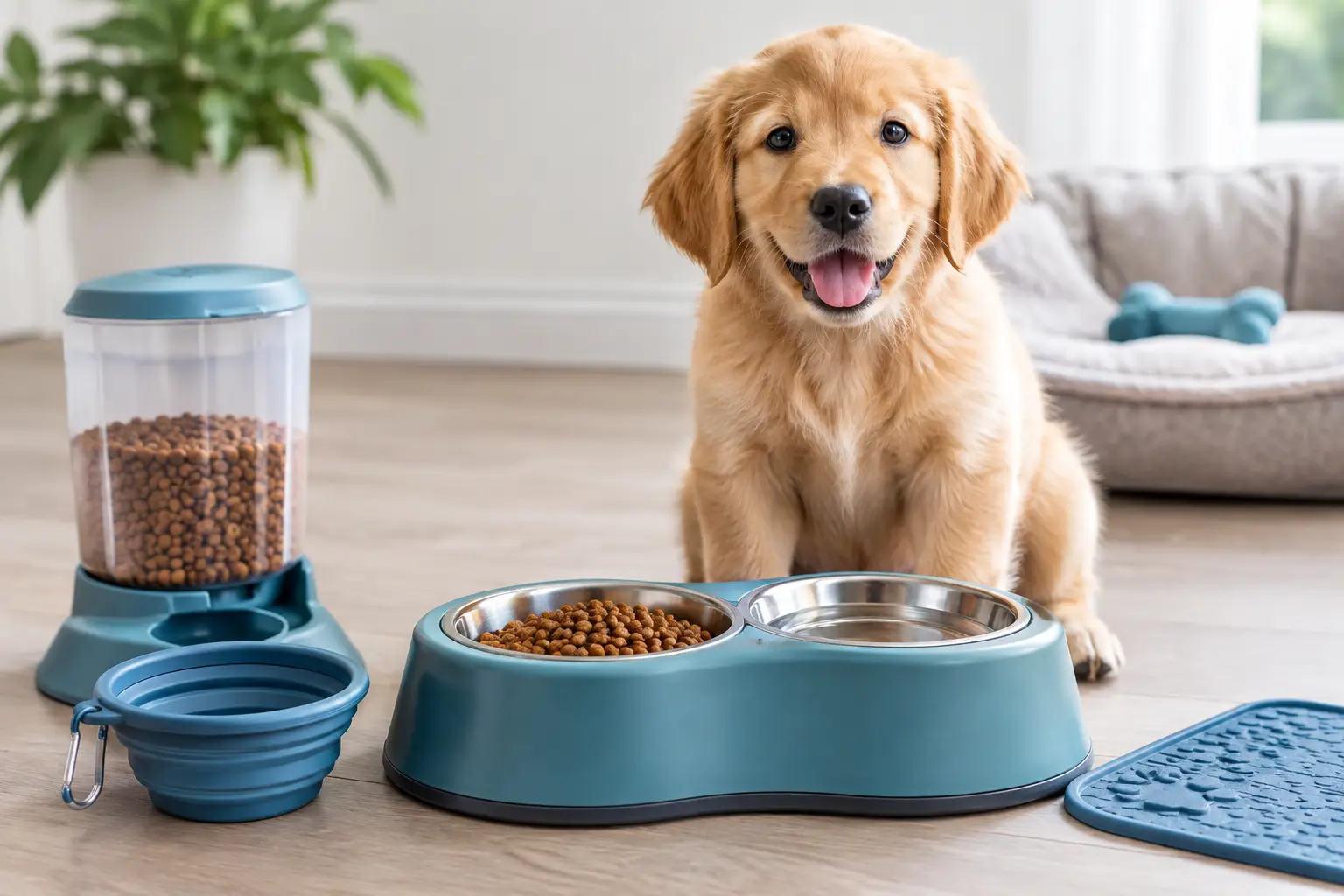
A new puppy can turn one simple meal into a tiny, enthusiastic mess. Kibble skitters across the floor, water lands beside the bowl, and somehow the food bag is always open when you need it least. This guide to puppy feeding accessories keeps the setup simple: choose practical basics that make daily meals cleaner, more comfortable, and easier to manage as your pup grows.
You do not need every feeding gadget at once. Start with the essentials your puppy will use every day, then add helpful extras based on their eating style, your home, and the places you go together.
Food and water bowls are the center of your puppy’s feeding routine. The best choice is usually a sturdy bowl that is easy to wash, hard to tip, and sized for the amount your puppy eats now, not the amount you expect them to eat as an adult.
Stainless steel bowls are a popular everyday pick because they are durable, simple to clean, and less likely to hold onto odors. Look for a smooth finish and a non-slip base if your puppy tends to push their bowl across the kitchen. Ceramic bowls can feel more decorative and substantial, but they should be checked for chips or cracks. Lightweight plastic bowls are convenient for travel, though determined chewers may see them as a toy rather than dinnerware.
A shallow bowl often works well for small puppies and short-nosed breeds, while a deeper bowl may better suit pups with longer muzzles. The goal is not a fancy bowl. It is a bowl that lets your puppy reach food and water comfortably without spilling half of it on the floor.
Raised feeders can be useful for some dogs, especially when a bowl needs a little extra stability or a pet parent wants a tidier feeding station. For most healthy puppies, however, a low bowl on the floor is perfectly suitable. Puppies grow quickly, so buying a tall stand too early may leave you with a setup that no longer fits a few months later.
If your veterinarian has suggested a particular feeding position because of your puppy’s size or health needs, follow that advice. Otherwise, focus on a stable bowl and a relaxed posture during meals.
A feeding mat is one of those small accessories that earns its place fast. It creates a designated meal area, catches water drips and runaway kibble, and helps protect wood, tile, or carpet near the bowls.
Silicone mats are especially handy because they are flexible, easy to wipe down, and often have a raised edge to contain spills. Choose a mat wide enough to hold both bowls with room around them. If your puppy is a very excited drinker, a larger waterproof mat can save you from wiping the floor several times a day.
For homes with multiple pets, separate feeding mats can also give each animal a clear space. That does not solve food stealing on its own, but it can make meal routines easier to organize and supervise.
Leaving dry food in an open bag can invite stale smells, pantry messes, and curious puppy noses. A dedicated food storage container makes everyday feeding easier while helping keep the food protected from moisture and pests.
Choose a container with a secure lid and enough room for the food you buy regularly. It is usually best to keep kibble in its original bag inside the container when possible. The bag carries useful details such as the expiration date, lot number, feeding guidance, and product information. If you pour food directly into a bin, keep that information somewhere easy to find.
Avoid buying an oversized container just because it holds more. A smaller container that you refill with fresh food may be a better fit for a single puppy, particularly if you are still testing what food agrees with them. Wash and dry the container between bags so crumbs and oils do not build up over time.
A scoop is a modest accessory with a big benefit: consistent portions. Your puppy’s food instructions may be measured in cups, and guessing can make it easy to overfeed. Keep a clean, dedicated scoop in the food container or nearby, and use the same measurement each day unless your veterinarian recommends a change.
Puppies need nutrition that supports healthy growth, but their exact portions depend on age, expected adult size, activity level, and food formula. The package is a useful starting point, while your veterinarian is the right person to ask if you are unsure about portions or your puppy’s body condition.
Some puppies inhale dinner as if another dog is waiting to take it. For fast eaters, a slow feeder bowl can turn a rushed meal into a more gradual activity. These bowls have ridges or patterns that make a puppy work around the food rather than gulping it all at once.
A food-dispensing toy can offer a similar benefit, especially for a bright, energetic puppy who needs a little mental activity. It can make part of a meal more engaging and help channel some of that puppy energy into a focused task.
There is a trade-off. Very complex feeders can frustrate a young puppy, and some designs are harder to clean than a standard bowl. Begin with an easy pattern, supervise the first few uses, and make sure your puppy is actually getting their full meal. If a feeder causes frustration or seems too difficult, switch back to a regular bowl and try again later.
Puppies still need fresh water and familiar meals when you are visiting family, heading to training class, or taking a weekend trip. A collapsible bowl, portable water bottle with an attached drinking tray, and compact treat pouch can make outings feel much more manageable.
For longer trips, bring a measured amount of your puppy’s usual food in a sealed container. Sudden food changes can upset a young dog’s stomach, so it is wise to keep their routine as familiar as you can. A small feeding mat or washable towel is also useful in hotels, rental homes, and car travel areas.
If you feed wet food, bring a lid made for cans or a small sealed container for leftovers. Refrigerate opened food as directed on the package, and do not leave moist food sitting out for long periods.
A complete setup does not have to be complicated. Most pet parents can begin with these practical picks:
After that, consider a slow feeder, treat pouch, or food puzzle only if it suits your puppy’s habits. A calm eater in a small apartment may need very little beyond the basics. A busy puppy who eats too quickly and joins you everywhere may benefit from a few more accessories.
Wash food and water bowls regularly, and refresh drinking water throughout the day. A quick wipe of the mat after meals prevents dried food from becoming stubborn cleanup later. It also gives you a chance to notice changes in appetite, drinking, or eating behavior that may be worth mentioning to your veterinarian.
Place the feeding station somewhere quiet and easy to access. Puppies do best when meals feel predictable, not crowded or chaotic. Keep bowls away from the litter box if you have cats, and give each pet their own space if household feeding time gets competitive.
Your puppy will outgrow a few things, spill on nearly everything, and make feeding time their own little event. Choose accessories that make your routine easier now, then adjust as your pup settles into the happy, hungry dog they are becoming.







Leave a comment