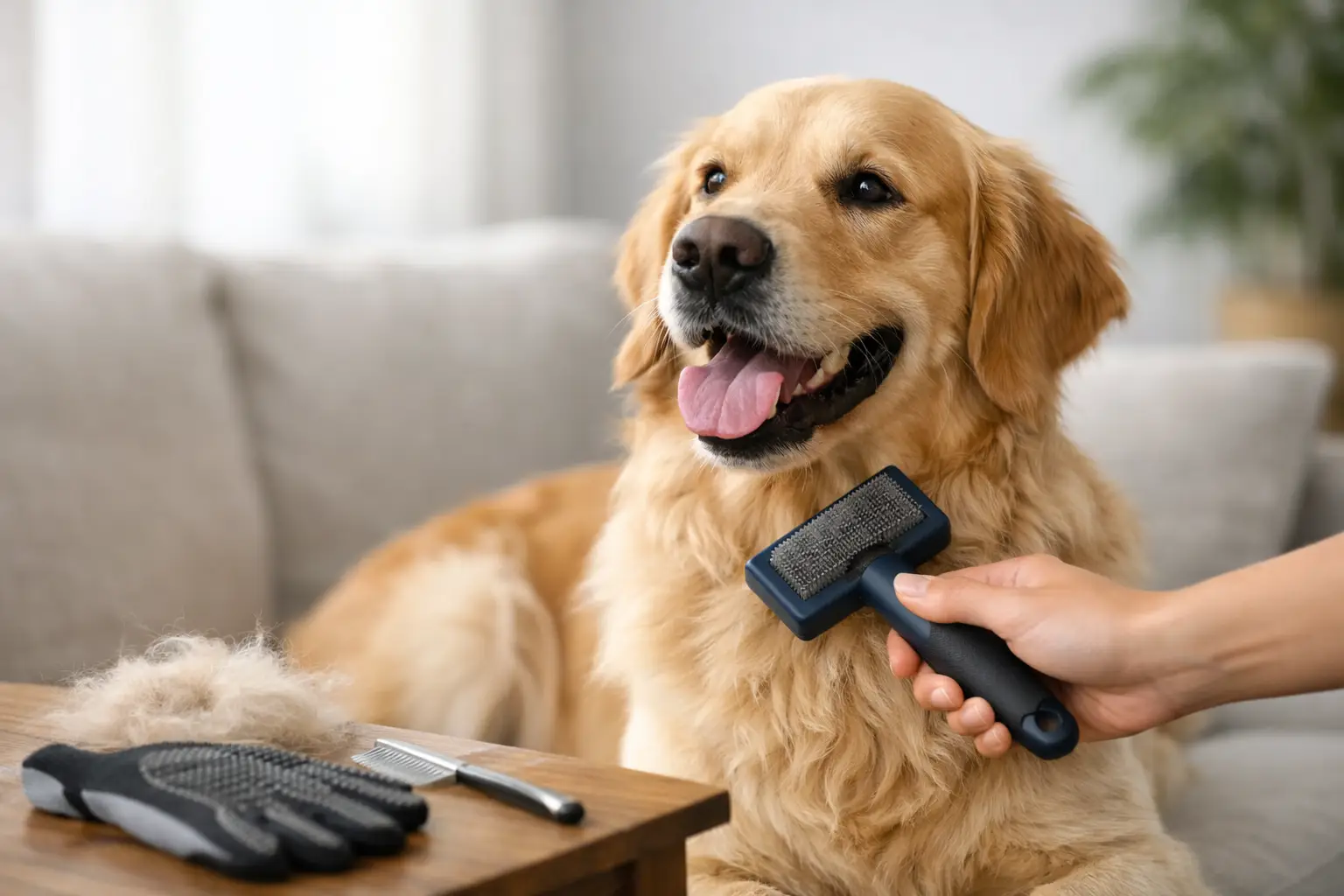
That brush in the closet can do more than make your dog look photo-ready. A regular brushing habit helps lift loose fur before it reaches the couch, lets you spot tangles early, and gives you a few quiet minutes to check in with your pup. So, how often should you brush your dog? The best answer depends on coat type, shedding, lifestyle, and whether your dog is prone to knots.
For some dogs, a quick brush once a week is plenty. For others, skipping even a few days can turn a small tangle into an uncomfortable mat. The good news is that finding the right routine is simple once you know what your dog’s coat needs.
Your dog’s fur is the biggest factor in setting a brushing schedule. Do not judge by how fluffy they look alone. A sleek-coated dog may shed quite a bit, while a curly-haired dog may shed less around the house but need frequent brushing to prevent knots.
Puppies can begin with short, gentle grooming sessions even if they do not need much brushing yet. This teaches them that a brush is part of normal, positive care. A few treats and plenty of praise can make a big difference later on.
Shedding season can make it seem like your dog is leaving a second dog on every floor. In much of the US, dogs with double coats shed more heavily in spring and fall as temperatures change. During these weeks, increasing brushing sessions helps collect loose undercoat before it drifts through your home.
Still, more brushing is not always better. Brushing too aggressively or using a tool that is too harsh can irritate the skin or break healthy hair. A few calm, thorough sessions are better than rushing through a long daily session that your dog learns to dread.
If shedding suddenly becomes extreme, patchy, or comes with redness, itching, flaky skin, or a dull coat, do not assume it is just seasonal. A veterinarian can help rule out skin issues, parasites, allergies, or other health concerns.
The right grooming tool makes brushing faster and far more comfortable for your dog. A soft bristle brush or rubber grooming mitt works well for short-haired pups. These tools gently pull away loose fur and can feel like a relaxing massage.
For medium and long coats, a slicker brush is a popular everyday choice because its fine wires can reach through the outer coat. Use light pressure, especially on thinner-skinned areas like the legs, belly, and armpits. Follow with a metal comb to check for hidden tangles near the skin.
Undercoat rakes and de-shedding tools can be useful for thick, double-coated dogs, but they should be used carefully and only as directed. They are designed to remove loose undercoat, not to scrape the skin or cut healthy topcoat. If you are unsure which tool suits your pup, start with a gentler brush and build your grooming kit from there.
At Doggodays.shop, pet parents can find everyday grooming picks alongside the toys, beds, travel gear, and other dog essentials that make routine care feel easier to manage.
A dog can look perfectly brushed on top while knots are forming underneath. During each session, use your fingers to feel through the coat before you start brushing. Small tangles are much easier to work out than tight mats.
Look closely behind the ears, under the collar or harness, around the tail, under the front legs, and between the back legs. Long-haired dogs may also get knots around their feet or where their leash and clothing rub against the coat.
When you find a tangle, hold the fur near the skin with one hand and gently work from the ends upward with the other. Do not pull hard. A small amount of dog-safe detangling spray can help, but never use human hair products on your dog. If a mat is tight against the skin, painful, or too dense to separate easily, call a professional groomer or veterinarian. Scissors can cause serious injuries when used near matted skin.
The goal is not perfection. It is a routine your dog will accept and you can keep up with. Start in a familiar, calm spot with good lighting. Keep the first few sessions short, especially if your dog is wiggly, sensitive, or new to grooming.
Let your dog sniff the brush, then offer a treat. Begin with easy areas such as the shoulders or back, using slow strokes in the direction the hair grows. Pause often to praise calm behavior. Once your dog is comfortable, work gradually through the sides, chest, legs, belly, and tail.
A five-minute brush after an evening walk may be all a short-coated dog needs. A long-coated dog may need 10 to 15 minutes divided into smaller sessions throughout the week. The routine matters more than doing everything in one sitting.
Brush before bath time whenever possible. Water can tighten existing tangles, making them more difficult to remove after the coat dries. After a bath, make sure the coat is fully dry before a final gentle brush, particularly for thick or long fur.
Home grooming is great for everyday coat care, but it does not replace professional help in every situation. Dogs with coats that grow continuously, including many Poodles, Doodles, Shih Tzus, and similar mixes, often need scheduled haircuts as well as regular brushing at home.
Book professional support if your dog has widespread mats, reacts painfully to brushing, needs a coat trim you are not comfortable doing, or has skin concerns you cannot explain. Groomers can safely handle many coat-care needs, while a veterinarian is the right choice for sores, swelling, odor, sudden hair loss, or persistent itching.
Daily brushing is ideal for many long-haired, curly-coated, and double-coated dogs during peak shedding. For short-haired dogs, daily brushing is optional unless they enjoy it or are shedding more than usual. Match the schedule to the coat instead of following a one-size-fits-all rule.
Yes. Overbrushing with a harsh tool or heavy pressure can irritate skin and damage the coat. If your dog flinches, tries to move away, develops redness, or seems uncomfortable, switch to gentler strokes and a softer tool.
Go slowly. Start with a few seconds of touching the brush to the coat, reward your dog, and stop before they get upset. Gradually lengthen each session. If fear or pain seems intense, ask a groomer or veterinarian for guidance rather than forcing the process.
Keep the brush somewhere easy to grab, such as near the leash or treat jar. Those small, regular moments of care can leave your dog more comfortable, your home a little less furry, and your bond even stronger.










Leave a comment