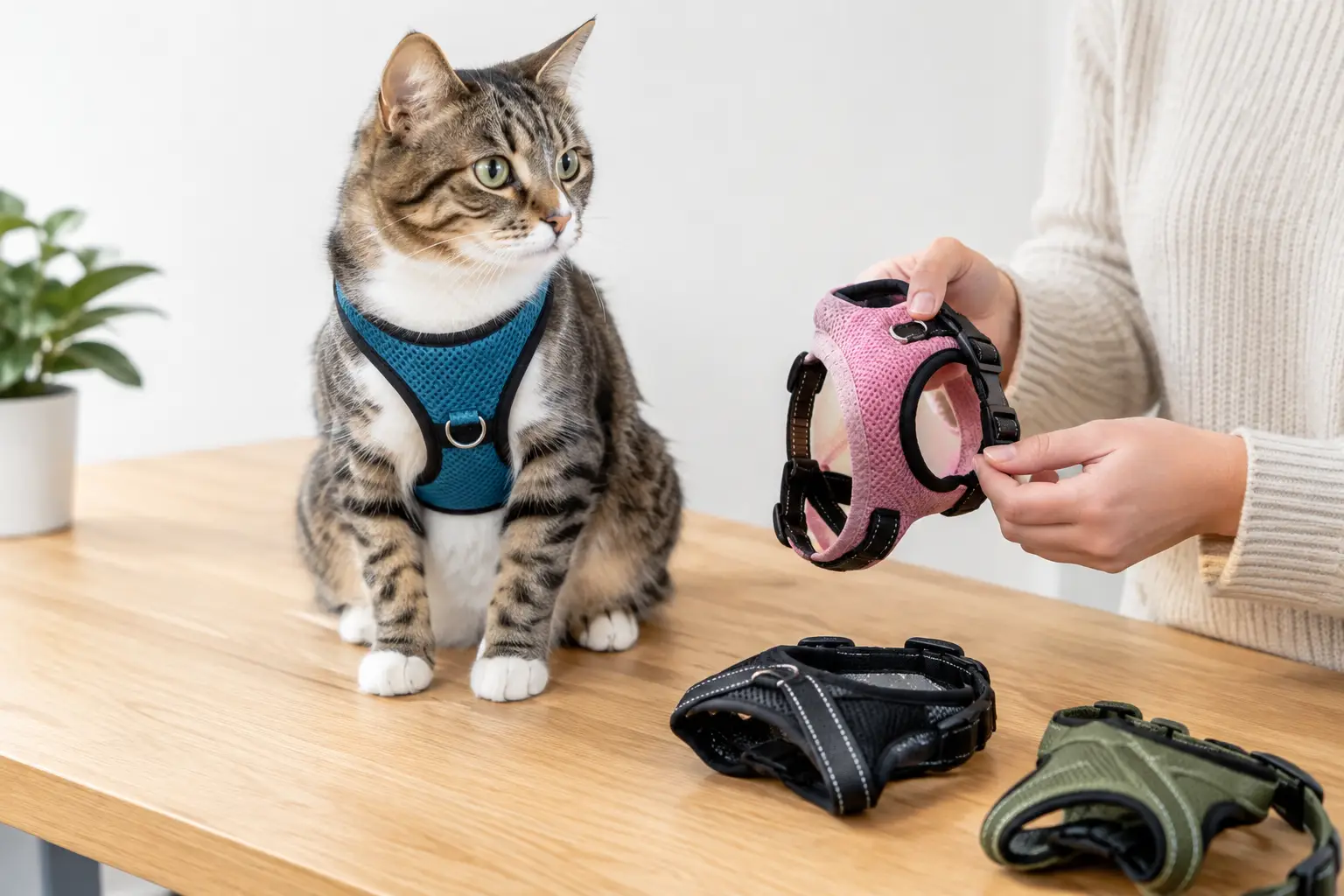
A cat who slips out of a harness can go from curious explorer to hidden-under-the-porch in seconds. That is why learning how to pick cat harness options is less about choosing the cutest color and more about finding a secure, comfortable fit your cat can tolerate.
The right harness gives your pet a safer way to enjoy a screened porch, backyard, travel day, or supervised outdoor adventure. The wrong one can rub, restrict movement, or give a determined escape artist an easy exit. Start with your cat’s body shape and comfort level, then choose a style that suits the kind of outings you have in mind.
Cats are built differently from dogs. Their necks are narrow, their shoulders are flexible, and many can reverse out of a loose strap faster than pet parents expect. A collar is not a safe substitute for a harness when using a leash. Pulling on a collar can put pressure on a cat’s delicate throat, while a well-fitted harness spreads gentle pressure across the chest and body.
Look for a harness made specifically for cats, not a small dog harness labeled as one-size-fits-all. Cat-focused designs account for a feline’s lighter frame and unique ability to twist, crouch, and back away. A secure harness should fit closely enough that your cat cannot slip a shoulder through it, but it should never pinch or flatten the fur tightly against the skin.
Before shopping, measure around the broadest part of your cat’s chest, just behind the front legs. This is usually called the girth measurement. If a brand provides a neck measurement, take that too. Use a soft measuring tape, keeping it snug but not tight. If your cat is between sizes, do not automatically size down. Compare the product’s adjustment range and choose the option that can be tightened securely without sitting at the smallest possible setting.
The best style depends on your cat’s size, personality, and experience with wearing gear. There is no single perfect choice for every pet.
A vest harness wraps around more of the chest and torso. Many pet parents like this style for cats that are especially good at escaping because it offers more coverage than thin straps. Soft mesh or padded fabric can also feel cozy for short walks and travel. The trade-off is that some cats dislike the feeling of a larger piece of fabric around their body, especially in warm weather.
An H-style harness uses adjustable straps around the neck and chest, connected by a piece along the back. It is lightweight, often very adjustable, and can be a good choice for cats who object to vest-style coverage. Fit matters greatly here. If the neck or chest strap is loose, an agile cat may still be able to back out of it.
Figure-8 or minimal strap harnesses are simple and lightweight, but they are usually better for calm cats already comfortable on a leash. Because they offer less coverage and fewer adjustment points, they may not be the best first pick for a nervous cat or a pet known for escape attempts.
For most first-time cat walkers, a secure vest or adjustable H-style design is a practical place to start. Choose based on fit and your cat’s reaction, not just the product photo. A harness that looks adorable but makes your cat freeze, roll, or panic will not make outdoor time more enjoyable.
Once the harness is on, use the two-finger check. You should be able to slide one or two fingers comfortably under the straps, but there should not be enough extra room for your cat to pull a leg or shoulder free. Check the chest area in particular, since this is where loose harnesses often create an escape route.
Watch how your cat walks indoors. They should be able to take normal steps, sit, crouch, and turn around without a strap digging into the front legs. The harness should sit flat rather than twisting to one side. If it shifts dramatically when your cat moves, adjust it or try a different size or style.
Pay attention to these fit warning signs:
Long fur can hide poor fit, so run your fingers beneath the fabric after each adjustment. A harness that seems secure over a fluffy coat may be looser than it appears.
Even a perfectly fitted cat harness needs an introduction period. Most cats will not enjoy being clipped into new gear immediately. Start indoors, where there are no cars, unfamiliar dogs, or loud distractions. Let your cat sniff the harness first, then offer a favorite treat or a little praise.
Put the harness on for a minute or two and let your cat choose what to do. Some cats walk normally; others crouch, flop over, or move sideways in a dramatic protest. A little awkwardness at first is common, but visible distress is a signal to slow down. Remove the harness calmly and try again later with a shorter session.
Build up wear time over several days. Once your cat can move comfortably around the house, attach the leash and let it trail only while you supervise closely. Then hold the leash lightly and follow your cat around a familiar room. The goal is not to teach heel walking. Cats generally prefer to investigate at their own pace, so think of the leash as a safety connection rather than a steering tool.
Soft mesh, lightweight nylon, and padded fabrics are popular harness materials. Mesh can be breathable and comfortable for everyday use, while nylon straps are easy to adjust and clean. For cats with sensitive skin or short fur, look for smooth edges and soft lining around the chest and underarms.
Hardware deserves attention too. Buckles should close firmly without being difficult to release, and the leash attachment point should feel sturdy. A back D-ring is common and works well for gentle, supervised walking. Reflective trim can be helpful for visibility at dawn or dusk, but it does not make a cat safe to walk near traffic.
If you plan to use the harness during car trips, remember that a standard walking harness is not automatically a crash-tested travel restraint. For vehicle safety, use a properly secured carrier unless you have a restraint specifically designed and tested for car travel.
A confident, food-motivated cat may adapt to a harness quickly. A shy cat may need weeks of gentle practice, and some cats simply prefer indoor enrichment to outdoor walks. That is okay. Window perches, puzzle toys, climbing spaces, and supervised time in a secure catio can offer plenty of stimulation without putting a worried cat in an unfamiliar environment.
Outdoor walks are best for cats who remain curious and relaxed while harnessed. If your cat pants, yowls, flattens their ears, tries repeatedly to escape, or becomes overwhelmed by every sound, head back inside. Forcing an outing can create a lasting negative association with the harness.
A lightweight leash is usually more comfortable than a heavy retractable one. Avoid tying your cat outside or leaving them unattended in a harness, even in a fenced yard. Cats can become tangled, caught on objects, or frightened by wildlife faster than anyone expects.
The easiest way to shop is to focus on three essentials: accurate measurements, secure adjustment points, and a style your cat can move in comfortably. Pet parents can find plenty of cat-friendly harness styles alongside everyday travel and comfort supplies at Doggodays.shop, making it easier to prepare for the whole outing in one place.
Give your cat time to form a positive association with their new harness. A few quiet indoor practice sessions, a well-checked fit, and plenty of patience can turn a simple accessory into the start of safe, happy exploring.









Leave a comment