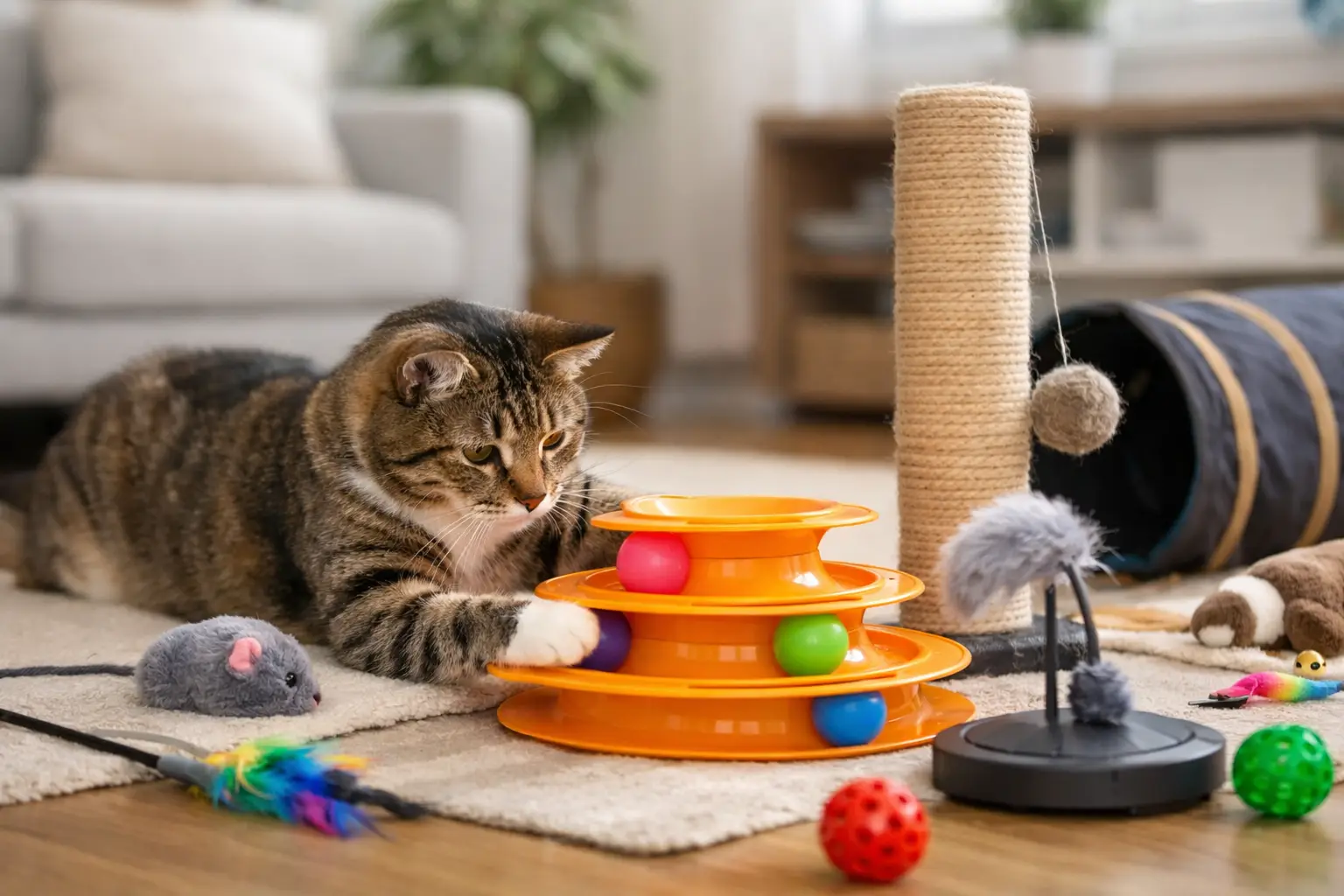
A cat staring out the window may look perfectly entertained, but indoor life can get repetitive fast. So, what toys do indoor cats need to stay active, curious, and content? The best answer is not one flashy toy. It is a small mix that lets your cat stalk, chase, scratch, climb, and settle down for a quiet solo play session.
Cats are natural hunters, even when dinner arrives neatly in a bowl. Toys give them a safe outlet for those instincts while adding movement and variety to their day. A thoughtful toy collection can also help redirect boredom-related behaviors, such as pouncing on feet, scratching the sofa, or waking the household before sunrise.
Start with toys that support different kinds of play. Indoor cats do not need a room overflowing with products, but they do benefit from options they can enjoy in more than one way. A toy that rolls across the floor offers a different experience than a scratcher, a teaser wand, or a puzzle feeder.
For many cats, a practical starter mix includes interactive chase toys, lightweight toss toys, a scratching surface, a climbing or perching option, and an independent activity toy. Rotate a few choices every few days rather than leaving everything out at once. That simple habit makes familiar toys feel more interesting and keeps the play area less cluttered.
Wand toys with feathers, fabric strips, or a soft toy at the end are a favorite for a reason. They let you imitate the unpredictable movement of prey, encouraging your cat to crouch, chase, leap, and pounce. A few short play sessions can be more satisfying than leaving a pile of toys on the floor all day.
Move the toy low across the ground, pause it behind a chair, then let it dart into the open. Let your cat catch it from time to time. Constantly pulling it away can be frustrating, while a successful catch gives the game a natural finish.
Always put wand toys away after supervised play, especially if they have strings, ribbons, or small detachable pieces. Curious cats can chew or swallow materials that were meant for play, not snacking.
Soft plush toys, crinkle balls, lightweight foam balls, and cat-safe toy mice are easy additions for everyday play. Some cats love batting a ball across a hard floor, while others prefer carrying a plush toy to a favorite resting spot. If your cat reacts strongly to catnip or silvervine, a refillable catnip toy can offer extra excitement.
The key is to watch your cat’s preferences. A high-energy kitten may send a ball racing down the hallway, while an older cat may prefer a soft kicker toy it can hold with its front paws and bunny-kick with its back legs. There is no single right choice for every cat.
Choose toys that are large enough not to be swallowed and durable enough for your cat’s usual play style. Inspect plush toys and balls regularly for loose seams, stuffing, bells, or damaged parts.
Long, soft kicker toys are especially useful for cats that grab, wrestle, and kick. This style of play is normal and gives cats a healthy way to burn off energy. It can be a smart choice for cats that tend to latch onto hands or ankles during play.
Offer the kicker toy when your cat is already in a playful mood. Pair it with a wand toy session, then leave the kicker nearby as your cat winds down. It gives them something appropriate to wrestle instead of turning your sleeves into prey.
Scratching is part of everyday cat behavior, not a bad habit to eliminate. Cats scratch to stretch, maintain their claws, mark their space, and release energy. Giving your cat an appealing scratcher is one of the simplest ways to protect furniture while making home life more comfortable for everyone.
A good setup often includes both a vertical scratching post and a horizontal cardboard scratcher. Some cats enjoy stretching tall against a sturdy post, while others prefer scratching flat on the floor. Sisal, cardboard, and carpet-like surfaces all feel different, so texture matters as much as shape.
Place a scratcher where your cat already spends time. Near a favorite nap spot, by a window, or close to the furniture they have been targeting are all sensible choices. If the post wobbles, many cats will ignore it, so prioritize a stable base and enough height for a full-body stretch.
Food puzzles and treat-dispensing toys offer a slower, more engaging way to enjoy part of a meal. Instead of finishing food in seconds, your cat can paw, roll, and problem-solve to release kibble or treats. This is particularly helpful for food-motivated cats and fast eaters.
Begin with an easy puzzle so your cat understands the idea. Use a few pieces of their regular dry food rather than adding lots of extra treats. Once they are comfortable, increase the challenge gradually.
Puzzle toys are not ideal for every feeding situation. Cats on a special diet, cats that need closely measured meals, or cats that become frustrated easily may need a simpler option. Supervise the first few uses, and keep the toy clean so food does not build up in small spaces.
A toy does not always need to move. Cat trees, window perches, tunnels, and pop-up hideaways create opportunities to climb, observe, ambush, and rest. For an indoor cat, vertical space can make a familiar room feel much bigger.
A tunnel works especially well for cats that like to hide before springing out at a passing toy. A perch near a secure window can provide a calm view of birds, squirrels, and neighborhood activity. Add a soft ball or plush toy nearby, and your cat has a little activity zone that supports both active and quiet moments.
Check that climbing furniture is stable and appropriate for your cat’s size. Senior cats or cats with limited mobility may enjoy lower platforms, ramps, or a shorter scratch-and-rest combination rather than a very tall tower.
Most cats are happy with a modest rotation of well-chosen toys. Keeping around five to 10 toys available, with a few swapped out regularly, is often enough. You might leave out a scratcher, a kicker toy, two small toss toys, and one independent puzzle or track toy, then bring out the wand toy when you are ready to play together.
More toys do not automatically mean more engagement. Cats can lose interest when every option is always available. A rotation keeps things fresh and also helps you notice which toys your cat truly loves.
If you have multiple cats, provide enough toys and scratching spots to reduce competition. One cat may claim the favorite tunnel or scratcher, so having choices in different areas of the home can make playtime more peaceful.
Try to schedule active play around the times cats naturally have energy, often early morning and evening. Even 10 to 15 minutes of focused wand play can make a difference. Follow a chase session with a small meal or a few pieces of kibble if that suits your cat’s feeding routine. Hunt, catch, and eat is a satisfying pattern for many cats.
Avoid using hands or feet as toys, even with a kitten. It may seem cute at first, but it teaches your cat that people are fair game for pouncing. Keep strings, elastic bands, yarn, and damaged toys out of reach when no one is home.
At Doggodays.shop, pet parents can find everyday cat toys and home accessories in one convenient place, making it easier to build a play setup that fits your cat’s personality. Start with a few pet-approved basics, pay attention to what earns the biggest purrs and pounces, and let your cat show you what makes home feel fun.









Leave a comment