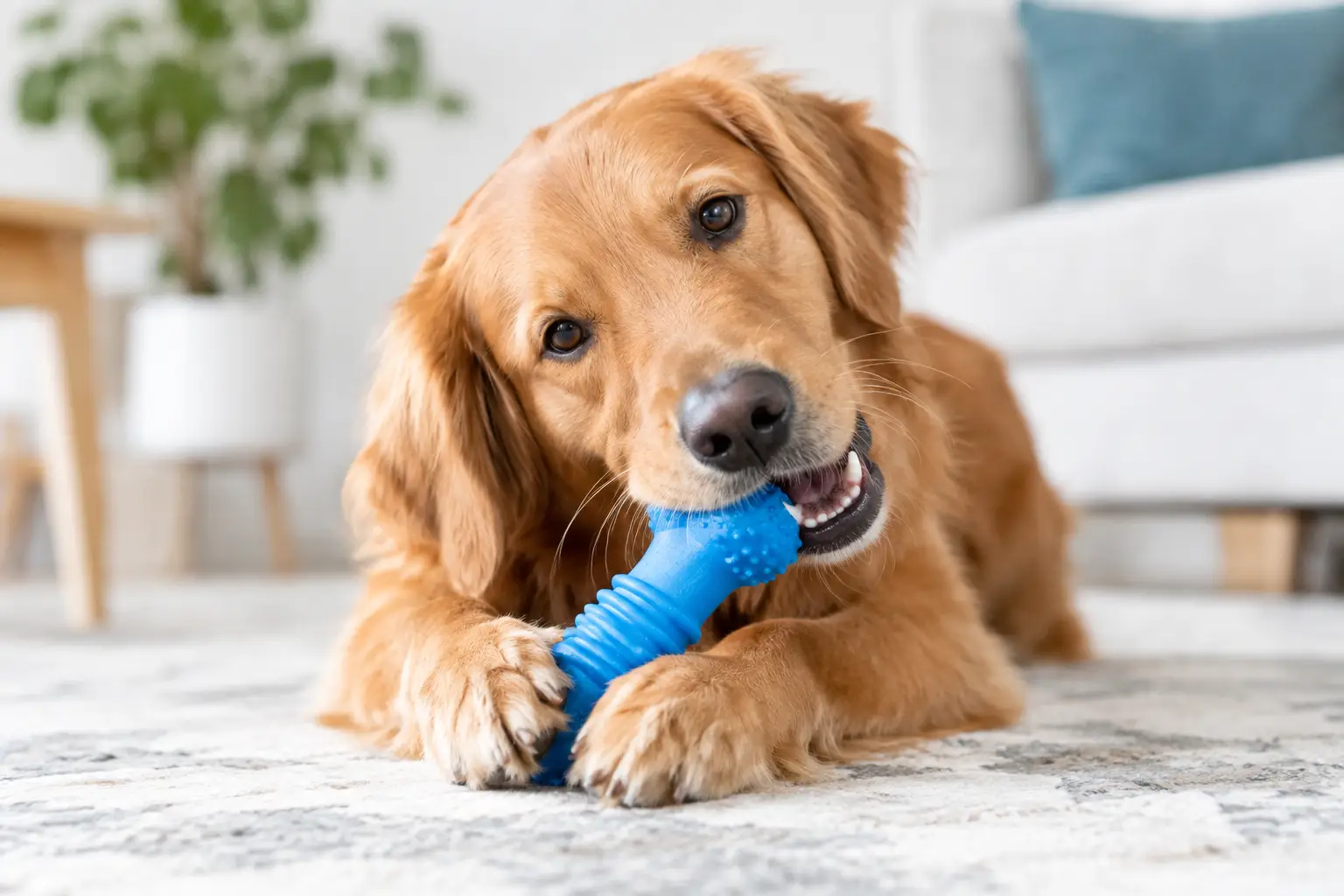
A new chew toy can buy you a few peaceful minutes while you answer emails, make dinner, or simply sit down with a cup of coffee. But why do dogs need chew toys beyond keeping them busy? For many dogs, chewing is a normal, satisfying behavior that helps direct energy, ease boredom, and give their jaws something appropriate to do.
The key word is appropriate. A sturdy chew that matches your dog’s size, age, and chewing style can be a welcome part of everyday play. A toy that is too small, too hard, or already breaking apart can create more worry than fun. Choosing well helps turn an everyday dog habit into safer, happier downtime.
Dogs explore the world with their mouths. Puppies mouth and chew as they grow, while adult dogs may chew after a walk, during a quiet afternoon, or when they need an outlet for excitement. Some dogs gently work on a toy for ages. Others treat every new chew like a serious mission.
Chew toys give that natural urge a place to go. Without a suitable option nearby, a dog may decide that a shoe, remote control, table leg, or favorite throw pillow will do instead. That does not mean a dog is being naughty. Often, it means the dog needs more direction, activity, or a better item to chew.
A good chew toy will not solve every behavior concern. Dogs also need exercise, attention, training, and rest. Still, it can be a simple, useful piece of the daily routine, especially when it is offered at the right moments.
A walk or a game of fetch uses a dog’s body. Chewing can occupy the mind and mouth afterward, making it a helpful transition from active play to calmer time at home. This is especially handy for lively dogs that are not quite ready to settle after an exciting morning or visitors at the door.
Interactive chew toys can add another layer of interest. A treat-dispensing toy, for example, asks a dog to lick, nudge, roll, and chew to reach a reward. That slower activity can make a small portion of dog-safe food or treats last longer than serving it in a bowl.
It depends on the dog, though. A highly food-motivated dog may love a fillable rubber toy, while another may prefer the feel of a textured nylon chew or a soft plush toy designed for gentle chewing. Variety keeps play from becoming predictable.
Dogs cannot always tell the difference between a toy you bought for them and a household item that smells strongly like you. Shoes, socks, wooden furniture, and kids’ toys can all be tempting. Keeping appropriate dog toys accessible gives your pup a better choice when the urge to chew arrives.
Timing matters. Offer a chew toy before leaving for a short errand, after a burst of play, or when you notice your dog starting to investigate something off-limits. If your dog picks up the wrong item, stay calm, trade it for a toy, and praise the better choice. Chasing a dog for a stolen slipper can accidentally turn the whole thing into a game.
For dogs that regularly damage belongings, chew toys are only one part of the plan. Consider whether your dog is getting enough physical activity and mental enrichment, and use safe management such as putting tempting items away. If destructive chewing appears suddenly or comes with distress when left alone, talk with a veterinarian or qualified trainer.
Puppy teeth are tiny, sharp, and very interested in everything. During teething, many puppies want to mouth and chew more often, and their gums may be uncomfortable. Puppy-specific chew toys can provide a safer target than hands, clothing, or furniture.
Look for a toy labeled for puppies and choose one that fits your puppy’s current size. Softer rubber and flexible textures are often more suitable than extra-hard chews for young mouths. Some toys can be chilled according to their instructions, which may feel soothing for sore gums.
Teething does not make biting people acceptable, but it does explain why a puppy may be extra mouthy. When those sharp little teeth land on your hand, calmly stop the interaction and redirect your puppy to a toy. Consistent redirection helps your puppy learn what belongs in their mouth.
A dog with something enjoyable to work on may be less likely to seek entertainment by barking at every passing squirrel or following you from room to room. Chewing is not a replacement for companionship, but it can make independent downtime feel more rewarding.
This can be useful during naturally busy parts of the day. Give your dog a safe chew while the family eats dinner, when you are on a work call, or while guests settle in. For some dogs, the familiar routine of receiving a favorite toy becomes a pleasant signal that it is time to relax.
Avoid using a chew toy as a way to ignore a dog’s needs for long stretches. Dogs still need bathroom breaks, social connection, exercise, and supervision. Think of a chew as a helpful activity in a full day, not an all-day babysitter.
Dogs have preferences, just like people do. One dog may happily gnaw a textured rubber ring, while another carries a rope toy around the house and a third wants a plush toy to cuddle and mouth. Rotating a few safe options can make familiar toys feel fresh without filling every corner with clutter.
Consider keeping different toy types for different occasions. A bouncy rubber chew may suit supervised playtime, a food-stuffable option may fit quiet crate time, and a softer toy may be best for a gentle chewer. If you have more than one dog, offering separate toys can reduce competition and help each pet enjoy their own space.
Some dental-style toys have raised textures that may help scrape away a little surface buildup as a dog chews. They can be a nice addition to a home dental routine, but they are not a substitute for regular tooth brushing or veterinary dental care. Dental needs vary widely, particularly for small dogs and older dogs.
The biggest everyday benefit is often routine. A dog that has a reliable place to direct their chewing urge is practicing a good household habit. Pairing the toy with praise, calm time, and occasional rotation helps reinforce that habit over time.
The best chew toy is not automatically the toughest one on the shelf. It should suit your individual dog. Start with the manufacturer’s size guidance, then consider how your dog actually chews. A gentle nibbler needs something different from a powerful chewer who can tear through toys quickly.
Use these practical checks before and during play:
Very hard items can sometimes damage teeth, especially for determined chewers. When in doubt, choose a product made for dogs, read its use instructions, and skip anything that feels overly hard for your pet’s mouth. Rawhide, bones, antlers, ropes, and stuffed toys all come with different benefits and risks, so there is no single best choice for every household.
Pay attention to what is left behind after a chewing session. If your dog is tearing off chunks, swallowing fabric, or trying to consume pieces of the toy, remove it and choose a safer alternative. Contact your veterinarian promptly if you think your dog has swallowed a toy piece or is showing signs such as repeated vomiting, trouble breathing, pain, or unusual lethargy.
A well-chosen chew toy is a small everyday comfort that can make life easier for both of you. Keep a few pet-approved picks on hand, rotate them with your dog’s interests in mind, and let each satisfying chew be one more way to make home feel like their favorite place to be.








Leave a comment