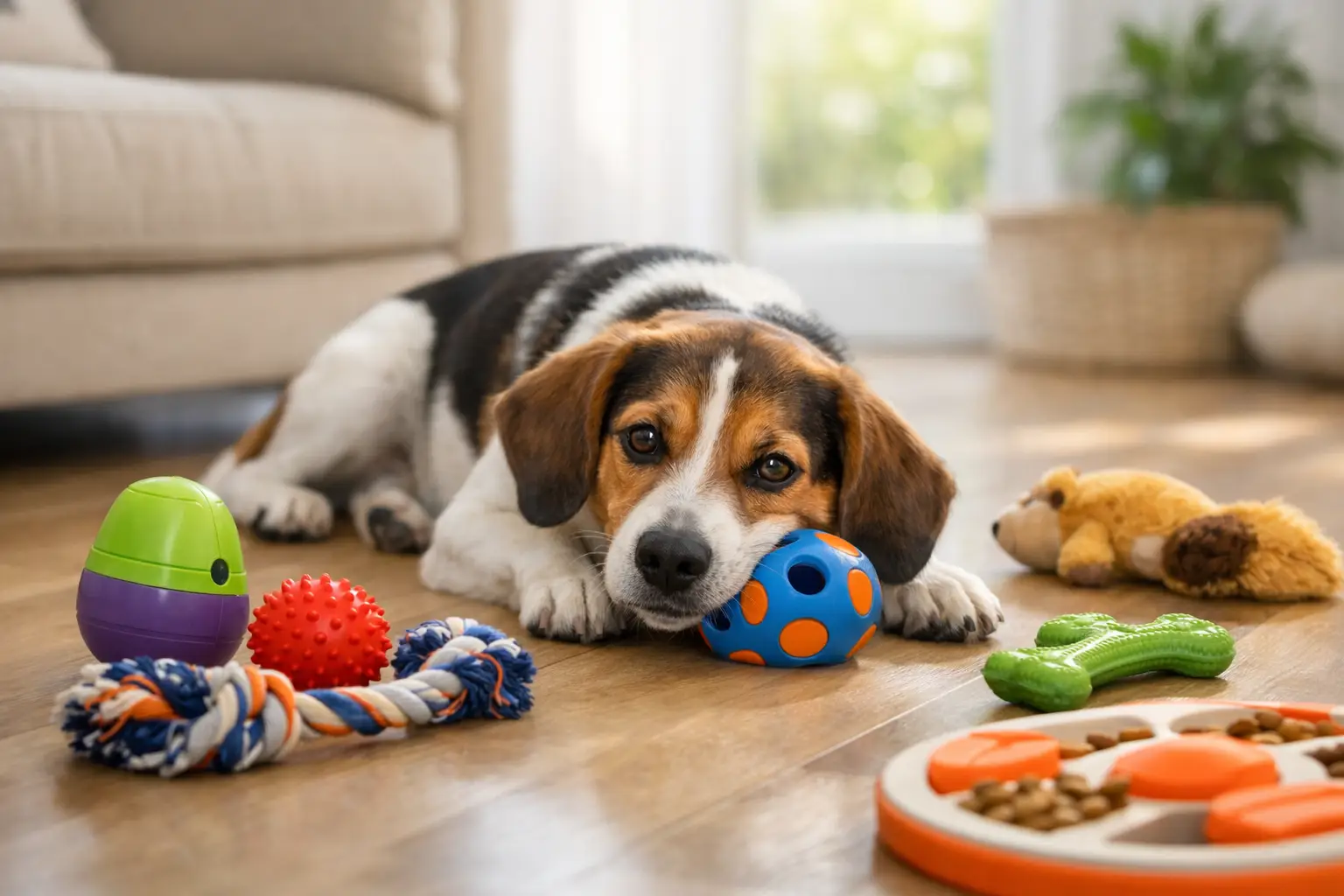
A dog who has already emptied the toy basket can still be bored. What many pups want is not simply more stuff to chew, but a job that feels rewarding: sniffing out treats, solving a small puzzle, chasing movement, or pulling against a favorite person. The best dog toys for boredom give that energy somewhere positive to go, especially during quiet afternoons, work calls, rainy days, and short stretches home alone.
The right choice depends on how your dog plays. A food-motivated Beagle may stay busy with a treat puzzle far longer than with a squeaky plush. A power chewer may need sturdy rubber and supervision, while a gentle senior may prefer soft, easy-to-carry toys. A little variety goes a long way, but safety and a good size match always come first.
Boredom-busting toys ask your dog to do something. They may encourage licking, chewing, sniffing, fetching, tugging, or figuring out how to reach a hidden treat. That mental or physical effort is what makes play last longer than a quick toss across the room.
A toy does not need flashing lights or a complicated setup to be engaging. In fact, the most useful options are often simple: a rubber treat toy, a snuffle mat, or a ball that rolls in an interesting way. The best fit is one your dog can use safely and enthusiastically without becoming frustrated.
For solo play, choose toys that are appropriately sized, made from dependable materials, and unlikely to break into swallowable pieces. Some toys are ideal only when you are there to supervise, particularly ropes, plush toys, and anything with small attachments. If your dog destroys a toy quickly, retire it rather than hoping it will last one more play session.
A durable rubber toy with a hollow center turns snack time into an activity. Fill it with kibble, a few training treats, or a dog-safe spread, then let your dog roll, lick, and nudge to earn each bite. For a longer challenge, prepare it ahead of time and freeze the filling.
This is a strong everyday option for dogs who like food and chewing. Start with an easy fill so your pup understands the game. If it is packed too tightly from the beginning, some dogs will give up instead of settling in.
Puzzle toys hide treats under lids, cups, or sliding panels. Your dog uses a nose or paw to move each piece and uncover the reward. They are especially handy for bright, busy dogs who finish their meals in seconds.
Choose beginner-level puzzles first, even for a clever dog. Watching your dog solve a new toy helps you see whether the compartments are a good difficulty level. Once the pattern becomes too familiar, put it away for a few days and bring it back into the rotation.
A snuffle mat lets dogs forage for dry treats or kibble tucked between fabric strips. It gives the nose something meaningful to do, which can be pleasantly tiring for many dogs. This is a simple way to slow down one meal without making the routine feel like a chore.
Use a snuffle mat on a clean floor and pick it up when the game is over. Dogs that enjoy shredding fabric may see it as a chew project instead of a search game, so this option is better with supervision for enthusiastic destroyers.
Licking is a calm, focused activity, making lick mats a helpful pick for settling down after a walk or during a busy household moment. Spread a thin layer of dog-safe peanut butter without xylitol, plain pumpkin puree, wet dog food, or another appropriate treat across the textured surface.
A lick mat is not a replacement for exercise, but it can create a peaceful pause. Look for a mat that stays put and is easy to wash. As with any food toy, count the filling as part of your dog’s daily treats or meal, especially for pups watching their weight.
Some dogs are happiest when they can gnaw. A properly sized durable chew toy gives them a legal outlet instead of directing that urge toward shoes, chair legs, or remote controls. Textured rubber options can be more interesting than a plain hard chew because they offer different surfaces to grip.
No chew toy is indestructible for every dog. Check it often for deep cracks, sharp edges, or chunks missing from the material. If your dog can bite off pieces, choose a tougher style or reserve that toy for closely watched play.
A classic ball becomes more exciting when it bounces unpredictably, has a textured grip, or holds a little scent or treat reward. These toys are great for dogs who need a quick activity break in the yard, hallway, or open living room.
Match the ball to your dog’s mouth. It should be large enough that it cannot be swallowed and easy enough to carry without strain. Tennis-ball-style toys can be fun, but very intense chewers may wear through them, so inspect the surface regularly.
Tug is one of the fastest ways to make a toy feel special because you are part of the game. A sturdy rope or handled tug toy can burn energy in a few focused minutes and strengthen recall when you add simple cues like “take it” and “drop it.”
Keep tug friendly rather than frantic. Let your dog win sometimes, avoid jerking upward on a small dog or puppy, and pause if teeth land on hands. This is usually a supervised activity, not a toy to leave out all day.
For many dogs, a soft toy that crinkles or squeaks taps into the joy of pouncing and carrying. Plush toys work nicely for gentle players, puppies learning how to play, and dogs who like to keep a comfort toy nearby.
The trade-off is durability. Remove loose stuffing, squeakers, ribbons, and torn fabric before they become a hazard. If your dog performs “surgery” on every plush within minutes, try a reinforced version for supervised play or switch to a rubber alternative for alone time.
Rolling treat toys release a piece of kibble now and then as your dog pushes them across the floor. The moving target keeps the game fresh and makes dinner more active. They can be a smart choice for dogs who are less interested in sitting still to solve a puzzle.
Set the opening to an easy level at first. Smooth floors tend to make these toys more fun, while thick carpet can stop the action. If you have multiple pets, offer each one a separate activity to prevent treat-time squabbles.
This last pick is less about buying one specific toy and more about getting better results from the toys you already have. Keep a small group available, then swap in different options every few days. A toy that has been out of sight for a week can feel new again.
Try rotating one chew toy, one food toy, one soft toy, and one interactive play toy. This makes it easier to notice what truly holds your dog’s attention and keeps the floor from becoming a permanent toy pile.
If your dog races through the house, prioritize movement with fetch toys, rolling treat toys, and short rounds of tug. If your dog follows every food sound from the kitchen, puzzles, snuffle mats, and stuffed rubber toys are likely to earn the biggest tail wags. Dogs that are nervous around new objects may do best with a familiar soft toy beside a low-pressure food activity.
Age matters, too. Puppies need toys sized for smaller mouths and benefit from supervised chewing while they learn what is okay to bite. Older dogs may appreciate softer materials, easier puzzles, and low-impact games that do not require fast turns or big jumps. For strong chewers, durability is more valuable than a toy with lots of extra parts.
It also helps to think about timing. Offer a food puzzle before you leave for a short errand, use a tug toy for connection after work, and save a lick mat for a calm evening routine. A toy is more likely to work when it matches the moment.
New toys can be exciting, but you do not need to hand your dog every option at once. Introduce one toy, show your dog how it works, and make the first experience easy enough to succeed. Praise and a few tasty rewards can turn a confusing object into a favorite activity.
Check toys frequently, wash food toys after use, and follow the maker’s size and supervision guidance. When boredom comes with nonstop pacing, destructive behavior, or trouble settling even after exercise and enrichment, a conversation with your veterinarian or a qualified trainer can help rule out a bigger issue.
A well-chosen toy gives your dog more than something to do. It adds a bright little moment to the day – a scent to follow, a treat to earn, a chew to enjoy, or a game shared with their favorite person.







Leave a comment