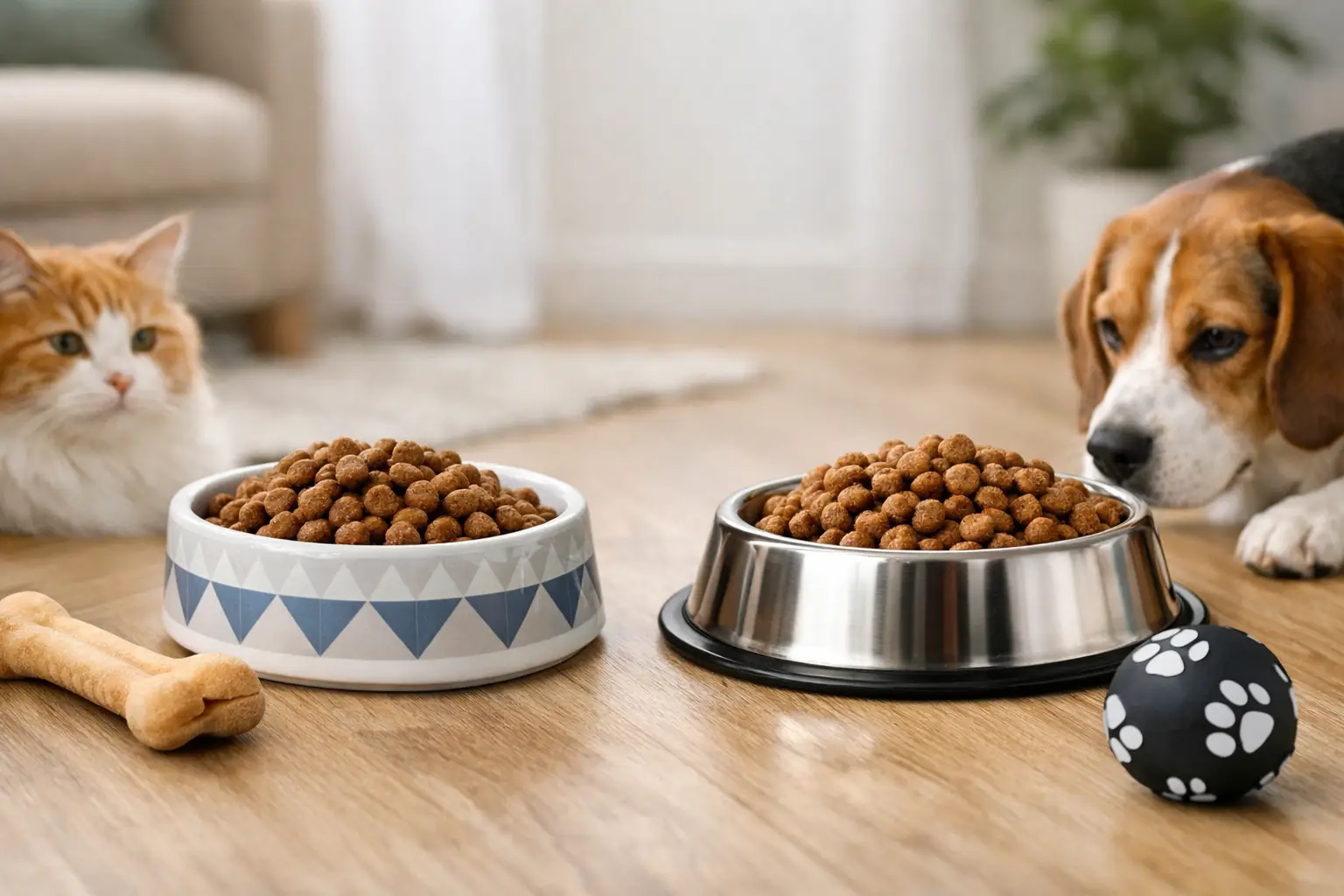
A pet bowl gets bumped, licked, washed, dragged across the kitchen floor, and refilled more times than most of us could count. That is why ceramic vs stainless pet bowls is more than a style choice. The right material can make everyday feeding easier for you and more comfortable for your dog, cat, or other hungry household companion.
Both options can be great picks. Stainless steel is the no-fuss favorite for busy homes, while ceramic brings welcome weight and plenty of personality to a feeding station. Your pet’s habits, your cleaning routine, and where the bowl will be used all help determine the better fit.
If you want a lightweight bowl that handles daily use, travel, and frequent washing with ease, stainless steel usually comes out ahead. If your pet pushes food around the floor or you want a bowl that stays put beside a cute pet mat, ceramic can be the better match.
The biggest difference is durability. Stainless steel does not crack or shatter when dropped, while ceramic can chip or break after a hard fall. On the other hand, a well-made ceramic bowl is heavier, so it is less likely to slide when an excited eater digs in.
Neither material is automatically right for every pet. A calm indoor cat may do beautifully with a glazed ceramic dish, while a large dog with an enthusiastic tail and a talent for knocking things over may need stainless steel.
Stainless steel bowls have earned their spot in so many pet homes because they are simple, practical, and tough. They are nonporous, meaning there are no tiny surface spaces for food residue to settle into the way it can with damaged or porous materials. A quick wash after meals keeps them ready for the next serving.
They are also remarkably durable. A stainless bowl can tumble off a raised feeder, get kicked under a cabinet, or come along for a weekend away without becoming a replacement project. For puppies that are still learning table manners and households with multiple pets, that durability is especially handy.
Many pet parents also like stainless bowls for water. They are easy to rinse and refill, and a good-quality bowl does not hold onto odors. Look for bowls labeled food-grade stainless steel and choose a size that gives your pet enough room to eat without crowding their face or whiskers.
The trade-off is that stainless bowls are light. A determined eater can scoot one across tile or hardwood, sending kibble on a little adventure. A non-slip silicone base, a bowl holder, or a feeding mat can solve much of that problem. Metal can also make a bit of clinking noise when tags hit the rim or when a pet eats with extra enthusiasm.
Stainless steel makes particular sense for large dogs, energetic pets, puppies, outdoor feeding areas, and travel. It is also an easy choice if you prefer to have several matching bowls ready for food, water, and backup use. For a busy pet-parent routine, it is hard to beat a bowl that is sturdy, easy to clean, and not precious.
Ceramic bowls bring a homey, polished look to a pet feeding area. They come in cheerful colors, playful prints, and designs that can coordinate with your kitchen or your pet’s personality. More than just decorative, their weight provides a real daily advantage: they tend to stay in place.
That stability is helpful for small pets that nudge their bowls, flat-faced breeds that need a steadier eating surface, and pets that like to chase a lightweight dish across the room. A wide ceramic bowl can also be a comfortable option for cats, particularly when it is shallow enough that their whiskers are not constantly brushing the sides.
A glazed ceramic bowl has a smooth finish that is easy to wipe and wash. When it is made for pet use and the glaze is intact, it can be a safe, attractive choice for meals and water. It feels substantial on the floor, which some pet parents simply prefer over a lighter bowl.
Ceramic does require more attention than stainless steel. It can crack, chip, or break when dropped, and even a small chip matters. A damaged glaze can create a rough area that is harder to clean properly, so a chipped or cracked bowl should be replaced rather than kept in rotation.
Choose ceramic bowls specifically made for pets, with a smooth, fully glazed food-contact surface. Avoid bowls with visible cracks, worn glazing, or rough spots inside the dish. It is also smart to check whether the bowl is dishwasher-safe, especially if that is how you handle your everyday cleanup.
Ceramic may not be the best option for a high-energy dog, a home where bowls are frequently bumped off a stand, or an outdoor area where a fall onto concrete is likely. In those cases, its charm may come with more risk than reward.
A clean bowl matters more than choosing the trendiest material. Food particles, saliva, and moisture can build up quickly, especially in a water bowl that gets topped off without being emptied and washed. Both ceramic and stainless steel can be easy to maintain when they are in good condition.
Wash food bowls after each meal whenever possible. Water bowls deserve a fresh wash daily, then a thorough rinse before refilling. Use warm, soapy water or a dishwasher if the manufacturer says the bowl is dishwasher-safe. Make sure the bowl is completely rinsed, because leftover soap is not part of anyone’s dinner plan.
Inspect ceramic bowls regularly for hairline cracks and chips. For stainless steel, look for deep scratches, bent rims, or a peeling non-slip bottom. Replacing a worn bowl is a small, practical way to keep your pet’s feeding setup fresh.
The most useful bowl is one that supports the way your pet actually eats. A fast eater may benefit more from a slow-feeder design than from a particular material. A pet with long ears may need a narrower, deeper bowl to keep ears away from water. A cat that seems fussy at mealtime may prefer a low, wide dish.
For dogs that are sensitive to noise, ceramic can feel quieter and more settled. For pets that have a habit of chewing, tossing, or knocking over accessories, stainless steel offers more peace of mind. If you feed more than one pet, it can also help to choose bowls in different colors, patterns, or sizes so everyone’s food and water station is easy to identify.
Raised feeders are another consideration. Stainless steel bowls are often designed to lift in and out of feeder stands, making cleanup quick. Ceramic bowls can work in some stands, but measure carefully and make sure the bowl sits securely without wobbling.
Stainless steel is often the more budget-friendly choice over time because it can last for years with basic care. Ceramic may cost a bit more depending on its finish and design, and it may need replacing if it breaks. That does not make ceramic a poor value. If a heavier, attractive bowl keeps your pet’s feeding corner cleaner and works beautifully for their habits, it can be worth it.
Many homes use both. A stainless steel bowl can be the everyday workhorse, the travel bowl, or the outdoor water dish. A ceramic bowl can be the steady indoor option for a pet who prefers it. Keeping an extra clean bowl on hand makes mealtimes easier when the usual one is in the dishwasher.
Yes, provided they are made for pet feeding, have an intact food-safe glaze, and are free from cracks or chips. Replace a ceramic bowl once the surface is damaged.
Most pets accept stainless steel water bowls without issue. If your pet suddenly avoids a bowl, first wash it thoroughly, offer fresh water, and consider whether the bowl’s location, noise, or size may be bothering them.
It is a helpful feature for pets that push dishes around, especially with lightweight stainless steel. A feeding mat is another easy way to add grip and catch spills.
Your pet does not need a fancy feeding setup to feel cared for. A clean, well-sized bowl that suits their habits is a small everyday comfort, and choosing the material that makes your routine easier means more time for the good parts of pet parenting.









Leave a comment